Isabel’s afternoon roundup
Friday, Apr 12, 2024 - Posted by Isabel Miller
* Tribune…
On Monday, the U.S. Supreme Court/ is set to hear oral arguments in a case challenging the very statute that Madigan was charged under for the Solis episode, which is commonly referred to as “666” because of its number in the federal criminal code.
How the high court comes down could have a resounding impact on political corruption prosecutions in Illinois — including the case against Madigan set for trial in October. […]
Snyder’s lawyers have argued it wasn’t a bribe at all, but a legal thank-you gesture, not unlike sending a fruit basket to a politician at holiday time in appreciation for their work. In their brief to the Supreme Court earlier this year, Snyder’s attorneys said the interpretation of the law by Chicago’s appellate court differs starkly from other districts and potentially criminalizes all sorts of otherwise innocuous behavior. […]
But federal prosecutors have said the plain language of the statute, which bars someone from “corruptly” soliciting or receiving something over $5,000 in value “intending to be influenced or rewarded,” leaves no question that doling out rewards to a politician for an official act is a type of “pernicious graft” that Congress clearly wanted to outlaw.
Here’s a great background story from the Sun-Times…
A cash-strapped mayor in northwest Indiana goes to a trucking company after engineering city contracts in its favor, and he tells its owners he needs money.
They pay him $13,000 for consulting. But there’s no evidence he did any work.
The feds call that corruption. But next week, the U.S. Supreme Court will consider whether the mayor even committed a crime under a law that’s popular among federal prosecutors — including those pursuing former Illinois House Speaker Michael J. Madigan.
The once-powerful Chicago Democrat would likely be on trial right now if it weren’t for the arguments Monday before the nation’s high court in the conviction appeal of former Portage, Ind. mayor James Snyder. One judge delayed Madigan’s trial until October to see how the court rules. A second put sentencing hearings on hold in a related bribery case involving ex-ComEd CEO Anne Pramaggiore and three others.
The judges are waiting for a decision from a Supreme Court that has taken “a very narrow view” of public corruption lately, said former Detroit U.S. Attorney Barbara McQuade.
* Capitol News Illinois…
Lead pipes in public water systems and drinking fixtures have been banned in new construction since 1986, when Congress amended the Safe Drinking Water Act, but they are still in use across the U.S. and in Illinois.
The presence of lead pipes has persisted due in part to a lack of a centralized federal or state removal strategy, as well as inadequate funding and insufficient inventories of where lead pipes are located.
In Illinois – which has the most lead pipes per capita of any state, according to a 2023 study by the U.S. Environmental Protection Agency – water suppliers are in the process of inventorying their lead pipes to get a clearer picture of timelines for removal over the next several decades. […]
Gov. JB Pritzker’s proposed FY25 budget would allocate $20 million to lead service line replacement planning grants. The capital infrastructure budget proposal also includes around $340 million in reappropriated funding along with almost $260 million in new appropriation for Lead Service Line Replacement loans.
* Rep. Bob Morgan and Sen. Sara Feigenholtz reject Mayor Johnson’s request for a meeting…
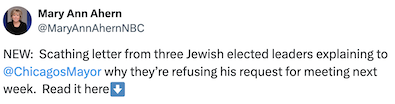
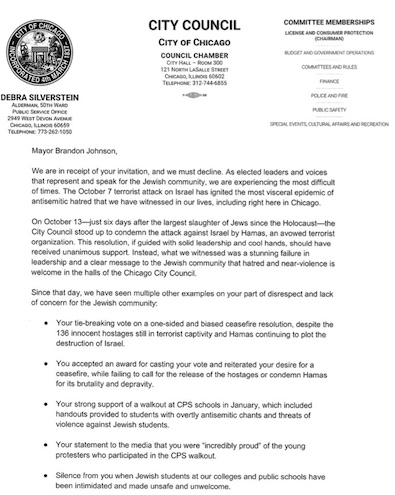
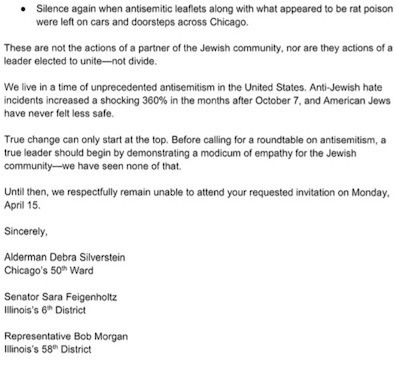
* Here’s the rest…
* Crain’s | Illinois awards first abortion training grants: Three groups will share $2 million in funding to provide training to abortion providers as part of Illinois’ efforts to improve access to abortions in the state. The Abortion Provider Capacity Building Grant Program is providing grants to Midwest Access Project, Planned Parenthood of Illinois and the University of Illinois Chicago College of Nursing, according to a statement from the Illinois Department of Public Health.
* State Week | DCFS makes a push for improvement: No state agency gets more negative headlines than the Illinois Department of Children and Family Services. Along with tragic outcomes, the department has struggled to keep up with demand and provide proper placements. A new director has taken over. Heidi Mueller recently updated a judge about efforts to find better housing options. This comes as the agency is in line for an increase in funding and a push to bring on more case workers.
* Center Square | Illinois corrections official defends handling of info to parole board:[Alyssa Williams-Schafer] defended IDOC’s handling of the case. “So currently, the Department of Corrections provides a violation report as well as a notification of charges to the parole board. So that violation report notification of charges is created by the agent, reviewed by the commander and then submitted,” she said. “So it has to be served within a certain period of time to the individual in custody. After it is served copies of those, particular reports are then submitted to the Illinois Prisoner Review Board as well as our automated management system, which is our Parole Communication and Command Center.”
* WSIL | Senator Fowler invites Southern Illinois students to State Capitol: Wednesday’s event was the second of two parts. The schools initially met in the fall at SIU to draft imaginary bills. On Wednesday, the schools came together to debate the bills in a practice committee hearing at the capitol.
* WCIA | Paxton-Buckley-Loda High School receives another threat: The Paxton-Buckley-Loda High School has reported they have received a “vague” threat from an anonymous individual Friday morning — the third threat the school has received within a week. After consulting with law enforcement, the school is remaining open Friday, though there will be “increased security measures” at the school.
* Chicago Reader | Dexter Reed, anti-LGBTQ+ attacks, Marquette Greenway construction: We don’t know how many times Reed shot, or how many times police shot him (the autopsy was still pending). We don’t know how police could’ve determined Reed wasn’t wearing his seatbelt, since the windows on his car are tinted. And we don’t know why a tactical team was conducting traffic stops in the first place, or why they initially drew their weapons. Collectively, the unknowns raise “serious concerns about the validity of the traffic stop that led to the officers’ encounter,” according to Andrea Kersten, COPA’s chief administrator. Both COPA and the Cook County State’s Attorney’s Office are investigating.
* WTTW | For 25 Years, Guest House Has Provided Temporary Medical Lodging to Patients and Families in Need: Since Guest House was founded 25 years ago, the nonprofit has offered temporary housing to medical patients, their family members and military veterans. Located in the Illinois Medical District, the lodging offers a way for patients to access advanced care or specialized treatment often only found in major cities at a limited number of hospitals or academic medical centers, according to executive director Adam Helman. Patients are not turned away from Guest House for their inability to pay.
* Daily Herald | Schools’ tax attorney to Bears: Dismiss your appeal: Ares Dalianis of Chicago-based Franczek P.C. — who has represented Palatine Township Elementary District 15, Northwest Suburban High School District 214 and Palatine-Schaumburg High School District 211 in the yearlong property tax dispute with the Bears — said Arlington Heights Village Manager Randy Recklaus’ proposed settlement to the schools and Bears was “too late” since it came five days after the Cook County Board of Review set the value of the team’s 326-acre property at $124.7 million. That stuck the Bears with a $8.9 million tax bill. But they’re now contesting the decision before the state’s property tax appeal board, in hopes of having the property’s value reduced to $60 million. That would set the tax bill at $1.7 million.
* Tribune | Former CPS student files lawsuit alleging sexual assault, coerced abortions by high school administrator: Following an investigation into Crowder by the Office of the Inspector General, CPS removed him from his position in September 2021. Crowder was later charged with sexual assault in 2022 and placed on a do-not-hire list by CPS while the OIG investigation is ongoing. Crowder is out on bond and due back in court April 17, according to public records.
* BND | Are dogs allowed in restaurants, grocery stores in Illinois? Here’s what state law says: While service animals have public access rights to enter grocery stores, restaurants and other establishments, companion or pet dogs may only enter dog-friendly buildings.
* NBC Chicago | Why are Illinois flags flying at half-staff today?: According to a notice posted to the state’s website, the flags have been ordered to be flown at half-staff in honor and remembrance of Illinois Department of Corrections Sergeant Andrew “Drew” Faught. Faught, who worked at the Pontiac Correctional Center, passed away April 8 while serving as a member of what the state referred to as the “TRT Team.”
* Courthouse News Service | Alabama harvested the organs of inmates without consent, families say: Families of Alabama inmates targeted the state’s practice of harvesting organs from the bodies of dead inmates, often in direct opposition to their wishes, in a trio of lawsuits filed Thursday. The practice first came to light in December 2023, after the family of 43-year-old Brandon Dotson filed a federal lawsuit claiming his body was returned from a state autopsy in a decomposed condition with his scalp peeled back and his heart missing. The lawsuits in Montgomery County Circuit Court are the first state actions to follow up follow up Dotson’s case.
* 404 Media | How a Money Laundering Crew Allegedly Moved Millions Through FanDuel: The plan was to create accounts with different casinos and sportsbooks, and in particular FanDuel, a very popular betting platform that has led the charge in the legitimization and surging popularity of sports betting in the U.S. Fresh accounts had limits on how much money they could deposit, but Bogomolny sent the clients screenshots of what established accounts were eventually capable of. They showed the accounts’ total winnings: $883,072.28 in one. $2,786,797.39 in another. The idea was that dirty money went in, legitimately gambled winnings came out.
* The Athletic | Ippei Mizuhara’s affidavit takeaways: The most startling claims against Ohtani’s interpreter: Months later, they were still looking to collect. On Nov. 17, 2023, the bookmaker texted Mizuhara looking to receive payment. Knowing Mizuhara’s public connection to Ohtani — the former interpreter garnered a semi-celebrity status due to their friendship — the bookmaker alluded to seeing Ohtani to gain access to Mizuhara. The text read: “Hey Ippie (sic), it’s 2 o’clock on Friday. I don’t know why you’re not returning my calls. I’m here in Newport Beach and I see [Ohtani] walking his dog. I’m just gonna go up and talk to him and ask how I can get in touch with you since you’re not responding? Please call me back immediately.”
7 Comments  
|
* Thanks, Dick…
U.S. Senate Majority Whip Dick Durbin (D-IL), Chair of the Senate Judiciary Committee, released the following statement on today’s announcement that the Department of Homeland Security and Federal Emergency Management Agency are releasing the first installment of congressionally-approved federal funds as part of the Fiscal Year 2024 (FY24) “minibus” to help cities and states address the migrant crisis, of which $19.3 million will go to Illinois and be split equally between the state and the City of Chicago:
“This announcement will help equip the City of Chicago and our state in receiving asylum seekers in a safe and orderly fashion. It’s important to remember the gravity of this situation. Asylum seekers have been subjected to cruel—and even unknowing—relocation at the whim of Governor Greg Abbott and Republicans’ inhumane agenda. We need to uphold our country’s commitment as a welcoming nation for migrants, and that requires federal assistance. While I welcome this funding, it’s not enough to properly provide our city with the resources we need—and I’ll keep pushing for more funding to help our city and state,” said Durbin.
As Chair of the Senate Judiciary Committee, Durbin has worked to deploy federal resources to assist cities and states—including the City of Chicago and state of Illinois—in receiving asylum seekers. The minibus that was signed into law included $650 million for the Shelter and Services Program, which Durbin advocated for.
Since the start of Governor Abbott’s cruel, inhumane, and partisan stunt dubbed, “Operation Lone Star,” more than 38,898 asylum seekers have been transported to Chicago from the U.S.-Mexico border. Durbin has pressed President Biden to make additional resources available, including funding and additional work permits. Durbin also introduced the Border Management, Security, and Assistance Act of 2023 with Senator Peters and 10 other Senate colleagues, which among other provisions, would provide $1.9 billion dollars in additional funding to the Shelter and Services program in support of local communities.
Last September, Durbin met with recent migrant arrivals in Chicago. In May, Durbin met with the Northside Refugee & Asylum Seeker Coalition to discuss ways to provide the Coalition with the necessary resources to assist the large number of refugees and asylum seekers in the Chicago area. Durbin also previously visited the Salvation Army Freedom Center in the Humboldt Park neighborhood in Chicago to meet with migrant families who were forced to come to Chicago from Texas by Governor Abbott.
I suppose every little bit helps, but, c’mon.
* Meanwhile, from Crain’s…
Mayor Brandon Johnson released additional details today on the $70 million funding request he’s asking the City Council to approve next week to care for the thousands of migrants living in city shelters. […]
The $70 million will come from the city’s reserve balance. The city must set aside a small percentage of cash to have on hand in case of a catastrophic event. The city also sets aside a reserve to fund up to 30 and 60 days of government services and an additional rainy day fund that has been boosted in recent budgets.
The $70 million will not affect those reserves, city officials told members of the City Council in briefings this week. Instead, it is taken from unallocated reserves.
8 Comments
|
Question of the day
Friday, Apr 12, 2024 - Posted by Rich Miller
* Sen. Seth Lewis…
With students from the Prairie School of DuPage watching remotely from their classroom in Wheaton, State Senator Seth Lewis (R-Bartlett) gained unanimous Senate approval on Thursday of a state symbol bill they worked on together.
Through Lewis’ Senate Bill 3514, the Calvatia Gigantea, or “Giant Puffball” is officially designated as the state mushroom.
“Since November, all 25 Upper Elementary scholars collected qualitative and quantitative data, surveyed over 100 Illinois stakeholders, and even held a school wide election,” said Prairie School of DuPage Teacher Erin Hemmer. “With the guidance of their two teachers, the change-makers have been working through the process with rigor, integrity, and passion.”
As part of their educational experience, students from the school traveled to Springfield when the bill was heard before the Senate State Government Committee last month. Hemmer and a student testified before the committee. As the bill was presented, committee members learned that 174 witness slips in favor of the bill had been properly filed by students, parents, and others in support of the new state symbol.
The original idea for a mushroom as a state symbol came from a class discussion on the different state symbols in Illinois.
“I met with these bright students earlier this year, and they expressed an interest in having a new state symbol of a mushroom,” said Lewis. “I was impressed with the amount of work they had already done and filed SB 3514 on their behalf in mid-February. The students continued to be involved as the bill was heard in committee, and it was my pleasure to bring it across the finish line in the Senate on Thursday.”
SB 3514 now moves to the House of Representatives, where Rep. Michele Mussman is carrying the bill.
* Here’s some pics…
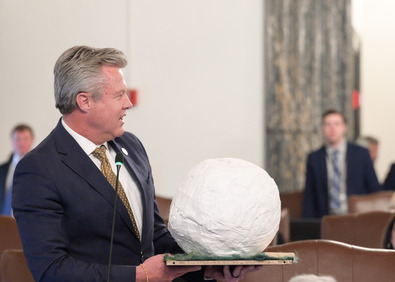

* The Question: Giant Puffball or morels? Take the poll and then explain your answer in comments, please.
[Isabel Miller contributed to this post.]
27 Comments
|
It’s just a bill
Friday, Apr 12, 2024 - Posted by Isabel Miller
* Chicago Reader…
ShotSpotter and its lobbyists worked with members of the City Council to advance a measure that would bypass Mayor Brandon Johnson and give alders final say on the use of the controversial gunshot detection system in their wards, documents obtained through public records requests show.
A lobbyist for the company provided alders with multiple drafts of both an original and a substitute version of the order, according to emails reviewed by the Reader. The measure was first considered at an April 1 meeting of the Committee on Police and Fire, where members sent it on a voice vote to the full City Council for approval. The proposal is expected to be taken up again when the council meets next on April 17.
The city declined to release the text of the drafts shared in the emails, citing an exemption in the state’s public record statute that allows agencies to withhold preliminary versions of documents. But the emails reveal ShotSpotter’s previously unreported role in helping craft the legislation. They also shed light on the influence wielded by corporations and special interests seeking to shape public policy to their benefit. […]
Alder David Moore, the measure’s sponsor, told the Reader in a phone interview, “Everybody knows my position on ShotSpotter.” He said ShotSpotter’s lobbyist reached out to him about the order after he spoke out in support of the technology. “We started working together on it because I needed somebody who had working knowledge of it, who were the subject matter experts on it,” he said.
In the lead-up to his election, Johnson vowed to end the city’s use of ShotSpotter, citing what he called “clear evidence it is unreliable and overly susceptible to human error.” On February 13, the mayor made good on that promise. He announced Chicago would not renew its contract and would end its use on September 22. He later clarified that the city would extend the contract a final time through the fall, to be followed by a “two-month transition period” that would allow police to phase out use of the technology.
* WAND…
A proposal that passed out of the Illinois Senate Thursday night could cap the monthly cost of inhalers for people with health insurance.
Illinoisans struggling with asthma and other lung diseases could pay just $25 for one prescription inhaler per month.
Senate Bill 3203 would also prohibit health insurance companies from denying or limiting coverage for prescription inhalers starting January 1, 2026.
* Tribune…
Illinois lawmakers joined the licensed cannabis industry Thursday in calling for a ban on intoxicating hemp products such as Delta-8-THC, a move retailers of such substances said would put them out of business.
The Cannabis Business Association of Illinois, which represents large licensed marijuana companies, called for allowing regulated sales of non-intoxicating hemp products such as CBD, but prohibiting sales of intoxicants until a committee can recommend how to proceed.
Tiffany Ingram, executive director of the association, called synthetically derived cannabinoids, including Delta-8 and THC-O, “Frankenstein weed.” […]
Rep. La Shawn Ford has introduced an alternative bill that would allow sales of intoxicating hemp products, but require them to be tested, labeled, regulated and taxed. Just as with cannabis, he said, prohibition only creates a underground market.
* Patch…
A new measure sponsored by Sen. Bill Cunningham (18th District) that would protect vehicle owners from rogue towing companies has passed the Illinois State Senate.
SB 2654 protects vehicle owners by updating towing regulations regarding devices and other property that can be retrieved without paying a fee to the towing company, and notification to vehicle owners.
“The more I have learned about the towing industry in Illinois, the more I see that we need to make changes,” Cunningham said in a news release, who represents portions of Chicago and the southwest suburbs. “This measure will stop towing companies from holding medical devices, like hearing aids, hostage if a vehicle is stolen and later towed.” […]
Senate Bill 2654 passed the Senate on Thursday and awaits further consideration in the House.
* Capitol News Illinois…
For decades, lobbyists in the Illinois Statehouse have been required to report how much they spend wining, dining and entertaining lawmakers.
Currently, though, there is no law requiring lobbyists to disclose how much they are paid by corporations, industry groups or other special interest organizations..
That would change under a bill now pending in the Illinois House. House Bill 4591 , an initiative of Secretary of State Alexi Giannoulias, would, for the first time in Illinois, require lobbyists to disclose how much they are paid by each of their clients. […]
[Amy Williams, an attorney in the secretary of state’s office] noted that all the provisions of the bill already exist, to one extent or another, in many other states. That includes compensation disclosure, which she said is required in 18 other states.
But that was the provision that generated the most resistance from those who work as lobbyists in the Statehouse.
* WGEM…
The Illinois state Senate passed a bill Thursday changing how liability is accrued for companies that violate the state’s Biometric Information Privacy Act (BIPA).
Under the current law, companies need to get written consent from customers and employees to use biometric information like fingerprints, face scanners and retina scanners. That part of the law would not change, though the bill would allow companies to obtain an electronic signature for consent. What would change is what happens when a company violates the law.
Currently, companies can be held liable in civil court for $1,000 in damages for each violation. It means every time an employee uses their fingerprint to punch the clock or enter a restricted area, the company could be held liable if they did not get consent. If the proposal becomes law, damages would change to $1,000 per person. […]
The bill’s opponents argue it doesn’t go far enough because it does not have retroactive protections for previous violators.
* Sen. Bill Cunningham…
State Senator Bill Cunningham advanced a measure that updates the liability guidelines in the Biometric Information Privacy Act.
“This reform to BIPA will protect small businesses from undue financial burden while still providing strong protections for consumers and workers,” said Cunningham, a Democrat who represents portions of Chicago and the Southwest Suburbs. “As technology continues to advance, it’s importance that our laws keep up with the times.”
Cunningham’s measure would limit the number of claims accrued should an employee bring a lawsuit against a company for a violation of BIPA. If a certain biometric identifier is collected by the same employer in the same manner, only one violation would accrue. This is a change from the current interpretation of BIPA, where claims are accrued on a per-collection basis, which resulted in hundreds of claims on a repeated violation.
SB 2979 also modernizes the manner in which written consent can be granted to include the use of electronic signatures. The original BIPA legislation took effect in 2008 when electronic signatures were not widely used. Cunningham’s legislation clarifies that because using electronic signatures is a common practice to obtain consent, they can be used to comply with BIPA consent requirements. […]
Senate Bill 2979 passed the Senate on Thursday and heads to the House for further consideration.
* STL Today…
Over the past year, several colleges and their students have collaborated with Illinois lawmakers to create legislation that would give college students mental wellness days every academic term.
While the idea stemmed from a former student body president at Illinois State University in Normal, current student body president Eduardo Monk picked it up and took the initiative when he stepped into the role last May. Monk said the project is an expansion of an Illinois law passed a few years ago that allows K-12 students five mental health days a year. […]
The bill would require all public colleges and universities in Illinois to implement a student mental wellness day policy that would allow students at least five mental health days per academic year. Schools would have to allow students to use at least two mental wellness days per semester, give them at least two scheduled wellness days every semester, or give them at least one scheduled wellness day and at least one wellness day to use per semester. […]
If the bill passes, colleges and universities would have to implement a policy by the 2026-27 academic year.
* Cook County Sheriff’s Office…
The Illinois Senate passed legislation [yesterday] proposed by Cook County Sheriff Thomas J. Dart that eliminates out-of-pocket expenses for first responders seeking mental health treatment.
“We ask first responders to be constantly exposed to traumatic and dangerous situations to protect us,” Sheriff Dart said. “This legislation is a solid step toward helping them. It will remove the financial barriers between them and the tools they need to manage the burden society has placed upon them.”
The need for mental health care for first responders is critical. Due to their exposure to violent and traumatic events, first responders are at an increased risk of developing mental health conditions such as PTSD, depression, and substance use disorder. The Journal of Police and Criminal Psychology reports suicide rates are 69 percent higher among police officers than the general population, while a Harvard Study has shown that first responders are at a higher
risk of developing PTSD. Studies by the federal Substance Abuse and Mental Health Services Administration found that 30 percent of first responders develop behavioral health conditions and 75 percent of police officers have experienced a traumatic event.
Sponsored by State Sen. Michael Hastings, SB3538, ensures first responders – including police officers, firefighters, and emergency medical services personnel – are exempt from any cost sharing requirements related to mental health counseling, including insurance deductibles, co-payments, and coinsurance. Unfortunately, finances are often an incredible burden for individuals seeking mental health care. The average price of psychotherapy is up to $200 per session, and insurance companies can pass along as much as 40 percent of the total amount to the insured. In a
survey conducted by the National Council for Mental Wellbeing, 42 percent of respondents identified cost as significant barrier to obtaining mental health services.
“Our first responders have endured many hardships, one hardship they should not face is a barrier to mental health treatment,” said state Sen. Michael Hastings, the legislation’s Senate sponsor. “This is a landmark piece of legislation that will not only impact first responders but set an example for the rest of the country as to how to help them.”
The legislation’s support includes NAMI Chicago, National Association of Social Workers –Illinois Chapter, Mental Health America of Illinois, Illinois Psychiatric Society, Illinois Association of Chiefs of Police, Associated Fire Fighters of Illinois, Illinois Fraternal Order of Police, Police Benevolent and Protective Association, Illinois Sheriffs’ Association and AFSCME Council 31, among others.
The legislation, which was approved without dissent 55-0 Thursday, now moves to the state House, where it will be sponsored by Rep. Angie Guerrero-Cuellar. Sheriff Dart urged lawmakers to quickly approve the measure and send it to Gov. JB Pritzker to sign into law.
“Every day, first responders answer our calls to help during the worst events of our lives – car crashes, violent attacks, health crises, the death of our loved ones – and this bill is an investment in not only their well-being, but in the health and safety of all our communities,” Dart said. “I encourage members of the Illinois House to pass this common-sense legislation in order to ensure the health of those who keep us safe.”
* Sen. Dan McConchie…
State Senator Dan McConchie (R-Hawthorn Woods) passed legislation that removes building permit fees for disabled Veterans when they need to modify their home to accommodate their disability.
“Navigating the complexities of home renovations is tough enough for disabled Veterans,” said Sen. McConchie. “This legislation ensures they don’t face additional financial strain with city permit fees.”
As an example, if someone comes back from military service disabled and needs to modify their home to accommodate their disability, they must currently pay a permit fee to their unit of local government on top of the cost they are already paying to make the required renovations.
Senate Bill 2751 would make sure that any time a disabled Veteran needs to make disability modifications to their home, the permit fees to the city will be waived.
“Our Veterans have done so much for us, and this is just one small thing we are able to do for them.” Said Sen. McConchie
This legislation has passed the Senate without opposition and will now be move to the House.
10 Comments
|
* SB2639 synopsis…
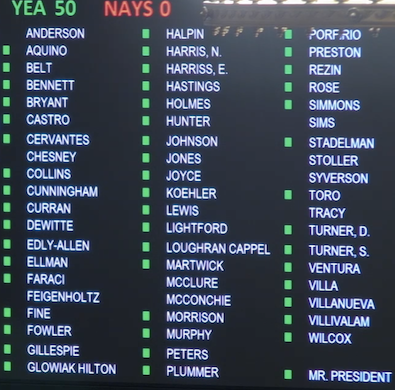
Amends the State Employees Group Insurance Act of 1971. Provides that the infertility insurance provision added by Public Act 103-8 (effective January 1, 2024) applies only to coverage provided on or after July 1, 2024 and before July 1, 2026. Repeals the provision regarding infertility coverage on July 1, 2026.
Amends the Illinois Insurance Code. Provides that no group policy of accident and health insurance providing coverage for more than 25 employees that provides pregnancy related benefits may be issued, amended, delivered, or renewed in this State after January 1, 2016 through December 31, 2025 unless the policy contains coverage for the diagnosis and treatment of infertility. Provides that no group policy of accident and health insurance that provides pregnancy related benefits may be issued, amended, delivered, or renewed in this State on or after January 1, 2026 unless the policy contains coverage for the diagnosis and treatment of infertility; specifies what shall be covered.
Provides that coverage shall be required only if the procedures: (1) are considered medically appropriate based on clinical guidelines or standards developed by the American Society for Reproductive Medicine, the American College of Obstetricians and Gynecologists, or the Society for Assisted Reproductive Technology; and (2) are performed at medical facilities or clinics that conform to the American College of Obstetricians and Gynecologists guidelines for in vitro fertilization or the American Society for Reproductive Medicine minimum standards for practices offering assisted reproductive technologies. Provides that if those requirements are met, then the procedure shall be covered without any other restrictions or requirements.
Makes changes in the Counties Code, the Illinois Municipal Code, the School Code, the Limited Health Service Organization Act, and the Voluntary Health Services Plans Act to provide that infertility insurance must be included in health insurance coverage for employees. Effective December 31, 2025.
* The bill passed without a single “No” vote. Sen. Sims has not been around this morning, but some other folks who are in town either missed or skipped the vote…
* Hastings press release…
Illinois is one step closer to having a law on the books to help guarantee insurance coverage for medically prescribed infertility treatments, thanks to State Senator Michael E. Hastings.
“My daughter was born via in vitro fertilization, so this initiative is near and dear to my heart,” said Hastings (D-Frankfort). “Unfortunately I know firsthand the heartbreak and stress that families and individuals face due to infertility complications. It is problematic that the health care system is set up in a way that insurance companies can trump the treatment plan recommended by your physician.”
Hastings spearheaded Senate Bill 2639 in response to a constituent whose physician had recommended that they seek in vitro fertilization treatment. However, when the constituent tried to access IVF care, they were told by their insurance provider that they had to complete other procedures before it would be covered by their insurance company, even with the recommendation of their licensed physician.
This measure would ensure that insurance companies provide coverage for infertility treatments that are recommended by a physician without requiring them to complete treatments that were deemed ineffective by their doctor.
Senate Bill 2639 would also allow a licensed physician to immediately approve any of these procedures based on the covered patient’s medical, sexual, and reproductive history, age, physical findings, or diagnostic testing.
According to the Kaiser Family Foundation, approximately 10% of couples receive medical help to become pregnant.
“We all know at least one person struggling to start or expand their family,” said Hastings. “These personal decisions should be made between a medical professional and patient – not by their insurance company. This legislation removes this barrier and helps alleviate some of the pain and anguish that many families experiencing infertility problems face.”
Senate Bill 2639 passed the Senate with bipartisan support and now heads to the House for further consideration.
* Meanwhile, in Alabama…
Providers in Alabama are resuming some in vitro fertilization services Thursday, the day after the state’s Republican governor signed a bill into law aimed at protecting IVF patients and providers from the legal liability imposed on them by a controversial state Supreme Court ruling.
The new law does not address the issue of personhood at the heart of last month’s unprecedented ruling, which prompted some providers to halt some IVF services, and experts say it’s going to take more work to fully protect fertility services in the state.
The Alabama Supreme Court ruled last month that frozen embryos are human beings and those who destroy them can be held liable for wrongful death. Three of the state’s limited pool of IVF providers immediately paused services, sending some families out of state to access treatment and prompting a widespread and urgent demand for lawmakers to provide a fast fix. […]
Still, the law “does not nullify the Supreme Court’s analysis that says the law ought to treat embryos just like people,” Katherine Kraschel, an assistant professor at Northeastern University School of Law, told CNN on Tuesday.
Almost three weeks after the bill was passed and signed into law, this happened…
Democratic candidate Marilyn Lands on Tuesday won a special election for a state House seat in Alabama after she made in vitro fertilization and abortion rights central to her campaign.
Lands, a licensed professional counselor, defeated Madison City Council member Teddy Powell, a Republican who once worked as a Defense Department budget analyst. A Republican had held the Huntsville-area seat in the state’s 10th District. […]
Lands had 63% of the vote to Powell’s 37% with all precincts reporting.
* Politico on Personal PAC’s target list…
In Illinois, Personal PAC is targeting at least four state legislative races, where it’s endorsing Democrats:
52nd House District: Maria Peterson, a Democrat, v. incumbent state Rep. Martin McLaughlin.
76th House District: Amy “Murri” Briel, a Democrat, v. Liz Bishop, a Republican.
104th House District: Jarrett Clem, a Democrat, v. incumbent state Rep. Brandun Schweizer, a Republican.
114th House District: LaToya Greenwood, a Democrat, v. incumbent state Rep. Kevin Schmidt, a Republican.
Not to mention all the incumbents Personal PAC will try to protect if they find themselves in close races.
13 Comments
|
Open thread
Friday, Apr 12, 2024 - Posted by Isabel Miller
* What’s going on in your part of Illinois?…
11 Comments
|
Isabel’s morning briefing
Friday, Apr 12, 2024 - Posted by Isabel Miller
* ICYMI: Illinois lawmakers call for ban on intoxicating hemp products, but retailers call for regulations. Tribune…
- The bill, which has the Cannabis Business Association of Illinois backing, calls for regulated sales of non-intoxicating hemp products like CBD, but prohibiting sales of intoxicants until a committee can recommend how to proceed.
- Unlike hemp, licensed cannabis companies in Illinois must test and label their products for potency, pesticides and other contaminants, have limits on total THC, and prohibit sales to those 21 and older.
-Rep. La Shawn Ford has introduced an alternative bill that would allow sales of intoxicating hemp products, but require them to be tested, labeled, regulated and taxed.
* Related stories…
* Isabel’s top picks…
* Capitol News Illinois | Giannoulias calls for disclosure of lobbyist contracts: “Right now, we’re only seeing part of the picture. We’re seeing what the lobbyist is spending to change or implement a policy,” Amy Williams, an attorney in the secretary of state’s office, told the House Ethics and Elections Committee Wednesday. “We’re lacking what the client is spending to change or implement a policy, and the client is the driving force behind those policy implications.”
* Tribune | Unionized health care workers say staffing shortages compromise safety: “This is something that impacts the workers but then think about your loved ones when they are the patients, that they’re not getting the care that they need because there is no staff,” Kim Smith, a patient care technician for Northwestern Medicine, said through a loudspeaker that blared throughout the Capitol rotunda. “When I walk into a hospital and I’m given 36 patients and I’m the only tech on that floor, there’s no way I can deliver good care.”
* Here’s the rest…
* ABC Chicago | Death of Cook County Clerk Karen Yarbrough causes confusion, delays for vital records: The clerk’s office said it is required to change documents that still have Yarbrough listed as the official signatory. […] The office is currently unable to provide paper copies of those records, but they can still be registered online. [Susan Dyer-Hultgren, president of the Cook County Funeral Directors’ Association] said she started getting calls Wednesday from funeral directors who couldn’t finalize death certificates and obtain permits for burials and cremations through the state’s vital records portal.
* The Century Foundation | The Best and Worst States for Family Care Policies: To date, 13 states and the District of Columbia have passed paid family and medical leave, and 15 states and the District of Columbia have passed paid sick days policies. These states are some of the highest scoring. […] Oregon received the highest grade on the report card, a “B+,” while Massachusetts, California, Colorado and Minnesota were the only states to earn a “B.” Oregon’s strong performance on childcare and paid family and medical leave propelled it to the top of the care report card.
* Press Release | Retired Justice Hon. Rita B. Garman to be presented with state’s highest honor April 13 in Chicago: Governor JB Pritzker announced the 2024 recipients of the Order of Lincoln, the state’s highest civilian honor for professional achievement and public service. Vermilion County’s retired Justice Hon. Rita B. Garman is among this year’s recipients.
* Winnebago County Board Member Paul Arena | Migrants welcome in Winnebago County, bills for housing, health care are not: State Representative Maurice West wrote an editorial in the Register Star accusing the Winnebago County Board of telling immigrants they are unwelcome; by symbolically hanging a “Keep Out” sign on the county. That is not true. The County Board members who voted in favor of the resolution limiting the use of tax dollars to support migrants are not anti-immigrant. Many of us have family members who are immigrants.
* Crain’s | As measles worries rise, schools are asked to draw up lists of unvaxxed students: The susceptibility lists for students who are not up to date on measles, mumps, rubella (MMR) vaccination, or do not have other evidence of immunity to measles, would include students “who are not completely vaccinated due to religious exemption, medical exemption, McKinney-Vento exception, on an approved schedule, or noncompliance with measles vaccination,” according to an IDPH memo posted April 8.
* Sun-Times | ‘Security footprint’ plan for Democratic Convention kicked to City Council for Wednesday vote: Protesters, residents and other DNC observers would be prohibited from bringing laptops, large bags, scooters and other items into certain areas closest to convention attendees under the ordinance, which the City Council’s Public Safety Committee advanced for a vote by the full Council.
* Crain’s | DNC security maps to be released in early July, CPD tells City Council: Over the last several weeks, officials from the Chicago Police Department and Secret Service have knocked on doors of local businesses and residents to let them know about the security maps law enforcement agencies are developing for the convention. The security footprint for the DNC won’t come out until early July, Duane DeVries, the police department’s Bureau of Counterterrorism chief, told the City Council’s Public Safety Committee today.
* Tribune | Feds look to call ex-aldermen to testify at Madigan trial as experts on machine politics, City Hall: In a motion Thursday, prosecutors asked that retired University of Illinois at Chicago professor Dick Simpson be allowed to testify as an expert witness on traditional Democratic machine politics, particularly the patronage system that ward bosses like Madigan were able to use to build and maintain power. They also want to call former Ald. Michele Smith, a former federal prosecutor who would describe for the jury the intricacies of City Hall, including obscurities such as aldermanic prerogative, zoning and the role of ward committeemen, according to the filing.
* Sun-Times | Chicago climate lawsuit against Big Oil moved to federal court — for now: A legal expert, however, believes the case will land back in Cook County Circuit Court where it was initially filed. The reason: Chicago’s lawsuit against five of the world’s largest oil and gas companies follows a pattern of similar complaints filed by other U.S. cities. In each of those cases, the companies argue that the case must be heard in federal rather than state courts but, on appeal, they have all been moved back to the local venues.
* Tribune | Bally’s Chicago revenue up 12.7% in March as casino company weighs buyout offer: Revenue at the Medinah Temple casino grew 12.7% in March to more than $11.1 million in adjusted gross receipts, according to data released Thursday by the Illinois Gaming Board. Bally’s Chicago ranked fourth in revenue among the state’s 15 casinos. Admissions to Bally’s Chicago increased 11.6% to nearly 118,000 visitors, ranking second behind Rivers Casino Des Plaines, the state’s busiest and top-billing casino.
* Sun-Times | The billionaire behind the scenes in Sox stadium plan: For two decades, an Iraqi billionaire who once was barred from entering the United States has been trying to develop 62 acres he owns along the Chicago River south of the Loop. Each time, Nadhmi Shakir Auchi has run into political and legal roadblocks. Some involved his partners, others centered on his past — which includes two criminal convictions, one in France, another in Iraq.
* Crain’s | The city rejects a new revenue source in Sox, Bears stadium talks: On April 8, the parties discussed adding revenue from the city’s amusement tax on ticket sales at the teams existing and potential new stadiums to the complicated mix of public financing they argue is needed to pay off the current debt that built the team’s current homes and build new ones, according to sources familiar with the negotiations.
* SJ-R | Owner of new Springfield business wants to be hub for social gatherings: Owned and operated by Springfield native Kaia Griffin, AR Luxury Event Spaces is a dream for the CEO to provide her community a thriving place to be in the city. […] The business will be the latest Black-owned business in Springfield and a place Griffin, a Springfield Public Schools District 186 graduate, hopes can bring people together.
* Block Club | Chicago River Open Swim Not Yet Approved By City: At a meeting of the city’s Committee on Special Events, Cultural Affairs and Recreation, Downtown Ald. Bill Conway (34th) asked city officials about the event after hearing from concerned neighbors and was told the event had been announced without being permitted. City officials are in talks with organizers and the other municipal agencies that need to sign off on such an event, a city official told Conway.
11 Comments
|
|
Comments Off
|
Live coverage
Friday, Apr 12, 2024 - Posted by Rich Miller
* You can click here or here to follow breaking news. It’s the best we can do unless or until Twitter gets its act together.
Comment
|
|
 Support CapitolFax.com
Visit our advertisers...

 ...............
 ...............
 ...............
 ...............


|
   
|
Hosted by MCS
SUBSCRIBE to Capitol Fax
Advertise Here
Mobile Version
Contact Rich Miller
|



