Warning they are “turning up the heat,” Republican Darren Bailey’s campaign for governor is planning to begin airing TV ads in Chicago and the rest of the state next week, thanks to another seven-figure infusion of cash from conservative billionaire Dick Uihlein.
Warning they are “turning up the heat,” Republican Darren Bailey’s campaign for governor is planning to begin airing TV ads in Chicago and the rest of the state next week, thanks to another seven-figure infusion of cash from conservative billionaire Dick Uihlein. […]
The $1.8 million ad buy set to begin across Illinois on Monday will mark the first TV commercials that Bailey has aired in the Chicago area. […]
The latest contribution from Uihlein brings his contributions to Bailey’s campaign to more than $6 million. But that still pales in comparison to the competing largesse from hedge-fund billionaire Ken Griffin, who so far is bankrolling Irvin’s bid for governor to the tune of $45 million.
It should be the welcome sign on Richard Irvin’s office: Pay to play. Because as mayor that’s how Richard Irvin does business. Over 100,000 in campaign donations for Irvin and millions in lucrative contracts for his friends. One telecom deal had already been rejected, but Irvin intervened and received a $10,000 campaign contribution after getting approval. Irvin even handed out another contract worth 9 million in taxpayer dollars. Then they hired Irvin’s former wife. Tell Richard Irvin, corruption is no way to run a government.
That could leave a mark.
These are supposed to be issue advocacy ads, by the way, so they don’t qualify as in-kind contributions or independent expenditures, the governor’s campaign says. And that means they aren’t legally required to be reported to the Illinois State Board of Elections.
* ILGOP chairman Don Tracy isn’t sayin’ the 2020 election was stolen in his latest party newsletter, he’s just sayin’…
Election Integrity Update
The 2020 Election is over and, unfortunately, Biden is the 46th President.
Recent books and movies like Rigged by Molly Hemingway and 2,000 Mules by Dinesh D’Souza argue that the 2020 Election was rigged by Democrat activists funded by Mark Zuckerberg and other liberal, wealthy elites through nonprofit intermediaries. I have read Molly’s book and seen Dinesh’s movie and found both to be extremely interesting and informative. However, investigating the 2020 Election is not my mission. We have another critically important election less than six months from now, which I am totally focused on.
Toward that end, in a state like Illinois with a rich history of voter irregularities, election integrity is our top priority, and that is what most of the funds we have raised during my tenure as your Chairman will be spent for this Fall. As the 2020 Election showed, widespread voting by mail presents unique and challenging election integrity issues, including especially illegal ballot harvesting and ballot chain of custody security issues.
I added the links.
* In government news, Gov. Pritzker signed several bills into law late this afternoon. Click here.
But text messages written by Irvin in 2018 during the middle of the Trump presidency, and obtained by WTTW News, appear to show Irvin has very strong feelings about Trump, and they are not positive. The messages offer some insight into aspects of Irvin’s political beliefs his campaign has been reticent to address.
“And I hate Trump too!” Irvin wrote. “He’s an idiot!!!”
Shortly after, Irvin added, “and a bigoted racist.” […]
Irvin then clarifies his position on Trump once again: “And although I don’t hate Trump the man, I do hate what he stands for.” […]
In a statement to WTTW News Irvin said, “I don’t recall sending those texts, and while there are areas where I disagreed, the Trump Administration delivered positive results for Americans like tax cuts, opportunity zones, and a focus on public safety – all of which we utilized to great effect in Aurora and are now a focus of our campaign to take back Illinois from the disastrous Pritzker regime.”
State Rep. Kam Buckner (D-Chicago) launched a bid for Chicago mayor on Thursday, presenting Mayor Lori Lightfoot with a challenge from the progressive wing of the Democratic Party.
Buckner told WTTW News in an interview hours before he made his campaign official that he decided to run for mayor because Chicago needs a leader who is “fearless and compassionate.”
“What I’m hearing from folks is that they don’t feel safe, they don’t feel seen or heard and they don’t think there is a plan for their safety,” said Buckner, adding that business leaders feel “neglected” and residents are concerned about the future of the Chicago Public Schools.
“We need a leader who can talk to all of them,” Buckner said.
State Rep. Kam Buckner kicked off his mayoral campaign Thursday, proclaiming “we cannot wait a day longer for a safe and just Chicago for all of us.”
Buckner pledged a more collaborative Chicago with “a mayor who brings people together,” an apparent reference to Mayor Lori Lightfoot’s reputation for combativeness with critics. […]
A mayor’s job is not just to fight for the sake of fighting,” Buckner told a crowd of several dozen supporters outside a South Loop tea shop on a sweltering afternoon. “It’s time to bring people together, find a way to ‘yes’ instead of being stuck at ‘no.’”
And he pointed to Chicago’s “best mayors” as those who “made our common values and common purpose our focus, not our differences.”
Buckner said his balanced approach to public safety would happen through “vastly increasing” the city’s gun violence prevention budget, investing in anti-violence organizations, helping push through gun reform and “a robust mental health responder model.”
Buckner’s past personal decisions also may be brought up by opponents, such as his 2019 arrest for driving under the influence, which he said he would have a “direct conversation with the people of Chicago” about.
He called on Chicago Police to adopt a “community policing” approach that prioritizes residents’ needs, rather than “neighborhood policing” based on geography.
This people-over-places mentality would transfer to his governance over the economy and tourism efforts as well, Buckner said.
“We have to find a way to celebrate the places and spaces that we occupy — their diversity, their importance, their significance — but more importantly, the people who live there,” he said. […]\
Buckner intends to directly negotiate a new contract with the Chicago Teachers Union in 2024 if elected — “not by proxy, not from behind the podium, not through press releases,” he said at his campaign’s launch Thursday. The announcement was made outside the Tea Pot Brew Bakery, 1802 S. Wabash Ave
When asked if he is saying that Mayor Lori Lightfoot has failed the city, Buckner replied: “What I’m saying is that if I thought that the city was moving in the right direction, I wouldn’t be sitting here talking today as a candidate for mayor.”
Mayor Lightfoot’s campaign team went on the offensive.
“Being Mayor of Chicago requires the sort of toughness that Kam Buckner hasn’t shown in his public life. When others stood up to Madigan and told him it was time to go, Buckner voted to keep him in power. You can’t take on the machine when you’re part of it,” Lightfoot campaign spokesperson Christina Freundlich said in an emailed statement.
Lightfoot’s team is also expected to make an issue of Buckner’s two DUI arrests, to which he pleaded guilty. In both, police said he was found passed out behind the wheel.
Throughout his career Buckner has been outspoken on issues of policing and public safety. Early in May 2020, he reported on a police officer stopping him and demanding to see proof of purchase and identification after he left a South Loop retailer, saying that the officer said he “looked like he was up to something.”
“Which begs the question, what does someone who is up to something look like?” Buckner asked on Twitter. He recalled the talks young Black boys receive “on how to maneuver a society that often looks at you as a threat first” and a mentor who told him as a teenager to “dress like a prospect and not a suspect.”
At today’s campaign launch, Buckner continued: “Where you live should not determine if you live,” he said. “Being a Black kid from the South Side, I know what it’s like to lie down on the wet pavement handcuffed because police officers think I fit a description.
“I’m a lifelong South Sider who has decided to remain a South Sider, and it’s important to me that I bring all those experiences to bear in City Hall,” he said. “I bring all of that with me in this race and, hopefully, a Buckner administration.”
In announcing his candidacy, Buckner previewed his “four star plan to bring Chicago back” — a nod to the city’s iconic flag. He said he plans to put forward detailed plans to improve public safety, build the “most effective” education system, create equitable economic development and deal with the city’s legacy debt.
Buckner co-sponsored legislation that will create an elected school board in Chicago by 2025. Though Lightfoot initially supported the concept of an elected board, she lobbied against the legislation that Gov. JB Pritzker ultimately signed.
He also was the chief co-sponsor on a criminal justice reform package that eliminated cash bail. Republicans are targeting that legislation for repeal and it’s becoming a key talking point in the gubernatorial primary.
A former football player at the University of Illinois Urbana-Champaign, Buckner has also supported bills that would allow college athletes to earn money through endorsements.
Buckner says he doesn’t want a teacher contract to be a war when it comes to schools. He says he’s prepared to negotiate from his kitchen table if he has to – not from podiums or press releases – because parents are fed up.
“We’re sitting by a telephone at 10 at night trying to see whether their children have school, trying to figure out how to log into a broadband system that was janky,” Buckner said.
He also wants to make sure the Chicago Bears don’t go anywhere.
“The Chicago Bears should always play football in Chicago.”
Some reaction to his announcement came from Lightfoot ally Ald. Michelle Harris, 8th, who chairs the City Council Rules Committee.
Chicagoans, said Harris, must “be wary of those who seek to divide us and reap the benefits. . . .We must remain vigilant against candidates who put themselves ahead of the progress we’ve been making together, or who would rather factionalize our community to grab a brass ring than do the hard work to make change,” she said.
Harris also criticized Buckner for being one of 51 Illinois House Democrats who initially voted to keep Michael Madigan as House speaker last year. Madigan, under indictment in the ComEd bribery scandal, eventually withdrew from the race and retired.
Recently, Buckner met with other candidates who are still mulling entry into the race for mayor, including State Rep. LaShawn Ford, Ald. Rod Sawyer and activist and current Congressional candidate Ja’Mal Green.
“I think the people will decide where they want the city to go,” he said.
On behalf of retailers across the state, the Illinois Retail Merchants Association (IRMA) applauds Gov. JB Pritzker for signing into law HB1091, a comprehensive proposal to combat organized retail crime that has plagued neighborhoods across Chicago and communities throughout the state.
Crafted by IRMA in partnership with Illinois Attorney General Kwame Raoul, the measure represents one of the most sweeping efforts in the nation to combat organized retail crime by addressing the problem from multiple angles. This includes providing prosecutors with more tools to hold criminals accountable, dedicating state funds to investigate and prosecute the criminal rings carrying out these brazen thefts, requiring more oversight of third-party marketplaces where stolen goods are sold, stronger rights for victims of organized retail crime and the creation of a statewide intelligence gathering and sharing platform to allow retailers and law enforcement agencies to better coordinate.
“Organized retail crime is not a victimless crime. It threatens the safety of employees and customers, robs businesses of tax dollars and puts communities at risk of further crime including illegal firearm purchases, human trafficking and even terrorism. We thank Governor Pritzker for signing this important measure into law, creating additional avenues to combat these complex crimes and provide for safer communities,” said Rob Karr, president & CEO, IRMA. “I want to thank Attorney General Raoul for his partnership in combatting the rising issue of organized retail crime, as well as every lawmaker who supported and voted in favor of this measure that will help protect retailers, employees and customers across the state.”
“This new law represents another important step to fight crime and advance public safety in Illinois,” said Governor JB Pritzker. “This is how we protect store workers and customers, prevent militarized storefronts and empty commercial corridors, and across the board, make communities safer for all who call them home. And I look forward to furthering our work to shape a public safety system that works for all of us, including ensuring the victim rights advanced today are carried throughout our justice system.”
The bill creates and defines the violation of organized retail crime, providing the emphasis and focus required to combat this dangerous form of retail theft, which is performed by criminal groups with the goal of reselling stolen items to fund illicit activities. The legislation specifically targets those organizing these crimes, which is defined as an individual who knowingly recruits, organizes, supervises, manages, finances or otherwise directs others to commit organized retail crime, which includes smash and grab robberies as well as the looting of supply chain vehicles. Prosecutors would be given wider discretion to bring charges regardless of where the crime takes place. For instance, if the conspiracy, theft and selling all occurred in different jurisdictions, each jurisdiction would have the ability to prosecute the whole crime.
In addition, organized retail crime could be prosecuted by the Attorney General via the Statewide Grand Jury. This would give law enforcement officials another avenue by which to hold leaders of criminal rings accountable. Further, victims of organized retail crime must be given at least seven days’ notice of all court proceedings, which must be sent to the establishment where the crime occurred as well as any persons the victims designate.
To support these efforts, HB1091 calls for earmarking state funds on an annual basis to create new positions in the Attorney General’s office and various State’s Attorneys offices dedicated to investigating and prosecuting organized retail crime and illicit trade.
“Serious criminal activities, including gunrunning and drug trafficking, have been funded using proceeds from the sales of merchandise stolen through organized retail crimes. This is not just a criminal problem – this hurts consumers as well. That is why we need online marketplaces to do their part. Online marketplaces must use their intellectual resources to make sure criminals are not selling stolen products on their sites, which will help us protect consumers,” said Attorney General Kwame Raoul. “This law strengthens the authority of my office and other law enforcement agencies to disrupt criminal enterprises that are directly responsible for the rise in organized retail crime. I appreciate Gov. Pritzker’s signing of this important law, as well as the leadership of Sen. Glowiak Hilton and Rep. Kam Buckner in guiding this bipartisan proposal through the Illinois General Assembly.”
The legislation builds on the work of the Attorney General’s Organized Retail Crime Task Force, which is designed to investigate these crimes and trace them to their source. In December, the task force and the Chicago Police Department Force recovered stolen goods worth millions of dollars during a sting operation. IRMA also works with the United to Safeguard America from Illicit Trade (USA-IT) Coalition, which aims to address organized retail crime at the national level.
Increasingly, goods stolen during the execution of organized retail crime are often sold on third party electronic marketplaces. The bill requires these online marketplaces to verify the identity of high-volume sellers using bank account numbers, taxpayer IDs or other information. Those sellers would be required to provide valid contact information, and marketplaces would be required to suspend the activity of third-party sellers for non-compliance. This is a vital public safety component as these sales are used to fund illegal activity including drug trade, weapons smuggling, human trafficking and terrorism. The proposal is identical to the agreed proposal being sponsored in Washington, D.C. by U.S. Senator Dick Durbin and Congresswoman Jan Schakowsky.
A recent study by the Retail Industry Leaders Association found that as much as $68.9 billion in products were stolen from retailers nationwide in 2019, with retail crime resulting in $125.7 billion in lost economic activity and 658,375 fewer jobs. It’s estimated that retail theft costs federal and state governments nearly $15 billion in personal and business tax revenues, not including sales tax losses. These are conservative estimates as some jurisdictions discourage organized retail theft complaints and prosecutions.
* From the press conference…
Q: Can you respond to critics throughout the last few months who have pointed out that since before even before the pandemic, various crimes like property crimes, which would include retail theft, burglary, etc, have actually gone down. And not just that, but there’s laws on the books that address conspiracy cases on criminal practices. So given all that, can you still talk about why a law like this is needed?
* Pritzker: Sure. And I’m gonna ask the attorney general to jump up just in a moment, but I just want to say many of those critics are people who didn’t stand up to make the laws stronger, they complained an awful lot. They never participated in any of the efforts that we’ve made to try to make public safety better for everybody to make our communities better our neighborhood safer for families. And so the critics can say whatever they want, but this was a significant effort to protect our retailers as well as the people who work at the retail establishments and their customers.
* Raoul: They haven’t gone down. The data that you heard with regards to the tax revenue loss because of specifically organized retail crime, which is what we’re here to discuss today, not crime generally, but organized retail crime has gone up, not only here in Illinois, but nationally. With regards to things like RICO. Any prosecutor’s office, state, county prosecutor’s office will tell you it’s a very difficult thing to navigate. It’s rarely used in the state. That’s why we honed in on language to target this specific criminal activity. You’re talking about crime generally, we can have that debate, but we’re talking about organized retail crime today.
Amid a federal corruption probe and a threatened lawsuit, the state has ordered red-light cameras at one of suburban Chicago’s busiest intersections to be turned off.
The Illinois Department of Transportation confirmed Thursday it revoked the operating permit for Oakbrook Terrace’s cameras, at Illinois Highway 83 and 22nd Street. But the reason given by IDOT had nothing to do with federal allegations the west suburb’s former mayor took bribes to greenlight the cameras, or with threats from a neighboring suburb that it would sue IDOT to get the cameras removed.
IDOT said Oakbrook Terrace hadn’t followed state requirements on submitting periodic reports documenting that the cameras had improved safety — requirements that the Tribune previously found IDOT had long failed to enforce.
Oakbrook Terrace, in a press release issued late Thursday, blamed IDOT for not releasing crash data in time for it to do the study
The charges do not identify the red-light camera company involved in the case, but according to published reports, the company is SafeSpeed, which has been connected to multiple other cases involving SafeSpeed representatives paying bribes to local politicians.
SafeSpeed has denied any wrongdoing, saying any bribes offered by former employees or representatives were made without the company’s knowledge.
* Meanwhile…
///BREAKING/// Stepsons of mob-connected businessman charged in red light camera kickback scheme w/ex-Oakbrook Terrace Mayor Tony Ragucci. James and Joe Colucci allegedly continued a deal struck by their stepdad, Dennis, a former associate of Outfit hitman Harry Aleman. Story tk pic.twitter.com/buL91tHWVG
State Representative Deanne Mazzochi (R-Elmhurst) has issued the following statement in response to the Illinois Department of Transportation’s announcement that the permit to operate red light cameras at Illinois Highway 83 in Oakbrook Terrace has been revoked:
“I appreciate that this justifiably vilified camera finally is going through the removal process. But it is baffling that IDOT cannot acknowledge the real reason why this camera should have been scrutinized and removed long ago: because it was specifically mentioned in a federal indictment involving red light camera public corruption for Democratic Senator Marty Sandoval. I also have repeatedly urged IDOT to conduct this review because this camera didn’t just fail to deliver improved public safety, it potentially was the cause of increased accidents.
IDOT expects us to believe that it is just a coincidence that the bureaucracy has belatedly reviewed the paperwork for compliance. In reality, given the recent criminal charges filed by the federal authorities against the former Mayor of Oakbrook Terrace involving this very camera, this has become a political embarrassment for IDOT and Governor Pritzker, who has let this sit for years. Various Democratic legislators are also about to face the voters during primary season. People want to know why Democrats’ prior promises to end red light cameras have gone unfilled, and why they have not enacted my common-sense legislation to target those involved with public corruption.
Further, by stubbornly refusing to concede the real reason behind this camera’s removal, IDOT is sidestepping two critical issues: first, how and why IDOT permitted this particular corrupt camera installation; and second, how and why red light cameras throughout the suburbs have been repeatedly tied to federal public corruption charges. Until IDOT can come clean, these cameras are going to continue to be tainted, and rightly viewed with suspicion until real reform legislation is put in place.”
Home safety checklists? DCFS was unable to provide them in 98 percent of cases.
Data on kids being properly immunized? DCFS data was “unreliable”. […]
Huge chunks of the state’s most vulnerable kids are missing physicals, vision tests, hearing screenings, and 88 percent missing at least one dental exam. […]
21 percent of taxpayer-funded DCFS positions remain vacant.
For aftercare services, more than half of the randomly selected cases did not have a record of receiving at least six months of services. Those services were also not updated to reflect new law.
“Because DCFS did not ensure that families are receiving the recommended services for the required duration of time, a successful family reunification is less likely,” the audit reads. […]
The audit also shed some light on the staffing vacancies within the department. There’s a 20% vacancy in budget-funded positions overall, with the greatest level of open positions in areas like Rockford (43% vacant) and southern Cook County (26% vacant).
The agency also failed more than half the time to properly document that support services were provided for the requisite six months after children were reunited with their families, the report said.
The audit also found that the agency’s records system was unable to track or identify cases that fell under a recent state law governing how DCFS deals with calls from legally mandated reporters, such as teachers.
In those cases, when the information provided doesn’t trigger a full-blown abuse or neglect investigation but the family has had previous involvement with the child welfare system, the agency is supposed to refer the family to the appropriate services. If the family refuses to cooperate, then the law requires DCFS to launch an investigation.
Cook County Public Guardian Charles Golbert, whose office represents more than 7,000 children involved in the child welfare system, said he was ”expecting disaster (from the audit), and it’s even worse than disaster.” Golbert earlier this year told the Tribune the agency is “is in the worst shape it’s been in 30 years.”
State Rep. Sue Scherer, D-Decatur, sponsored the bill that requires more home safety checks.
In a statement Rep. Scherer said:
“After thoroughly reviewing the DCFS audit and speaking to the auditor general at length, I am at a complete loss for words. I am deeply concerned about the well-being of Illinois youth, and I will continue to work in their best interest.”
* Why this audit was done and why this story is so important…
Ta’Naja Barnes was two years old when she was found wrapped in a urine-soaked blanket amid rodent droppings, garbage and rotting food.
The temperatures dipped to 45 degrees inside the Decatur home on Feb. 11, 2019, the day Ta’Naja was found. Medical personnel couldn’t get a temperature reading from Ta’Naja. She was too cold.
An autopsy revealed the former Department of Children and Family Services ward died from neglect, malnutrition and hypothermia.
DCFS had been involved with Ta’Naja and her family for more than half of her life after allegations of abuse and neglect. Ta’Naja had already spent two stints in foster care before her case was closed and she was returned to live with her mother six months before her death.
Ta’Naja’s death led to a law named in her honor that requires DCFS to complete home safety checks before and after a child is returned to their parents and to provide aftercare to the child and their family for at least six months after their return home.
Nearly a year after the law’s passage, a state auditor found that DCFS has yet to implement it.
A tenth contempt of court order has been issued against Illinois Department of Children and Family Services Director Marc Smith.
The contempt orders all stem from the department’s ongoing failures to place youth properly, such that they end up stuck in in psychiatric facilities long after they are ready to be released. […]
This tenth contempt of court order involves a young girl who entered DCFS care more than a year ago. She has spent most of her time in inappropriate placements instead of in a residential treatment center getting the care she needs.
During court, it was said the little girl suffered sexual abuse when she was as young as 8 years old and the system failed to treat her underlying issues related to her trauma.
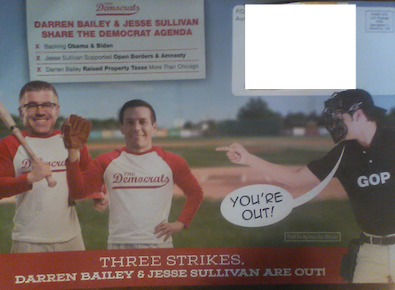
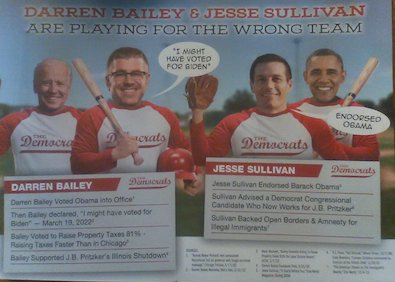
Republican Darren Bailey. An agenda too conservative for Illinois.
100 percent pro-life, Bailey wants to ban abortions and make it illegal here in Illinois.
An NRA member, Bailey opposes sensible gun control and says he’ll protect the Second Amendment at all cost.
And Bailey proudly embraces the Trump agenda, calling into question our elections and fighting for gun owners and the unborn.
Tell Darren Bailey his policies are just too conservative for Illinois.
The governor was asked about the ad today and the ILGOP has a response. I’ll get to those in a bit.
*** UPDATE *** ILGOP Executive Director Shaun McCabe…
“JB Pritzker is a failed Governor and weak man buoyed by his billions in inherited fortune. A lifetime of privilege coupled with obvious desperation has Pritzker believing he is entitled to pick which Republican he will face in the general election. Thankfully, Illinois Republicans are too smart to let Pritzker’s meddling - laundered through the DGA - influence who our nominee is.
The DGA and Governor Pritzker are flailing and it’s important for every person, including the media, to call out this severe case of election meddling.”
Q: Today, there’s a new ad from the Democratic Governors Association you’ve given quite generously to that group. The ad implies that Bailey is too conservative for Illinois. Might that only helped Bailey in the primary to point out his conservative roots?
A: Look, I’m focused on beating the Republicans in November. And so let me start with I’m a Democrat and I’m a Democratic governor. So yeah, I support the Democratic Governors Association, and have for some time. I think everything that’s in that ad is accurate. I mean, he is wrong for Illinois. He is somebody who stands up against Roe v. Wade. He’s somebody who stands up, opposed to advancing the interests of working families across Illinois. And you know, so I’m gonna say so.
Q: [Unintelligible] Are you afraid of Richard Irvin?
A: Are you saying that when I criticize a Republican that that’s… I say when I criticize Republicans, it elevates attention to all the good that Democrats have done in the state and that I as governor have done in the state. I’m not afraid of any of the Republicans. We’re gonna run a tough race against Republicans. We’ve got 5, 6, 6 and a half months I think, until the general election. We’re gonna beat them in November. But we’re just you know, they’re attacking me every single day. The Democratic Governors Association is I think responding to some of that.
Q: [Compares the new DGA ad to the Jeanne Ives ad from four years ago where she is labeled as “too conservative for Illinois”] This looks like meddling by Democrats in the Republican primary. Can you respond to that?
A: You gotta remember that Darren Bailey sued me, you know, a year and a half ago, almost two years ago now, to take mitigations away that frankly, have ended up with people dying in the state of Illinois. Darren Bailey has been attacking my policies since day one. Certainly if he becomes the Republican nominee, he’s gonna be a tough competitor. I’m simply trying to tell everybody who Darren Bailey really is.
Q: [Asked whether he’d rather face Darren Bailey or Richard Irvin, who is the “more moderate” of the two]
A: It’s a mess over there. I have no idea who’s gonna win that Republican primary. I mean, I think there are six candidates running. You know, it’s early. There seem to be more undecided voters there than there are people who’ve decided on somebody.
Q: You personally have contributed to the Democratic Governors Association, you’re behind this ad.
A: I have con… I’ve, you know, I mean, there’s a whole history of my contributing to the Democratic Governors Association, not just in the last the last year, I guess, but also over the course of the time since I began running for governor in 2017.
…Adding… House GOP Leader Jim Durkin, who has endorsed Irvin…
JB Pritzker is so scared to face Richard Irvin in the General Election that he will do anything to win, even if it means trying to hijack the Republican primary to ensure the weakest candidate is his opponent this November. All Republican gubernatorial candidates need to immediately disavow these ads and tell Pritzker to stay out of the primary.
…Adding… Christina Amestoy with the DGA…
“Illinoisians need to know how out-of-touch and conservative Darren Bailey’s agenda is. These ads make it clear: Darren Bailey’s policies are too conservative for Illinois.”
* I agree with Robert Feder, this conflict should have been avoided. The TV stations which participated in this sham should’ve agreed to work things out. They’re being used by the politicians…
In a conflict that should have been avoided, two Chicago TV stations have scheduled live in-studio debates among Republican candidates for Illinois governor on the same night — and neither station is backing down. So on May 24, Richard Irvin, Paul Schimpf and Max Solomon will appear on NBC-owned WMAQ-Channel 5, and Darren Bailey, Gary Rabine and Jesse Sullivan will appear on Nexstar Media WGN-Channel 9. The NBC 5 forum, moderated by Mary Ann Ahern, will start at 6 p.m. and also air on Telemundo WSNS-Channel 44 and TV stations in Peoria, Rockford, Decatur, Quincy, St. Louis and Paducah/Cape Girardeau/Harrisburg. Co-sponsors are the Chicago Urban League, the Latino Policy Forum and the Union League Club of Chicago. The WGN debate, anchored by Micah Materre and Tahman Bradley, will start at 7 p.m. and also air on Nexstar Media news/talk WGN 720-AM and TV stations in Champaign, Peoria/Bloomington, Rockford, Springfield/Decatur, Rock Island/Moline, Carterville, St. Louis and Terra Haute. There’s still a chance for the candidates to appear together when ABC-owned WLS-Channel 7 hosts another live debate June 2, co-sponsored by Univision WGBO-Channel 66 and the League of Women Voters of Illinois. The primary election is June 28.
Aurora Mayor Richard Irvin’s gubernatorial campaign today launched a new ad “Proud” highlighting J.B. Pritzker’s massive funding of Darren Bailey’s campaign for governor.
“J.B. Pritzker is in desperation mode, funding a massive increase in TV ad spending to ensure he gets Darren Bailey as his opponent this November, and Darren Bailey is happily accepting Pritzker’s assistance,” said Irvin Spokeswoman Eleni Demertzis. “Darren Bailey’s candidacy is so weak he needs J.B. Pritzker to do his dirty work.”
BACKGROUND
• The Democratic Governors Association is doubling their ad buy this week.
• Irvin opponents including Republicans, the Democratic Governors Association, and other outside groups have so far spent $22 million, $8 million of that directly against Irvin.
• Governor Pritzker has donated millions to the Democratic Governors Association.
* Rate it…
The DGA had no comment on whether the group is changing up its advertising buy. But I’m told two new ads have started running this morning (or will begin later today).