And these children that you spit on
As they try to change their worlds
Are immune to your consultations
They’re quite aware of what they’re going through
Friday, Jan 15, 2016 - Posted by Advertising Department
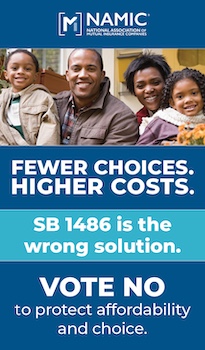
[The following is a paid advertisement.]
Credit unions exist as member owned cooperative financial institutions. Cooperatives are most often formed to support producers such as farmers, purchasers such as independent business owners, and consumers such as electric coops and credit unions. Their primary purpose is to meet members’ needs through affordable goods and services of high quality. Cooperatives such as credit unions may look like other businesses in their operations and, like other businesses, can range in size. However, the cooperative structure is distinctively different regardless of size.
As not-for-profit financial cooperatives, credit unions serve individuals with a common goal or interest. They are owned and democratically controlled by the people who use their services. Their board of directors consists of unpaid volunteers, elected by and from the membership. Members are owners who pool funds to help other members. After expenses and reserve requirements are met, net revenue is returned to members via lower loan and higher savings rates, lower costs and fees for services. It is the structure of credit unions, not their size or range of services that is the reason for their tax exempt status - and the reason why almost three million Illinois residents are now among 100 million Americans who count on their local credit union every day to reach their financial goals.
AFSCME REFUSES TO COMPROMISE DESPITE BETTER COMPENSATION THAN MOST TAXPAYERS
Study Shows State Workers Earn 40% More than Private Sector Workers
NAPERVILLE — Americans for Prosperity-Illinois highlighted a study released in June 2015 by its sister organization, Americans for Prosperity Foundation, showing the total annual compensation, including salary and benefits, for Illinois state government employees is 39.6% higher than the compensation earned by comparable private sector workers.
“AFSCME has shown itself to be wildly out of touch with the financial realities facing the taxpayers who fund their compensation packages, as well as the fiscal calamity facing the state,” said Americans for Prosperity Illinois State Director David From. “This 2015 study shows that taxpayers are being asked to fund compensation packages that they themselves are not able to obtain. Yet, AFSCME continues to demand in negotiations that taxpayers pay for continued raises and unaffordable health care plans for its members, while refusing commonsensical reforms like triggering overtime after 40 hours per week rather than 37.5 hours.”
The Americans for Prosperity Foundation study found that Illinois state government employees receive a benefits package that is on average, three times more generous than is received by private sector workers. In particular, Illinois state employees receive health coverage, retiree health plans, and pension benefits that are substantially more generous than are paid in the private sector. The average Illinois state government employee in the data sample receives an annual salary of $56,919. In addition, Illinois employees receive annual benefits, either received in that year or accrued toward retirement, worth $55,791. A comparable Illinois private sector employee receives a slightly higher salary of $61,017 but annual benefits of only $19,725. Total annual compensation for Illinois state government employees equals $112,710 versus $80,742 for comparable private sector workers, a difference of $31,968 or 39.6 percent. The study author, Andrew Biggs, is a resident scholar at the American Enterprise Institute in Washington, D.C., where he has written extensively on public employee compensation.
“Governor Rauner is right to stand up for the beleaguered Illinois taxpayers,” continued From. “AFSCME has continually pushed pay and pension packages that have contributed to the fiscal challenges facing the state. Rauner’s push for sensible changes and more modest pay increases are necessary and the right thing to do in the interest of taxpayers.”
“This latest inaction from the governor is just another step in his plan to make Illinois a right-to-work state. AFSCME has been able to negotiate contracts with governors for the past 30 years from each party in good faith. Just as with the budget, this governor is sidestepping negotiations and using the back door take employee benefits.
“Governor Rauner has said before that he wants chaos. What he fails to comprehend is the situation he’s creating means mothers and father can’t provide for their families, sick people go without health benefits and more people are steered to state-sponsored benefits instead of being able to provide for themselves. Now the governor’s hand-picked Labor Relations Board will decide whether or not the governor negotiated in good faith. I don’t think the people he appointed will decide against him. Looks corrupt if you ask me.”
Whew.
* Rep. Christian Mitchell…
“Today’s action by the governor is yet another example of him holding working families hostage to his far right political agenda. By walking away from the bargaining table, he continues to show an unwillingness to compromise.
“Public service workers – the people who help keep us safe, provide critical services for our most vulnerable, and respond to emergencies – deserve wages and working conditions that reflect the importance of the work they provide our state. They are often our neighbors, our friends or our family members. Today, Governor Rauner turned his back not just on our public service workers, but our entire state.
“I call on the governor to rejoin the bargaining table, negotiate in good faith, and find a solution that is fair to both our state employees and the citizens of Illinois.”
Despite an ongoing battle with the Chicago Teachers Union (which is backing his primary opponent to the hilt yet again), Rep. Mitchell has been endorsed by the Chicago Federation of Labor, Illinois AFL-CIO, AFSCME Council 31, SEIU Illinois State Council and others.
* Rep. Lou Lang…
“It is extremely disappointing that Governor Rauner has terminated negotiations with AFSCME. Apparently he wants to provoke a confrontation and disruption of state operations. That would mean the loss of vital services relied upon by millions of Illinois residents every day, as well as further instability in the state’s business climate.
“That is why I and other lawmakers sought to enact a fair process for contract resolution through neutral arbitration last fall. Maintaining public services is critical, and such a process needs to become law.”
* Rep. Rob Martwick…
“I am extremely disappointed that Gov. Rauner is using procedural maneuvers in an attempt to force a strike by state workers. This action contradicts his promise to negotiate in good faith. The state workers have negotiated in good faith, have recently offered compromise on wages, health insurance and other important issues. Most importantly the employees have been and continue to be willing to negotiate.
Today, we see Gov. Rauner’s true intentions. His rhetoric during his campaign for governor was about forcing a strike, and today it is clear that he’s been on this path all along. His agreements with other bargaining units cover a very small portion of state employees. Now, along with his failings as governor to propose a balanced budget and find solutions to our state’s financial problems, he is putting Illinois taxpayers at risk of losing access to vital government services, causing more suffering for decent, hard-working families.”
So far, I’ve received no press releases from any Republican legislators or from the two caucus leaders (or the Democratic leaders, for that matter). Keep an eye on this for updates, however.
…Adding… Rep. Kelly Cassidy…
This morning, Governor Rauner declared an impasse in negotiations with AFSCME, the union that represents over 38,000 child protection workers, nursing aides, correctional officers, human service workers and other state employees. Prior to this week, there was no indication negotiations would be broken off, and AFSCME has expressed their willingness to continue to bargain and work to find common ground.
Declaring an impasse creates chaos and is not the path to reaching a fair agreement. Negotiations are inherently difficult, but dedication to working through differences and achieving compromise is critically important.
Our state employees that help to keep us safe, respond to emergencies and care for our most vulnerable deserve more than bad faith negotiations and brutal cuts. Their work is vitally important, and putting in whatever effort it takes to reach a fair agreement is equally important.
I strongly urge all parties to recommit to sincere negotiation and work through the process to achieve compromise. While it is unclear what the result of an impasse could be, a strike or lockout would be devastating. Our social service system has already faced crushing difficulties under the budget impasse, causing many organizations to reduce services or shut their doors. This would further reduce critically important services for our most vulnerable citizens.
* Sen. Dave Koehler…
Having already shutdown the state budget process, Gov. Bruce Rauner is now walking away from labor talks with the state’s largest employee union.
On Friday, his office said there is an impasse in negotiations, even though labor groups claim they are willing to keep working toward a compromise.
“The Governor’s asking for an impasse to be declared by the labor board is disappointing. If this is a step to force a last and best offer on state workers, it will add even more chaos to state government,” said State Senate Dave Koehler (D-Peoria). “This is why I supported SB1229 – to engage both sides into interest arbitration as a way to settle the labor contract with AFSCME. Interest arbitration has been used successfully with police and firefighters in Illinois for many years, and would offer a reasonable way to end this dispute.”
Though the Rauner administration has contended it has reached settlements with all other unions representing state employees, in fact, no settlements have been reached with the six other unions representing more than 25,000 state employees, including state troopers and thousands of child and home health care providers.
“What we don’t need is to force state workers out on strike. The situation with not having a budget is bad enough. Let’s not make things worse,” said Koehler. “Compromise is hard work. I urge all involved to look for ways either through arbitration or mediation, to resolve the differences between the administration and the union.”
According to AFSCME, this past week, the union presented three separate proposals to the State, in which wages and health care were modified to better align with the administration’s framework, and an IDOC proposal was altered to create a joint labor-management committee to improve rehabilitative opportunities for inmates.
* Sen. Linda Holmes…
State Sen. Linda Holmes issued the following statement in response to Gov. Bruce Rauner’s Unfair Labor Practices Act petition to the Labor Relations Board against the largest state employee union.
The move is the first step in the possible declaration of an impasse in negotiations, a move which could force employees to strike.
“Governor Rauner assured the state employees who protect children, provide care to veterans and the elderly, staff our prisons and maintain our infrastructure that he would not walk away from the bargaining table or provoke a strike,” said Holmes, D-Aurora. “We can see now that he does not intend to honor that promise.”
The governor’s office has reached settlements with unions representing about 5,000 state employees, but negotiations have continued with six unions representing more than 25,000 state employees, including the American Federation of State, County and Municipal Employees (AFSCME) Council 31. Among employees still waiting for a settlement are nurses, state troopers and thousands of home health care and child care providers legally defined as state employees for purposes of collective bargaining.
“This is picking a fight at a time when both sides should be working to reach an agreement,” Holmes said. “AFSCME has shown a willingness to negotiate in good faith, and Governor Rauner should do the same.”
*** UPDATE 1 *** Our first leader’s response in either party is from Jim Durkin…
“It is disappointing that after eleven months and 24 bargaining sessions there is no agreement on a new labor contract with AFSCME. Based upon the latest offer from AFSCME, it does not appear that they are sincere about negotiating with the administration and are not willing to make concessions regardless of the state’s ability to pay. I am stunned that AFSCME is still clinging to their 37.5 hour work week when 17 labor unions representing state employees agreed to a 40 hour week with the administration. Governor Rauner is correct in seeking a decision from the Illinois Labor Relations Board to determine whether there is an impasse. Governor Rauner has negotiated in good faith with AFSCME but at some point this must be brought to a conclusion for both taxpayers and state employees.”
“Governor Rauner has clearly demonstrated he can successfully negotiate labor contracts by compromising with unions. He has reached agreement with 17 labor unions which have been ratified by more than 80 percent of union members. He has also shown that he is a true advocate for taxpayers at the negotiation table — something AFSCME may not be accustomed to – but it’s the undisputed reality of our financial crisis.”
*** UPDATE 3 *** Press release…
State Representative Ed Sullivan (R-Mundelein) has expressed his unhappiness at the news Gov. Bruce Rauner has been forced to ask the Labor Relations Board to weigh-in on contract negotiations between his administration and the American Federation of State, County and Municipal Employees (AFSCME). Good faith negotiations agreed to in September appear to have stalled, causing the Governor to ask for the Labor Relations Board to rule on the matter of an impasse.
“It’s very unfortunate that the Governor has had to call on the Labor Relations Board to make a determination about an impasse with AFSCME,” said Sullivan. “Despite many claims to the contrary, Gov. Rauner has worked tirelessly to negotiate in good faith through 24 bargaining sessions and has already come to agreement with 17 other unions representing state employees. AFSCME doesn’t seem to understand that Illinois taxpayers are unable to handle the $3 billion in additional costs they are demanding.”
*** UPDATE 4 *** Cook County Board President Toni Preckwinkle…
“It is my view that leaders of government and its employees should work together for the public good. In our state, this often means reaching a mutually agreeable resolution in contract negotiations with collective bargaining units of government employees.
“Declaring an impasse as a way to pressure public service workers is, in my view, short-sighted and does nothing to engender trust between parties.
“In Cook County, we negotiated and have reached agreements with almost 100 separate collective bargaining units. I would urge the Governor to rethink his position, return to the negotiating table and respect the collective bargaining process.”
* Matt Dietrich at Reboot writes about the governor’s promise of “long-term gain” in exchange for short-term pain as it relates to MAP Grants…
The prospect of “long-term gain” is meaningless to a college student who’ll miss the coming semester because he/she had a promised state grant snatched away. The very concept of long-term gain is a cruel hoax if the end result is a state with universities irreparably damaged by an extended state funding drought and thousands of young people who have given up hope on attending college.
The same applies if this is allowed to happen in the interest of protecting the standard of living of the middle class. Many MAP recipients need college aid because they aspire to get into the middle class.
Rauner on Jan. 27 will deliver his second State of the State Address. If the MAP situation stays as it is today, an awful lot of young adults in Illinois will be a week or so into what would have been their spring semester as Rauner speaks in Springfield.
For them and the thousands of other Illinoisans affected directly and immediately by the Illinois budget crisis, this is no abstract exercise in political theory.
* Mayor Emanuel held his annual Martin Luther King interfaith breakfast today. Things got weird…
Prior to Emanuel’s breakfast, three African-American pastors leading a boycott of the event from religious leaders attempted to hold a news conference at the main entrance of the Hyatt Regency McCormick Place. Their bid to speak to the assembled cameras, however, was delayed by several minutes as a half-dozen angry protesters shouted obscenities at the ministers and claimed they had long been part of the city’s problems.
* Meanwhile…
Cook County Board President Toni Preckwinkle has decided not to show up at Mayor Rahm Emanuel's MLK interfaith breakfast.
* Yes, Democratic state’s attorney candidate Donna More actually said this to the county’s Democratic Central Committee yesterday…
“I’m not here today seeking your political endorsement,” More said in her remarks at party headquarters. “Politics has already done enough to damage our criminal justice system.”
Indignant snorts and half-stifled chuckles — but no audible applause — greeted More after she’d finished speaking.
Well, at least she got her name in the papers. But this is loser talk…
“I think it [not getting the endorsement] does help me, because I have been out there since the beginning of my campaign saying that we need an independent prosecutor, and Miss Foxx claims to be independent, but Toni Preckwinkle’s been doing her bidding since the beginning,” More said after the endorsement.
According to the party, Foxx got 85 percent of the vote.
A year after Gov. Bruce Rauner directed his administration to help local governments start putting their employee salary data on a state website, the information still hasn’t been posted.
A law directing the state to post the local information online was approved in 2012. A year ago Friday, Rauner issued an executive order aimed at getting things moving.
“It was never implemented. This is state law today,” Rauner said then. He blamed former Gov. Pat Quinn for not directing the state agency in charge of the website to get it done.
“No more,” Rauner said at the time. “We are going to get this done.”
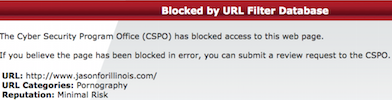
Jason Gonzales is a 41-year-old consultant on a mission to beat House Speaker Michael Madigan, who was elected to the Illinois House before Gonzales was born.
Gonzales filed paperwork to run as a candidate in the March 15 Democratic primary in the 22nd District. Yes, Madigan’s district. He’s trying to beat Madigan in Madigan’s backyard.
He’s a consultant on a mission!
I’m betting that slogan ain’t gonna be on any bumper stickers.
And a friend just sent this screen cap of her browser as she attempted to access Gonzales’ campaign website at work…
* As we’ve already discussed, Senate President John Cullerton’s chief of staff Dave Gross and press secretary Rikeesha Phelon are leaving for the private sector.
* Our esteemed commenter “RNUG” (which stands for Retired Non Union Guy) takes a look at the governor’s latest move on AFSCME…
Reading the documents carefully is an interesting exercise.
Reading the list of concessions, I get a bit confused. While maintaining the status quo may not be a good thing, a lot of what they maintain are concessions are nothing more than agreeing to the status quo. I’ll admit there are a couple of items I would not have conceded. There are some others, from both sides, that just seem plain silly to me. And to the public who will read most of it as gobbly-gook, I’m sure all of it will seem crazy.
I did find the switching between 3rd person and 1st person a bit disorienting in some of the FAQs. That removes the appearance of objectivity that we expect in such answers.
Maintaining the $1000 bonus and 2% increase are the same thing is disingenuous. The amounts are different and will have different financial consequences. I understand they are trying to convey that, with both pensionable, there is a similar Fiscal impact on future salaries and budgets, but they phrased it poorly.
While trying to talk all around it, the State is, in fact, doubling the health insurance cost for the current coverage levels. They also mislead somewhat on the health insurance; if we stick with ACA terms, it would probably be more accurate to call it a gold plan instead of platinum.
From what I can see here, I’m guessing the health insurance is the major sticking point. If I was AFSCME, I would agree to the wage freeze in exchange for status quo or a slight percentage increase in the health insurance. IMO, minimizing the health insurance increases has more impact on the employees than gaining raises.
…Adding… Our “Rookie of the Year” commenter “Honeybear” offers some thoughts…
I just want to ask if posters could be respectful as we go into this labor unrest. This is going to be a horrifying time for a lot of families of public servants, mine included. Most of the folks I work with here live paycheck to paycheck, not because of financial irresponsibility but because life is more expensive. No one I work with drives a luxury car, has a large home, etc. The folks I work with are just solidly middle class working folks. The lucky ones have a spouse that works in the private sector. The ones that are really going to hurt are the younger single workers who are just starting out. God bless them, every one has said they won’t cross the picket. I ask that posters be respectful during this time. It’s horrific to face financial ruin. Please remember that you’re talking about fellow Illinoisans. I had sincerely hoped we wouldn’t be here.
AFSCME and the public-service workers we represent have worked hard to reach a fair agreement with the Rauner Administration, and we’re prepared to continue to do so. We reject the claim that the bargaining process is at an impasse.
It’s regrettable and damaging to the public interest that the governor has chosen a confrontational path. Just as Gov. Rauner is holding the state budget hostage, his “my way or no way” demands of state employees are the obstacle to a fair agreement. Rauner’s demands would force workers and their families pay double to keep their health care—making the Illinois state health plan the nation’s worst for any state workforce—while getting zero wage increase for four years. Instead of fairly compensating all workers, he wants to base bonuses on unknown criteria open to political favoritism. And the governor wants to wipe out protections against irresponsible privatization of public services. These are just some of more than 200 extreme demands the administration has made during this process.
Although we have serious disagreements with the governor’s positions, we reject the administration’s charge that we have not been “seriously negotiating.” The members of AFSCME’s rank-and-file elected bargaining committee have consistently responded to the administration’s demands with fair counterproposals. We’re committed to continuing to do so, and we don’t want disruption of the public services we provide. That’s why last summer we supported the option of both sides going before an independent arbitrator if our differences couldn’t be resolved by bargaining.
Unfortunately, the administration’s ongoing campaign of false claims about these negotiations makes compromise that much harder to achieve. Among their many misleading statements, the administration has never offered AFSCME the same terms as other unions. Some unions received vastly better terms on health insurance than those offered to AFSCME. Many others did not agree to a four-year pay freeze. We know of none who agreed to change hours of work or reduce overtime or holiday pay for employees who go above and beyond to serve. In any event, no union can be forced to accept the terms of other unions that have different circumstances and concerns.
The administration claims to want innovation, yet it has rejected our union’s proposals to work together to improve inmate rehabilitation programs in state prisons, rejected our proposals to ensure nondiscrimination in the hiring of women and minorities, and rejected our proposals for labor-management collaboration to improve public services.
Governor Rauner is wrong to walk away and try to end negotiations. Public-service workers who keep us safe, protect kids, respond to emergencies and care for the most vulnerable want to keep serving their communities, and they want to do their part to reach a fair agreement, but we can’t do it alone.
*** UPDATE 1 *** From the IFT…
100,000 IFT workers stand with AFSCME
WESTMONT, IL – In response to Governor Rauner’s move to declare impasse in negotiations with workers represented by AFSCME, Illinois Federation of Teachers (IFT) President Dan Montgomery issued the following statement:
“Governor Rauner’s actions today prove once again that his priority is forced conflict, not progress. The 100,000 workers of the Illinois Federation of Teachers, some of whom are also state employees, are proud to stand with AFSCME as we face a deceptive and irresponsible Governor willing to use middle-class families, the most vulnerable, and our students as a wager in his fanatical game. Make no mistake: this isn’t in service of financial savings for the state. This is an ideological obsession unfit for a state leader forcing chaos to enact a reckless and unpopular agenda. Our members go to work each day trying to help others, trying to resolve conflict, trying to educate our children. Governor Rauner could learn a thing or two from them.”
In addition to teachers, school staff, and higher education faculty at community colleges and universities throughout Illinois, the IFT includes thousands of public employees under dozens of agencies and statewide officeholders.
*** UPDATE 1 *** From Cinda Klickna, President of the Illinois Education Association…
“The 130,000 members of the Illinois Education Association support the members of AFSCME as they try to negotiate a fair contract with a governor who seeks confrontation instead of compromise.
Rather than negotiate a fair contract, Governor Rauner seems focused on picking fights with the hard-working men and women who provide services to the people of Illinois.
It is shameful that, as he enters his second year as the state’s top constitutional officer, Gov. Rauner remains either unwilling or unable to govern. The people who elected him deserve much better service than they have received from Gov. Rauner.
We urge Gov. Rauner to return to the bargaining table and negotiate a fair contract with the public service workers who keep us safe, protect kids, respond to emergencies and care for Illinois’ most vulnerable. It is what he was elected to do.”
After AFSCME Rejections, Administration Appeals to Labor Board
Labor Board to Determine if Parties at Impasse
SPRINGFIELD – Last week, AFSCME refused to seriously negotiate for the 24th bargaining session in a row on any of the core contract proposals presented by the Rauner Administration.
At the bargaining table, AFSCME made clear that they are unwilling to negotiate any contract similar to the ones agreed to by 17 other labor unions, which in many instances, were ratified by more than 80 percent of union members.
In the press, AFSCME described small changes to their proposal as “a big new offer.” The “big new offer” would end up costing the State billions over the next four years.
In response to AFSCME’s refusal to seriously negotiate, and in accordance with the tolling agreement, the Rauner Administration is now asking the Labor Board to determine whether or not the parties are at an impasse.
“While we have reached innovative and fair contracts with most unions and seen those contracts approved overwhelmingly by union members, AFSCME leadership unfortunately refuses to budge or offer reasonable proposals. We want to reach an agreement with AFSCME members, but their leaders have proven unwilling,” Governor Bruce Rauner said. “Instead of acting reasonable like the state’s other union leaders, AFSCME bosses have said no to merit bonuses, they’ve said no to programs to help minority employees, and they’ve said a 40-hour work week is too long. At a time of unprecedented fiscal crisis, AFSCME is pushing insurance and wage demands that would cost taxpayers more than $3 billion. As a result, we are asking the Labor Board to determine the next steps in the negotiating process.”
AFSCME vehemently rejected the Administration’s proposal to implement merit pay programs similar to ones welcomed by the 5 Teamsters and 12 other Trade Union bargaining units.
AFSCME vehemently rejected the Administration’s proposal that would maintain a 37.5-hour work week, but have overtime rate wages kick in only after completing a 40-hour work week. AFSCME rejected this offer despite the fact it is more generous than the 40-hour work week the Teamsters and Trade Unions ratified. Instead, AFSCME wants to only work 37.5 hours per week and immediately get paid overtime wages for any minute worked over 37.5 hours. They are also demanding double pay for regular holidays and even 2.5x pay for some “super holidays.”
AFSCME vehemently rejected the Administration’s proposal to make it easier to promote minority employees. Other unions welcomed efforts to promote minority employees.
AFSCME vehemently rejected a health insurance proposal that closely mirrors insurance proposals agreed to by the Trade Unions. Instead, AFSCME is demanding insurance that is considered platinum-plus under the Affordable Care Act. They are also demanding taxpayers subsidize over 80% of the cost of these platinum level plans, which is asking to pay silver-level premiums for a platinum-plus plan. Additionally, while the Teamsters agreed to maintain their current wages for the next four years, AFSCME is demanding wage increases that would cost taxpayers nearly $1 billion over the next four years. These demands come after many union members have already seen their salaries double since 2004. Illinois employees are now the third-highest paid in the nation – behind California and New Jersey - and the highest after adjusting for the higher cost of living in those states. Altogether, AFSCME’s wage and insurance demands would cost taxpayers over $3 billion.
Under the signed tolling agreement, the Labor Board must now determine whether the Administration and AFSCME are at impasse. During this time, the parties must adhere to all statutory obligations regarding good faith negotiations while the Labor Board is deciding the case. Quoting from the tolling agreement, this specifically means there can be no “strike, work stoppage, work slowdown, or lockout” until the Labor Board has determined that the parties are at an impasse. The Governor will comply with these and all other obligations regarding good faith negotiations.
We would love to continue negotiating if it meant we could reach a deal with AFSCME. AFSCME’s actions at the bargaining table and their comments over the last week are strong evidence why further negotiation is no longer worthwhile. While the Governor has indicated he now shares the views of his bargaining team that the parties are at an impasse, today’s action simply asks the Labor Board to resolve this dispute.
More from the FAQ…
The tolling agreement that the Governor and AFSCME signed and renewed several times prohibits either side from declaring impasse unilaterally. Today’s action does two things. First, it asks the Labor Board to determine that AFSCME has committed an unfair labor practice by bargaining in bad faith. Second, under the tolling agreement, the parties can ask the Labor Board to decide if they are at impasse, but only the Labor Board can make a final determination. All that the Governor did this morning is to ask the Labor Board to determine if AFSCME has been bargaining in bad faith and whether the parties are at an impasse. Since the parties disagree about whether they are at an impasse, the only tribunal that can answer this question is the Labor Board. […]
During the debate over SB 1229, the Governor committed to continue to negotiate in good faith, and he has kept that commitment. At the Governor’s initiative, the parties extended indefinitely the tolling agreement that was initially set to expire September 30, 2015. That agreement requires both parties to negotiate in good faith. AFSCME has not been bargaining in good faith. […]
The Board will now determine whether the Governor’s filing properly before it and, if so, whether an evidentiary hearing should be scheduled. If a hearing is scheduled, the Administrative Law Judge (ALJ) assigned to this matter will conduct the hearing and, after its conclusion, receive the parties’ written submissions. After the ALJ has ruled on these issues, either party can appeal to the Board. The Board will then issue the final decision. […]
Under the terms of the tolling agreement, it is the Labor Board’s right to decide if the parties are at impasse, whether the State has presented its best and final offer, and when it can be implemented. The Governor will accept the Board’s direction on these questions. It is critical to mention that the last offer made by the State to AFSCME is virtually identical to the agreements signed by 17 other unions. These agreements were ratified in many cases by over 80% of state employees in those unions. This is not a radical or extreme contract as AFSCME has portrayed, but one that is fair, reasonable, and overwhelming accepted by large portions of state government already. It is also reasonable when compared to our neighbors: under the State’s proposal, state workers would continue to make over $20,000 more per year, on average, than their peers in Indiana and Missouri.
* Progress Illinois interviewed former Gov. Pat Quinn this week…
Asked whether he has any plans to run in the next Illinois gubernatorial election, Quinn said he’s currently interested in grassroots organizing.
“I’m not too interested in candidacy campaigns and [all] that. I’m interested in petitions and referendums. That’s what I got started on when I started in Illinois politics 40 years ago. We did the petition drive that set up the Citizens Utility Board. So I’d like to do a referendum in Illinois this year, at least in the Chicago area. That gives people a chance to open up the government to more citizen participation.”
“There’s a lot of work to be done. This is the year to get it done,” he added. “We can’t let someone who stands in the way of progress, Bruce Rauner, stop the people of Illinois from getting progressive, fair government. And I want to say to the 130,000 students who are looking for their scholarship that they were promised, but it’s being denied by the governor, that we’re not gonna take that sitting down. We’ve gotta organize.”
So, he’s interested in running a petition drive, not in running for governor, then in the next breath blasts Rauner and brings up MAP Grants - always one of his pet programs.
* Until a year ago, Tyrell, 62, was the COO of Rahm Emanuel’s public school system…
Governor Bruce Rauner today announced today the Central Management Services Director Tom Tyrrell will be transitioning out of state government.
Governor Rauner has designated Mike Hoffman as the Acting Director of CMS. Hoffman is the current Chief Operating Officer of the Illinois Department of Commerce and Economic Opportunity (DCEO).
On Broad Street, a steady stream of people are swinging into a coffee shop serving lattes and elaborate scones. They can sip their drinks while hitting up the record store and eyeing instruments at a shop where Wilco buys gear. Or they can walk up the street for a haircut from a celebrity stylist, turn onto Main Street to grab a beer at one of the three craft breweries in town, then tuck into a chickenless chicken salad sandwich at the local vegan-friendly cafe.
Only a taxidermy parlor with a moose on its roof makes it plain that this isn’t Wicker Park but a small northwest Indiana town, population 16,500, just south of Gary, 35 miles from the Loop.
Griffith, with its suddenly cool six-block downtown, has a story that starts with the familiar Rust Belt tropes—a rail town hit hard by the rise of trucking in the ’70s, then hit again as area steel mills declined. Without jobs to keep young families in town, Griffith shuttered one of its four elementary schools—the one anchoring its downtown—in 2011. But then the story changed.
A $2 million shot in the arm and a $600,000 facade program triggered a reinvention straight out of a city planner’s dreams. Today, Griffith’s downtown is filled with young entrepreneurs building the kind of independent businesses that attract 20- and 30-somethings. In 2007, the vacancy rate downtown stood at 60 percent. Now it hovers around 7 percent.
Good on both Griffith and Indiana.
We don’t have to exactly copy this example, and it obviously can’t work everywhere because there are only so many hipsters to go around and only so many forgotten places that close to the Loop.
But we need more innovative thinking like this in Illinois. Everywhere in Illinois, including in the governor’s office. Enough with the anti-union stuff. Move the state forward.
* Gov. Bruce Rauner’s work on criminal justice reform has been highly commendable and even historic. He attended his criminal justice commission’s meeting yesterday…
Commissioners are still working to reach Rauner’s goal of reducing Illinois’ inmate population by 12,000 men and women over the next decade. They have delivered their first set of recommendations, and Rauner told commissioners he was excited about the report, calling it “excellent.”
“What I can guarantee you: I will work tirelessly to make sure this isn’t just something that just gathers dust,” he said. “I’m going to implement this.”
Rauner is the first sitting Illinois governor to have visited state prisons in years. He said they’re harsh, hostile places — but they don’t have to be that way. […]
Rauner said “everyone makes mistakes” and “everyone deserves a second chance.”
The group suggests more training for officers at every level, especially when dealing with race.
The Governor applauds that suggestion.
“I don’t think there’s any question that there’s bias in the system. I mean, the system is built by human beings and human beings have biases. We all do and some of them are more harmful than others and we’ve got to be honest about it and it’s really hard to be honest about it. This is a tough set of issues, but to serve the people of Illinois well we have to talk about it and not be afraid to talk about it,” said Gov. Rauner.
* But I wish he’d put as much thought into other vitally important issues as he obviously has on this one...
“I think everyone’s big concern is, as we do this, some of these things are going to require resources, and resources means money, and I think that’s just a point of anxiety,” said Brendan Kelley, St. Clair County state’s attorney.” […]
“There’s no question that sometimes to save money in the long run requires spending more money in the short run, and in Illinois, we haven’t been doing that for years,” Rauner said. “We’ve always taken the short-run decision, what cuts costs now and not what saves significant resources over a longer term. We’ve got to change that mindset.”
The governor added that the goal is to move the corrections system away from simply housing offenders and keeping them away from the public, and to focus on effective rehabilitation, such as substance abuse training, mental health treatment and counseling to ensure those offenders don’t make the same mistakes again.
“If we can implement (the commission’s) recommendations, I firmly believe that we can have the people of Illinois safer,” Rauner said. “I believe we can save taxpayer money, and most importantly, I believe we can help those who made mistakes lead productive lives and come back as productive, full citizens who are enhancing the quality of life for everyone in all of our communities around Illinois.”
* A Lutheran Social Services of Illinois internal memo…
January 14, 2016
Dear LSSI Staff Member,
Recently we asked you to contact your state legislators and Gov. Rauner to urge them to pass a state budget. Thank you for your continued advocacy on LSSI’s behalf.
This January, Illinois entered its 7th month without a state budget. No one anticipated a budget impasse of this length. LSSI is in the challenging position of responding to the deadlock’s impact on our ability to continue providing services to those in need. At this time, the state owes us more than $6 million for services delivered.
Over the past months, LSSI has been using a bank line of credit and available resources from our Cornerstone Foundation. As we worked with the state regarding nonpayment for services provided, LSSI leadership began exploring options to restructure our programs and contain costs. As we finalize plans for a restructured organization, we will keep you informed in the coming weeks of the changes this will bring. I can assure you we have taken these steps with careful deliberation and prayerful consideration.
We urge you to contact your legislators and the governor’s office to let them know how critical it is for them to pass a state budget.
During these challenging times, we are grateful for your continued prayers and support of our mission.
In Faith,
Mark A. Stutrud
President and CEO
It’s no secret that I’m a big fan of this group, which serves 97,000 people across the state. It cannot be allowed to whither on the vine.
Click here for information on LSSI’s good works. Click here to donate your money or your time. Thanks.