
|
Union defers half of next year’s raise, but preserves pension bump
Friday, Dec 10, 2010 - Posted by Rich Miller * AFSCME agreed to defer a pay increase in order to help save the state some cash in the coming fiscal year, but the union also got a retirement bump of sorts for some of its members. From the SJ-R…
The union pledged during the campaign to find $100 million in savings in exchange for a highly controversial agreement not to lay anyone off or close any state facilities until the end of June, 2012. They announced $10 million in savings when the agreement was announced. That raise deferral (including Social Security savings) adds up to another $30 million. Another $20 million will be saved this way…
* But, as mentioned in the lede, the union also preserved a pension bump for state workers who agree to retire at the end of calendar year 2011. If state employees pledge to retire at the end of 2011, they get the full 4 percent raise next July 1st, instead of just 2 percent. The workers have to make their decision by May 1st. * According to the agreement, the union is also discussing these ideas with the administration to arrive at the $100 million cost savings… 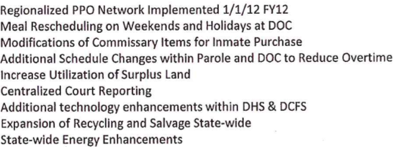 Thoughts?
|
















- Anonymous - Friday, Dec 10, 10 @ 10:26 am:
Maybe I am misunderstanding the deal– how would deferring the raise save anything? I can see that eliminating the raise is true savings, otherwise it is just delaying payment creating a future liability. No?
- lakeview - Friday, Dec 10, 10 @ 10:32 am:
People are getting 4% raises in a deflationary environment? The taxpayers are so screwed.
- Team Sleep - Friday, Dec 10, 10 @ 10:34 am:
Yesterday, I mentioned that AFSCME’s lobbyists obviously did a good job in 2010 to protect the interests of their members. This is a clear example of their effectiveness. I worry how many people will take advantage of the early retirement clause in the agreement. That will hit the state doubly hard. My guess is that an early retirement offer will be floated early in the session as a way to alleviate some short term costs. However, that also stokes the fear of possible mass buyouts and more pension underfunding.
The state really needs to look at the compensation of high-level university official retirement compensation and health insurance.
- cassandra - Friday, Dec 10, 10 @ 10:35 am:
It looks promising but without a financial degree, how do we know? When it’s AFSCME vs. the Quinn admin in any negotiation, you have to assume AFSCME has the upper hand–in smarts and in power (volunteer and fiscal support during the campaign). AFSMCE negotiators do this for a living. Quinn doesn’t and neither do his top staff. I can’t help but think that taxpayers will be at a disadvantage when Quinn is negotiating with any public employee union.
The big money, of course, will be at stake when the negotiations start for the contract which expires (along with that no-layoff agreement)
in mid-2012. For reasons above, I am not optimistic that the taxpayers will get a good deal. Illinois state employees, like public employees nationally, will continue along the path to being a special economic class with
pay, benefits, lack of accountability and extraordinary job security which are vanishing from the private sector in a global economy. And the rest of us will be paying, for example via Quinn’s income tax hike. Don’t assume those billions will be going only to “education.”
- Commonsense in Illinois - Friday, Dec 10, 10 @ 10:46 am:
Okay, I’ll take the bright side of this…every dime helps, but it’s gonna take a whole bunch more dimes. I’ll be interested to see if cutting back on overtime with new hires will be a real savings or simply a book savings.
- wordslinger - Friday, Dec 10, 10 @ 10:47 am:
==— Reducing mandated overtime in facilities that are open 24 hours a day, seven days a week by hiring more staff.
– Three contracts that have been out-sourced will be brought in-house for state employees to do.==
Hiring more staff and bringing in more work will save money? The devil’s in the details. We’ll see.
Also, whats “increased utilization of surplus land?” Raising Illinois Ditchweed for medicinal marijuana?
- Rich Miller - Friday, Dec 10, 10 @ 10:53 am:
===People are getting 4% raises in a deflationary environment? ===
So, you prefer the deflationary environment?
- dupage dan - Friday, Dec 10, 10 @ 10:54 am:
I’m don’t see that an early retirement program is being offered here. The agreement only makes reference that those folk who decide to retire by a certain date will receive the whole raise, presumabely to insure that their final salary is at the highest possible point for a period before their retirement, boosting their retirement salary as much as the contract would allow. I didn’t read any language in the agreement that talks about people being offered some type of early retirement. Correct me if I’m wrong.
- Rich Miller - Friday, Dec 10, 10 @ 10:55 am:
DD, you are not wrong. There is no early out here. But there is a bump.
- Rich Miller - Friday, Dec 10, 10 @ 10:56 am:
===how would deferring the raise save anything? ===
It’s a fiscal year savings.
- Anonymous - Friday, Dec 10, 10 @ 11:13 am:
“It’s a fiscal year savings.”
I would gladly pay you Tuesday for a hamburger today. -Wimpy
- Anonymous - Friday, Dec 10, 10 @ 11:15 am:
Which contracts are being outsourced? Seems to be this a plus for the State and for AFSCME. Each got something and gave up something. This is what negotiations is all about. And when noone is really happy means good deal.
- Yellow Dog Democrat - Friday, Dec 10, 10 @ 11:19 am:
@Rich -
AFSCME members won’t have their retirements diminished as a result of this deal, but I don’t think that’s the same as a bump.
The scheduled pay raises are part of a collectively-bargained contract. If they haven’t carved out language that preserved pensions of existing members, it would have opened the deal up to challenge under the State Constitution.
Now that unions have stepped in to provide $50 million in savings to the taxpayers, I eagerly await the announcement from the Illinois Chamber of Commerce that their members are prepared to give up some of their taxpayer subsidies. One can only assume this means that Tom Cross and Christine Radogno are now willing to consider a tax increase.
- dave - Friday, Dec 10, 10 @ 11:20 am:
how would deferring the raise save anything?
Ummm… if you don’t give someone a raise, you don’t have to pay them the raise. If you don’t have to pay the raise, you save that money.
- Jim - Friday, Dec 10, 10 @ 11:28 am:
The entire problem is that even if the union does save the $100M it is a one-time savings and the years after the savings will be right back at the prvious spending level. Layoffs would be permanent savings. I don’t want to see anyone laid off in this hiorrible economy, but the only choices are to raise taxes, layoffs, and/or spending cuts and city and state government don’t want to do any of these.
And, umm, dave, deferring the raise just makes the raise due in 2012, and the cylc continues.
- cermak_rd - Friday, Dec 10, 10 @ 11:50 am:
You know what, Cassandra? One of the reasons I support state employee unions, despite being a private sector employee, is that I’m ticked off over the changes in the private sector that have occurred due to globalization. So for me, supporting the public employee unions is one little way I can lift a finger to the grand capitalists!
- Yellow Dog Democrat - Friday, Dec 10, 10 @ 12:00 pm:
@Jim -
Illinois state government has already undergone massive payroll cuts. We now have the fewest number of state employees per capita of any state in the nation.
For example, many child protection case workers now have as many as 1100-1400 open cases on their desk. That gives them about 10 minutes per case per month.
Besides, lay-offs in an already bad economy only make matters worse, driving up unemployment rates, state spending on unemployment benefits, and crippling fragile local economies in downstate economies where the economy depends on spending by public employees.
There are a handful of options left for spending cuts, but the Republicans are adamantly opposed to them:
Closing $1 billion in corporate tax subsidies;
Eliminating or reducing the retailer reimbursement in the sales tax;
Eliminating or reducing the the local reimbursement in the sales tax.
Combined, these options could save the state Billions.
At the end of the day, every independent budget expert admits that even after you enact every conceivable budget cut, its still going to take changes in the tax code to balance the state budget.
- Yellow Dog Democrat - Friday, Dec 10, 10 @ 12:01 pm:
P.S. If that $50 million in savings is injected into the pension system, this is a CLEAR net win for the state.
- Rich Miller - Friday, Dec 10, 10 @ 12:11 pm:
===We now have the fewest number of state employees per capita===
Actually, we’re second-fewest. Believe it or not, we had the fewest before Ryan’s early out plan.
- RetiredStateEmployee - Friday, Dec 10, 10 @ 12:27 pm:
===People are getting 4% raises in a deflationary environment? ===
By what measure to you consider this to be a deflationary environment? The CPI is widely known to be a joke. Energy and food prices are increasing and I don’t know anyone who can get by without those.
- Mike Ins - Friday, Dec 10, 10 @ 12:35 pm:
Deck chairs, meet Titanic.
- Cincinnatus - Friday, Dec 10, 10 @ 12:43 pm:
Someone with a good spreadsheet can run the numbers, but deferring a 2% raise for seven months will definitely save money. But then a second 2% raise kicks in which compounds on the first raise which has the effect of an overall raise of greater than 4% (unless the agreement uses the same single baseline). So there are a number of months after the February date where the money saved/lost will equal the amount of money paid/received. After that date, the two 2% raises result in higher payroll costs.
- Decaturguy - Friday, Dec 10, 10 @ 12:50 pm:
Let’s see. Over next 14 months a state that’s broke will give over 90% of its workforce a 8.25% raise. How do taxpayers like that! My community has over 12% unemployment.
- Reformed - Friday, Dec 10, 10 @ 1:05 pm:
If they retire they get 7% not 4%. the additional % comes from the previous years wage deferral.
- cassandra - Friday, Dec 10, 10 @ 4:21 pm:
That figure for child protection worker caseloads doesn’t sound right but if it is correct then there is some serious mismanagement going on. There have been no layoffs at DCFS (or any state agency) in recent years, and as far as I know there is no hiring freeze.Nor did the budget take much of a hit. DCFS since the Jess McDonald years has held national accreditation, which includes caseload limits for individual caseworkers; there is also a consent decree with respect to DCFS caseloads pusuant to a lawsuit filed in the 80’s by the ACLU. If these caseload numbers are correct, somebody should notify the accreditation agency and the ACLU immediately. They can petition to reopen the decree.
Not only that, the Director (a Blagojevich appointee) should be fired or placed under very tight probation. Now that the election is over, it’s time for a little Quinn admin to start demanding a little accountability from its highly paid agency managers. Even if they do have political connections.
- Tobor - Friday, Dec 10, 10 @ 4:24 pm:
What some of you are saying,and yes this is going to be rather rude, since some of you took a beating without fighting back so should the State workers.