* 2:13 pm - House Judiciary Committee Chair Elaine Nekritz just announced that there would be no vote on an assault weapons ban during the lame duck session.
* If you haven’t yet, you ought to read Bernie Schoenburg’s interview of retiring state Sen. Larry Bomke (R-Springfield). The last half of the story is about Bomke’s impressions of the four governors he’s worked with over the years. For example…
Bomke thinks that Democratic Gov. Pat Quinn is “just a really nice guy.”
“When he does things … he honestly believes what he is doing is not in his selfish interest, but in the best interest of the state,” Bomke said. Still, Bomke said of Quinn, “I don’t think that he understands the process well enough to get things done.
“We almost need a Jim Edgar/George Ryan clone combination,” Bomke said, “George Ryan, who knew the politics, and Jim Edgar, who understood government.”
Former Illinois Gov. George Ryan could be released from federal prison at any time, according to Federal Bureau of Prison spokesman Chris Burke, and it’s even possible he could go directly to his Kankakee home.
However, Burke said it is extremely rare for a federal inmate to go directly from federal prison to home.
“Almost every inmate released spends at least a short amount of time in a halfway house,” Burke said
Imprisoned Governor George Ryan has yet again been nominated for the Nobel Peace Prize.
University of Illinois College of Law Professor Francis A. Boyle nominated the retired governor first in 2003, following Ryan’s landmark decision to commute all death sentences in Illinois to life in prison. The nominations have continued annually since then.
“We are extremely disappointed that Governor Quinn and legislative leaders have shut out the voices of workers and retirees in their latest talks on pension legislation. Instead, once again, Illinois politicians are preparing to use unconstitutional schemes to ruin the retirement security of hundreds of thousands of Illinoisans while ignoring the state’s revenue problem.
If the General Assembly rams through last-minute legislation that violates the Illinois Constitution, we are prepared to sue to protect the hard-earned benefits of teachers, caregivers, corrections officers, university employees, and others.
It doesn’t have to be this way. The coalition has put forth a real plan to fix the state’s pension funding problem and called to meet with lawmakers at a mid-January summit. Our plan — to create an ironclad guarantee, curtail corporate welfare by closing tax loopholes, and share in the sacrifice by asking employees to pay more into the pension systems — remains the only fair, constitutional, and sustainable proposal on the table.”
* Rep. Jim Durkin might wish this week that he’d kept quiet instead of talking to his local paper late last week…
At least one suburban legislator is rankled by last-ditch efforts to pass laws on controversial issues during the lame duck session in Springfield.
State Rep. Jim Durkin, R-82nd, Western Springs, said moves to rush through laws banning assault weapons and allowing same-sex marriage are unfair to voters.
“I’ve had it with the 11th hour passage of bills which do not get the thorough vetting before the public and members of the legislature,” Durkin said. […]
“I have been in the minority party for a great amount of time, and it’s sickening to watch this process play out,” he said. “It should disgust the voters in Illinois.”
Durkin said he intends to sponsor a bill insuring that a super majority vote, rather than a simple majority of 60, is required to pass bills in the House after May 31, to prevent lame-duck session abuses.
“This is just wrong. The fact that it’s being done in the dark of night at a speed, which is nearly impossible for a thoughtful debate and input from the public,” he said.
I happen to like Jim Durkin a lot and have a great deal of respect for the man. He’s a good state legislator, a decent man and is a reasonable voice in his caucus.
* But what the heck is Rep. Durkin gonna do if a pension reform bill suddenly pops up on the floor in the next day or two and an immediate vote has to be taken - without much deliberation and with little to no public input?
* On the surface, Durkin’s idea has plenty of merit. There is no doubt whatsoever that the Constitution’s lame duck loophole has been overused.
But the reality is that sometimes you just gotta do what you gotta do when you’re in leadership. The hard truth is that being allowed to pass bills with a mere simple majority after January 1st helps stuff get done around here. Sometimes the Republicans don’t like that, as with the income tax hike (although they aren’t complaining about the new money). Sometimes, they do, like when they rammed through a bunch of stuff in the 1997 lame duck session - or now, with pension reform.
There’s no way they can pass pension reform with three-fifths majorities when they’re gonna have a whale of a time trying to find simple majorities this week.
When some House members crafted their own pension reform bill, Gov. Pat Quinn insisted it had to undergo a vigorous review by actuaries to see how much it would save.
It took a couple of weeks, but it was reviewed and the results were made public before Christmas, giving legislators time to digest them before coming back to Springfield.
Now Quinn is talking about yet another plan that he thinks should be approved by lawmakers in three days. The House returns Sunday, and the last day to do anything before new legislators are seated is Tuesday.
Hopefully, the actuaries were given this plan long enough ago that they can verify in the remaining three days that all of the savings are legitimate.
If so, they will have had more time to review it than the people who are expected to vote on it.
And remember the last time the Legislature quickly rammed through some pension reforms? Even some of the reformers now admit mistakes were made that will need to be corrected.
Anyone confident they’ll avoid that problem if a new reform plan is rushed through again?
* Mark Brown thinks that Speaker Madigan will either get a pension bill done, or do whatever he can and let the blame fall elsewhere…
There were no smiles on the faces of anyone emerging from Saturday’s closed-door summit of Gov. Pat Quinn and legislative leaders on how to solve the state’s pension funding woes.
That was the bad news for those hoping for an agreement.
The good news was that House Speaker Michael Madigan told reporters afterward that he wants a pension bill passed by the time the Legislature finishes its lame-duck session Tuesday night.
Past performance tells us that when Madigan is of a mind to pass a piece of legislation, he will pass that piece of legislation. […]
When the speaker speaks, you can take him at his word. But you also have to look for the nuance.
My interpretation: He was a little frustrated by whatever transpired over the previous two hours but will apply himself to forging a deal. If things go south this time, we’ll have a hard time blaming him.
Gov. Pat Quinn and Illinois’ legislative leaders met Saturday but couldn’t reach a deal to resolve the state’s pension mess.
“Unfortunately, there are still differences among the participants, and my recommendation is we move beyond the differences and just find a bill that we can pass so there will be some action taken on the question of funding for these pension systems,” House Speaker Michael Madigan said.
He described the meeting among legislative leaders and the governor at the Thompson Center as “productive” and said he remains hopeful that a pension deal can be struck before the lame-duck legislative session’s scheduled conclusion Tuesday.
Asked what he meant by “productive,” Madigan (D-Chicago) joked, “Well, we weren’t throwing punches at each other.”
Senate Minority Leader Christine Radogno (R-Lemont) was less enthusiastic.
“It was a marginally productive meeting,” Radogno said. “We still obviously have a long ways to go.”
* Most every other pension story was covered yesterday, but the Trib’s piece had some important stuff again. For instance…
Cullerton’s position is that a change in public pensions must be accompanied by a choice for employees, such as opting between keeping the cost-of-living increase and giving up health care, or taking a smaller annual increase but keeping health benefits. Cullerton staunchly believes that his approach is the only way to work around the state Constitution’s guarantee that a person’s pension cannot be diminished once it is set. But not everyone agrees with his approach.
Following the meeting, Cullerton, in a statement from an aide, said he was “encouraged,” but still urged the House “to follow the Senate’s lead.” Radogno, however, called the meeting only “marginally productive” and noted Democratic leaders were at odds over whether any pension legislation should include changes being sought by Mayor Rahm Emanuel to deal with Chicago’s municipal pensions.
“We will vote on what Democrat leaders decide to put up on the board,” said Radogno, who did not take questions. “And some of the issues, they can’t even decide if Chicago is going to be in or out of this program. So they have thinking to do before we have an opportunity to vote.”
* The Tribune editorial board sounded almost reasonable on pensions, for a change, when it endorsed the new Nekritz/Cross reform proposal…
In sum, this plan provides a substantial and relatively swift restructuring of the pension systems. It is a strong proposal.
It will run into predictable resistance from organized labor. It might run into resistance from Sen. Cullerton, who has pressed the House to vote on a much more limited pension reform package approved last year by the Senate.
We respect that Senate effort, but we strongly encourage Cullerton to reach agreement with the other leaders and the governor on legislation along the lines of what has been negotiated by the House members.
One more encouraging sign: Republicans, who have been highly suspicious of Democratic efforts to shift future pension costs to local government, are warming to this compromise. They have helped to craft the product. It is likely that the shift of future pensions costs to local government will be separated and negotiated later, in the spring.
Will wonders never cease?
* Roundup…
* Pensions affect Illinois college scholarships: Augustana Vice President of Enrollment Kent Barnds said the uncertainty surrounding the MAP program had led the college to try and recruit more students from outside Illinois.
Officials locked down one of the state’s maximum-security prisons Friday morning, but not because of an outbreak of violence.
Rather, the movement of prisoners at the Stateville Correctional Center was limited from 7 a.m. until 3 p.m. because a significant number of prison guards called in sick.
It was not clear Friday why there were so many absences, but Illinois Department of Corrections spokeswoman Stacey Solano said it was “unusual” that 58 workers were unable to report for their shift. […]
The incident came a week after more than 100 Stateville prisoners were reportedly bed-ridden by norovirus, a highly contagious flu that apparently spread through the Crest Hill facility.
It also came a day after hundreds of correctional officers and state retirees had rallied in the Capitol against possible cuts to their pensions.
Practically everybody I know has been sick lately. Then again, practically every AFSCME member I know is supremely upset at the governor right now.
* The absences also came a day after this bill passed, but was held up by a parliamentary procedure…
A bill restricting the number of state employees who can join unions isn’t going to Gov. Pat Quinn right away.
Shortly after the Senate gave final approval to the bill Thursday night, Sen. Don Harmon, D-Oak Park, filed a motion to reconsider the vote, a technical step that keeps the bill from being sent to Quinn.
Quinn has said he will sign the bill if it reaches his desk.
“I still believe negotiating a fair compromise with all the stakeholders is preferable to forcing a legislative solution,” Harmon said. “I’m hoping the Senate action will reinvigorate the negotiations.”
* The leaders are meeting again today to discuss pension reform. The House convenes this afternoon at 5 o’clock, but committees start at 2, so we’re restarting the blog now. Blackberry users click here…
Coming out of the meeting, which lasted less than two hours, leaders from both parties said they better understood one another’s positions but that there were still many obstacles to producing a proposal to take to lawmakers before the end of the current General Assembly on Wednesday.
“I’m just anxious to pass a bill,” said Democratic House Speaker Michael Madigan, who has agreed to drop for now his proposal to shift pension costs for public school teachers from the state to local districts, an idea that has been a major point of disagreement in negotiations and the reason reform efforts collapsed in last spring’s legislative session.
“There’s no resolution today. We’re going to continue to work throughout the weekend and right through Tuesday of next week to try and move legislation that will solve this funding problem of Illinois pension systems,” Madigan told reporters following the meeting.
Democratic House Speaker Michael Madigan of Chicago called the meeting “productive” and said work would continue to try to meet the Wednesday deadline, but acknowledged serious differences remain. Asked why he thought progress was made, Madigan joked, “Well, we weren’t throwing punches at each other.” […]
Asked Saturday what the impediments are to reaching a deal, Madigan basically recited each of the proposals. “It’s all the issues that you’ve all heard, and the question is, ‘Can you bring these all together and get a bill that can pass and be signed by the governor?’” the House speaker said.
Following the meeting, Cullerton, in a statement from an aide, said he was “encouraged,” but still urged the House “to follow the Senate’s lead.” Radogno, however, called the meeting only “marginally productive” and noted Democratic leaders were at odds over whether any pension legislation should include changes being sought by Mayor Rahm Emanuel to deal with Chicago’s municipal pensions.
“We will vote on what Democrat leaders decide to put up on the board,” said Radogno, who did not take questions. “And some of the issues, they can’t even decide if Chicago is going to be in or out of this program. So they have thinking to do before we have an opportunity to vote.”
* The leaders are meeting today to talk about pensions. So, while you need to keep in mind that this could all change once the leaders get together, here’s the outline of what’s being proposed…
* Only the first $25,000 of pension benefits for teachers, university employees, state workers and lawmakers would be subject to a compounding, 3 percent annual cost-of-living allowance. For members of the State Employees Retirement System who also receive Social Security benefits, the amount subject to a COLA would be capped at $20,000.
* All COLAs might be paused for the next five to six years (that detail has not been finalized). COLAs also would not be paid until a retiree reaches age 67.
* Employee contributions to the pension systems would increase by 1 percentage point on July 1 and another 1 percentage point on July 1, 2014.
* An employee’s pension would be based on his or her salary upon passage of the bill or the wage base for Social Security, whichever is higher.
* The bill would require certain amounts to be transferred from the state’s general revenue fund to the pension stabilization fund, presumably to address the current $96 billion owed to the pension systems. If the state attempts to skip payments, the retirement systems could go to court to enforce the law. This provision is sought by public employee unions to prevent future pension crises.
* A cash balance plan would be created for employees who began work after Jan. 1, 2011.
A Cullerton spokeswoman said the House should vote on the Senate-passed bill because it’s the best way to ensure something gets on Quinn’s desk by the Wednesday deadline.
“If there is a more comprehensive plan to address the other systems within that same framework, the Senate president would be open to that,” spokeswoman Rikeesha Phelon said.
Rep. Elaine Nekritz filed House Amendment No. 9 today to Senate Bill 1673. It exactly mirrors the language of House Bill 6258, which she and other members had filed a few weeks ago. She filed it to this Senate Bill that’s in the House because the clock has expired on the ability for House Bill 6258 to pass both chambers by Jan. 9.
It appears Senate Bill 1673 will be the vehicle for any pension reform deal moving forward — the amendment Elaine filed today will not actually be the language that moves forward. A hearing on the bill is set for Monday, Jan. 7, at 10 a.m. in the House Personnel and Pensions Committee, which Elaine chairs.
The legislative leaders and governor are meeting tomorrow to talk about the framework, and Elaine is encouraged by the progress made today and pronouncements from Gov. Quinn, Speaker Madigan and Leader Cross. We’ll keep you updated as we know more. [Emphasis added.]
* I don’t usually share usage stats for this blog because I don’t sell my advertising based on the quantity of eyeballs, but the quality. Also, I kinda like to keep that data to myself. But I thought I’d tell you about a few stats today.
The number of unique visitors to this blog rose over 10 percent last year compared to the year before. We now have over 40 percent more visitors to this blog every day than we did in 2008.
The 2012 stats show we had 9 million more total page views last year than we did in 2010. Every time I think it can’t get any bigger, it does.
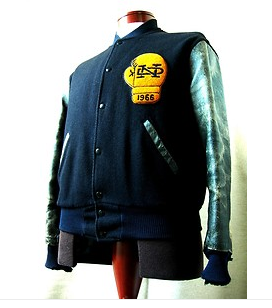
* My brother Denny is a vintage clothing dealer in California. He’s selling a 1966 Notre Dame letterman’s jacket, size 40/42, on Ebay. This thing is way cool and if you buy it now you can have it delivered in time to wear it to Monday’s BCS National Championship game.
* Gov. Pat Quinn said today that House Speaker Michael Madigan has agreed to defer the pension cost shift idea to a later date so that the rest of pension reform can be dealt with.
That’s some major movement. But a pension reform bill is still not gonna be easy.
Quinn appeared with legislators from DuPage County and DuPage County Board Chairman Dan Cronin (a former legislator) today to announce that they were working toward an agreement. Here’s the list of the other attendees…
Rep. Darlene Senger, Rep. Chris Nybo, Rep. Michael Fortner, Rep. Jim Durkin, Rep. Michael Connelly, Rep. Patti Bellock, Rep. Franco Coladipietro, Rep. Randy Ramey, Rep. Dennis Reboletti, Sen. Ron Sandack, and Sen. Tom Johnson.
Quinn said he was “real optimistic” that a pension reform bill can be passed by Tuesday.
Details to come.
*** UPDATE *** You can watch Quinn’s press conference by clicking here.
Gov. Pat Quinn and legislative leaders plan to meet Saturday to try to come up with a compromise to fix financially broken government worker pension systems as the clock ticks down toward the end of the lame-duck session.
The talks are scheduled as House Speaker Michael Madigan has indicated a willingness to explore backing off a provision that would shift the pension costs for suburban and Downstate teachers away from the state and onto local school districts. Critics fear such a move would result in property tax increases.
A Madigan spokesman today indicated the governor and the speaker have been talking.
“Madigan said, ‘I told him to pass whatever he can pass,’ ’’ Brown said Madigan told Quinn. “If that means we defer the cost shift for some other day, to get other things passed, we’ll try to get other things passed.”
*** UPDATE 3 *** Rep. Elaine Nekritz has filed a pension reform proposal. Click here to read it.
* The Daily Herald’s Mike Riopell posted this on his blog the other day…
Today we add another reporter to the Springfield bureau team until the end of lawmakers’ spring session in May … or however long it takes them to approve a budget this year.
Doug T. Graham is a graduate student at the University of Illinois Springfield and an alum of Eastern Illinois University.
We recently gave some solid advice to incoming legislative freshmen, so I thought maybe we could do the same for the new crop of Statehouse PAR interns.
* The Question: What advice would you give these new Public Affairs Reporting interns?
On guns, the Senate Wednesday advanced out of committee two bills that would ban an array of automatic and semi-automatic weapons plus the ammunition they need to operate.
But the measures withered under a furious pushback from the National Rifle Association and other gun-rights advocates, who told the Sun-Times Thursday that neither measure had more than 27 or 28 votes in the Senate, shy of the 30 needed for passage.
Cullerton acknowledged the votes weren’t there for either gun bill but said “we learned about potential ways to enhance those bills. Those bills, of course, will be taken up in the next General Assembly.”
Sen. Dan Kotowski, D-Park Ridge, said the failure to call the gun bills also was because some supporters were absent.
“The reality is, in order to get it passed, we have to have people in their seats,” he said.
Gun rights supporters said the assault weapons ban, as written, would outlaw the sale of far more guns than military-style assault weapons. A second bill to ban the sale of large-capacity ammunition magazines would be unworkable, they said.
* But it’s not over. yet House staff has reportedly contacted the NRA to let them know that Gov. Pat Quinn and Mayor Emanuel will attempt to push a gun and magazine ban when the chamber reconvenes for the lame duck session this coming Sunday.
Senate President Cullerton has said he will call his chamber back on Tuesday if there’s anything to do. But attendance issues are going to be a problem then as well.
- The Illinois State Police would be given full control over the design and operation of commercial gun ranges in the state. That control would extend from the design of the bullet backstops to qualifications of range employees and even to the color of the paint on the walls of the men’s room. The State Police would determine the hours of operation, what types and calibers of firearms could be discharged at the range, and even a minimum number of square feet. Every range customer would have to undergo a background check and each customer’s visit would be logged by the range operator. Any Illinois law enforcement agency could conduct unannounced and warrantless inspections and searches of ranges at any time. Those searches and inspections would extend to range customers and their property. That means that the Chicago Police Department would have the authority to raid a range in Peoria and roust the customers of that range. The bottom line is, this range regulation proposal has the sole objective of running commercial shooting ranges out of business. We had never seen anything like this before, but the intent was clear.
- All semi-automatic firearms would be either banned outright, or be so severely taxed and restricted that ownership would be impractical. We expected to see attempts to ban or regulate AR and AK type firearms, but what we saw in Cullerton’s proposal carried that to an extreme. Cullerton’s gun ban would extend to all semiautomatic rifles, pistols and shotguns. Additionally, many pump action rifles and shotguns would be banned as well. This ban would include such classics as the 1911 and the M1 Garand. Of course, all Glocks, Sig-Sauers, and other popular pistols would be banned as well. Estimates are that about 50% of rifles and 80% of handguns lawfully-owned by Illinois citizens would be subject to ban and confiscation under the Cullerton gun ban.
- A bizarre and convoluted scheme to register all “ammunition feeding devices” capable of holding more than 10 rounds – including magazines, stripper clips, drums, etc. Since none of these devices possess serial numbers, owners of these devices would essentially register them under the “honor system.” Of course, we all know how well criminals stick to the honor system.
* Gov. Pat Quinn and Mayor Rahm Emanuel made gay marriage a top priority of the lame duck session. They came up short and the Senate Democrats looked bad in the process…
In the Senate, the wheels came off the gay-marriage wagon Thursday after three key supporters wound up being absent, leaving the roll call being assembled by the bill’s backers below the 30 votes needed for passage by the full Senate.
The absent senators included retiring Sen. Jeff Schoenberg (D-Evanston), who was in Israel; Senate Majority Leader James Clayborne (D-Belleville), who had a family health crisis emerge involving his son; and Sen. Suzi Schmidt (R-Lake Villa), whose mother died.
At one point during the day, backers of the gay-marriage bill went so far as to try persuading Schoenberg to tender his resignation from the Senate and allow his successor, Rep. Daniel Biss (D-Evanston), to be seated, meaning a pick-up of a gay-marriage vote. But that plan fizzled.
So instead, the legislation got a lengthy hearing in the Senate Executive Committee, which voted 8-5 to move the bill to the Senate floor.
Republicans were against the measure. But Senate Minority Leader Christine Radogno (R-Lemont) left open the possibility of “bi-partisan support” if changes were made to appease worries of religious leaders, who testified Thursday about their concerns over how the legislation would impact churches opposed to gay marriage.
State Sen. Heather Steans (D-Chicago), the marriage bill’s chief Senate sponsor, held out hope for a Tuesday vote but also acknowledged her issue might have to wait until after a new, more Democratic-version of the Legislature is seated Wednesday
Blaming the loss on absent members isn’t really a good excuse since pretty much everybody in the Senate knew from the get-go that Sen. Schoenberg was in Israel and wouldn’t be attending. That was the time to hold off and take stock. Instead, they pushed forward and looked bad.
Ralph Rivera, a lobbyist for the Illinois Family Institute, told lawmakers the bill was “an attack on our particular religious beliefs” and that it would force churches and other religious institutions to allow their facilities to be used for same-sex marriages.
Steans said that wouldn’t be the case, but she said she planned to work with Republicans to address some of those concerns.
Senate Minority Leader Christine Radogno, R-Lemont, said she hoped a compromise could be reached on church exemption language. Radogno voted “no” in committee, but Steans nonetheless said she was pleased by Radogno’s comment.
“I was very heartened by Leader Radogno’s desire to make this bipartisan,” Steans said. “I think that might have one of the more important things we heard today. That was terrific.”
* You can watch last night’s Executive Committee hearing on the matter by clicking here.
Illinois GOP Chairman Pat Brady says he’s heard from more partisans than he can count in the last 24 hours — many of them quoting the Bible — even though he’s out of state on a family vacation and is available only by cell phone.
But he says he’s not backing off his decision to endorse a pending bill to legalize same-sex marriage in Illinois. Not one little bit.
“Ask yourself this: How has it been for us (Republicans) in Illinois for the past 15 years?” Mr. Brady said in a phone chat this morning, referring to a series of election setbacks by the GOP. “How are we ever going to get the vote of anyone under 40?’ […]
“People have a very bad image of the party now. Mean-spirited. But this is the party of Lincoln, the party of equality,” Mr. Brady told me. The gay wedding ban is “the last condoned discrimination.”
* One of the only bright spots for Gov. Pat Quinn in an otherwise disastrous lame duck session was final passage last night of the “management bill.” It took the Senate two tries, but the bill received 31 votes the second time around…
Senators also approved a bill that restricts union membership for thousands of state workers. Cullerton said nearly 3,400 state workers would either be prohibited from joining unions or would have to give up their union membership.
Even workers in management positions have been allowed to join unions, lawmakers said, resulting in a state workforce that is more than 90 percent unionized.
The bill now goes to Quinn for his signature. He has supported the measure.
Quinn has been pushing this bill for two years. The House passed it a while ago, but it’s never been able to move in the Senate, until yesterday.
So, the bill is now stalled and won’t go to the governor’s desk until either Harmon withdraws his motion or the full Senate rescinds it. Fascinating development and a big setback for Quinn.
“The Governor I believe is clearly entitled to assemble a management team that is responsive to him and pursues his policy objectives,” Harmon said. ”And on the flip side unions representing public employees should vigorously represent public employees who report to the governor’s management team. It’s a question of where we draw the line between so that both sides can do their job.”
Harmon says he has negotiated the measure for years … and hopes the Senate’s action will “reinvigorate” discussions.
He says after he’s convened talks in coming days, he’ll decide whether he’ll lift the hold.
That has to be done by Wednesday … otherwise, with the General Assembly’s session over, the bill would be dead for good.
Saying she has “serious questions and concerns” about her office’s handling of the Nathaniel Beller arson tragedy, Cook County State’s Attorney Anita Alvarez has launched an internal investigation.
Hours after the Chicago Sun-Times revealed Thursday that Beller wasn’t charged with any crime after he threatened to burn his children to death during a tense standoff with Cicero Police in September, Alvarez issued a statement promising a “complete review” of the case.
The review will examine why Beller was freed so soon after the September incident, allowing him to allegedly follow through on his threat at his mom’s West Side home early Saturday. Beller poured accelerant on his girlfriend and two kids before lighting a fire that took his own life and also killed Taniya Johnson, 33, and their daughter Nariyah, 4, Chicago Police say.
He likely wouldn’t have been free to set the blaze if he had been prosecuted in the earlier case.
The State’s Attorney’s office rejected a request from Cicero Police to file felony charges even though a police report said that Beller had filled his bathtub with gasoline and told a lieutenant he would kill both kids if they tried to enter his home.
This appears to have been a major blunder, so let’s hope Alvarez can get to the bottom of it and does the right thing.
The Chicago City Council is about to lose its second-longest serving member — and a healthy chunk of its colorful personality and institutional memory.
Ald. Richard Mell (33rd) — powerful chairman of the City Council’s Rules Committee and father-in-law of convicted former Gov. Rod Blagojevich — has told associates he is preparing to step down within the next few months after 38 years as a Chicago alderman.
Sources said Mell, 75, who lost his wife in 2006 and recently got engaged, already has persuaded Mayor Rahm Emanuel to appoint the alderman’s daughter, State Rep. Deb Mell (D-Chicago), to replace him in the City Council.
Among the myriad political parlor games at City Hall, one of the longest running is the annual speculation about whether Northwest Side Ald. Richard Mell will finally step down.
Mell, 74 and the second-longest serving alderman on the City Council, said today that he’s always thinking about retiring, and nodded to the boy-who-cries-wolf nature of his yearly decision.
“I’ve been retiring for the past five years,” said Mell, 33rd. “Sure, it’s tempting. I think it’s tempting for everybody (on the City Council).”
“This is premature,” Mell said of a report he was on his way out. “I haven’t made any decision, and I may not make a decision (to retire).”
Now that there’s talk of Rod Blagojevich’s sister-in-law vacating her state House seat, someone else with ties to Blagojevich says he may want to take her place: Blagojevich’s lawyer.
Aaron Goldstein, who headed Blagojevich’s second trial, told the Chicago Sun-Times on Friday that he is “seriously considering” running to replace Deb Mell after the Sun-Times reported that Mell’s father, longtime powerful alderman Dick Mell (33rd), told associates he was preparing to step down within the next few months. […]
Goldstein was involved in both Blagojevich’s trials and was the lead attorney in Blagojevich’s second trial. He cross-examined key witnesses, including numerous former colleagues of the onetime governor.
“I’ve always had the interest, I think what (the Blagojevich trials have) done, I’ve experienced so much. Obviously, there’s a certain side of it that I want nothing to do with, the political indictments,” Goldstein said. “I realistically learned how politics works for better or for worse.”
Mayor Rahm Emanuel acknowledged Friday that he’s talked to Ald. Richard Mell (33rd) about the alderman’s plan to retire and about Mell’s desire to engineer the appointment of the alderman’s daughter State Rep. Deb Mell (D-Chicago) to replace him in the City Council.
Emanuel said Deb Mell has done a “tremendous job on her own as a state rep” and “wherever she goes in public service, she’s gonna be an addition.”
But, the mayor said Dick Mell has “been retiring for five years” without ever pulling the trigger on resignation, leading Emanuel to say he’ll believe it when he sees it.