|
*** UPDATED x1 *** Bill to repeal 1995 Chicago school reforms clears House
Monday, Apr 1, 2019 - Posted by Rich Miller * The status of HB2275 looks harmless enough…
The bill cleared the full House last week 73-35. * Way down at the bottom of the bill…
What would happen with the repeal of that section? The mayor’s office says these items would be put back into the collective bargaining process…
Section 4.5 (Subjects of Collective Bargaining) is here. * Greg Hinz had the scoop…
That’s a big payback for the CTU, campers. *** UPDATE *** WBEZ…
|


|
What Steve Rhodes said
Monday, Apr 1, 2019 - Posted by Rich Miller * Tribune…
Steve Rhodes…
* Tribune…
* And the lack of enthusiasm showed later…
Yep. …Adding… Chicago Tribune editorial…
Steve Rhodes…
|
|
Breaking down Friday’s most intense House debate
Monday, Apr 1, 2019 - Posted by Rich Miller * Illinois News Network…
Maybe I missed something, but I heard no explicit “calls of racism.” The bill is here. * To the debate…
* Leader Davis went on like that for a while and Rep. Steven Reick (R-Woodstock) decided to add his own “contribution”…
Whew. * The response from Rep. Margo McDermed (R-Mokena), who sits down the row from Rep. Reick… 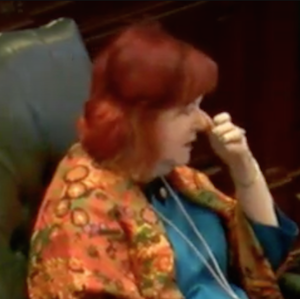
Agreed. * But the Republicans were not finished…
* All heck kinda broke loose…
And that’s when Mazzochi asked if Rachel Dolezal, the woman who claimed she was black and wasn’t, and whether a white woman from South Africa would also qualify. McCombie eventually rose to defend herself, saying people who know her understand she wasn’t trying to make this about race, and Welch said he wanted to make a change to the bill and pulled it out of the record. Several minutes later, Welch said he had changed his mind and asked for a “Yes” vote. * House Republican Leader Jim Durkin rose to clarify…
Durkin went on to say “There clearly are places and times when there has to be some oversight,” of business but, on the whole, Republicans are for free markets. He called Rep. Welch a “gentleman” and said “Let’s just take a vote.” It passed with 61 votes. * But it wasn’t over yet. Rep. Rita Mayfield (D-Waukegan) rose at the end of Friday’s session to give this speech…
* Politico…
A check of the roll call shows that Burke, Moeller and Conroy did not vote either way on the motion. No Democrat explicitly voted against the bill. In the end, taking a walk or voting “Present” have the same impact as voting “No.” They do not necessarily have the same intent, however. …Adding… As Rep. McDermed points out in comments, she voted “Yes” on the bill.
|
|
*** UPDATED x1 *** Progressive, peer-reviewed study: Pritzker’s tax plan falls $280 million short
Monday, Apr 1, 2019 - Posted by Rich Miller * The buried lede…
According to the AP and to one of the study’s authors, the study figured Pritzker’s corporate tax hike into its projection. Business interests have been saying for weeks that the Pritzker proposal wouldn’t raise as much as advertised, but this is the first group on the left saying the same thing. Click here for the study and click here for the press release. Overall, the report had good news for the Pritzker camp. But it’s not good at all if the governor’s revenue projection is off by 8 percent. I’ve asked the governor’s office for a response. *** UPDATE *** The governor’s office points out that the study didn’t run Pritzker’s actual plan. The study “implemented” the plan using Fiscal Year 2018 numbers, instead of the higher incomes during Fiscal Year 2021, when the plan would first be implemented. That explains a lot of the discrepancy. They also went back a year earlier to calculate their estimates than Pritzker (2015 vs. 2016).
|
|
*** LIVE COVERAGE ***
Monday, Apr 1, 2019 - Posted by Rich Miller * Follow along with ScribbleLive…
|
| « NEWER POSTS | PREVIOUS POSTS » |