* The Illinois Policy Institute continues to focus on Senate Republicans in order to kill off the chamber’s “grand bargain.” Here’s its latest…
Americans for Tax Reform, a taxpayer advocacy group, maintains an active pledge for lawmakers across the country to sign. The pledge states that the signer will agree to not vote for or support any new taxes or tax hikes. The pledge has proved popular among candidates and officeholders across federal, state and local levels of government with signatures from over 1,400 elected officials.
The following Illinois state senators have also signed the pledge:
Tim Bivins, R-Dixon
Kyle McCarter, R-Lebanon
Jim Oberweis, R-Sugar Grove
Dave Syverson, R-Rockford
Bill Brady, R-Bloomington
Sue Rezin, R-Morris
The state senators who signed this pledge should remember they were not making a promise to Americans for Tax Reform, but rather to Illinois taxpayers. Illinois already has one of the largest combined tax burdens in the country, and the last thing middle-and working-class Illinoisans need at this point is yet another tax hike.
Meh.
It was a campaign pledge, and campaign pledges should be broken when the very future of the state is at issue.
And, really, the only pledge that matters now is the pledge that all lawmakers make when they’re sworn in: To uphold the state Constitution. And that Constitution requires a balanced budget.
So, unless these geniuses can come up with a plan to close a $6 billion budget hole without raising any taxes whatsoever, that pledge to Grover Norquist means nothing.
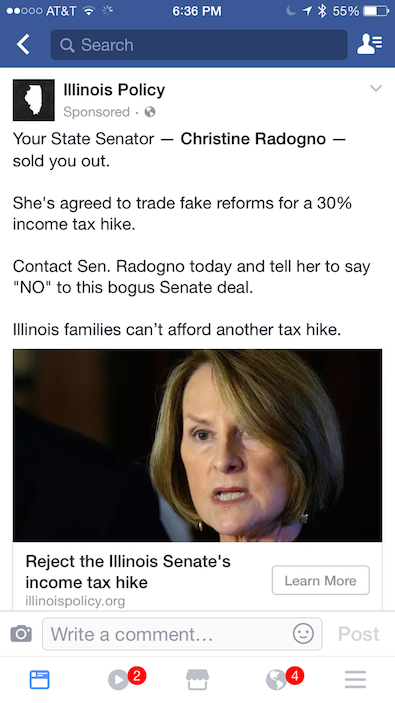
* Meanwhile, here’s its latest Facebook ad, which appears to be targeting Leader Radogno’s own district…
* And this is from its “news service”…
Parts of a potential budget agreement in Springfield include a number of pro-business incentives, but business advocates say they’re no consolation for massive tax hikes.
A series of bills waiting to be voted on in the Illinois Senate are being promoted by leadership as the grand compromise that will break Illinois’ two-year long budget stalemate between Gov. Bruce Rauner and the Democrat-controlled General Assembly. The proposed plan rakes in billions by raising the state’s income tax to almost five percent along with other taxes. They also included a two-year property tax freeze and minor reforms to pensions and workers compensation laws in an effort to court business support.
But Technology and Manufacturers Association of Illinois President and former state Sen. Steve Rauschenberger says token reforms are no justification for a massive tax increase. “An increase in revenue is not a good deal for minor changes to the workers’ compensation program,” he said.
*** UPDATE *** Hilarious…
This is exactly why I consider that group to be more of a propaganda outlet than a “think tank.”