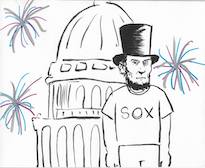
*** UPDATE *** The mayor’s pension bill easily passed the House 73-41. On to the Senate.
[ *** End Of Update *** ]
* I told you this would happen yesterday…
Mayor Rahm Emanuel and House Speaker Michael Madigan Monday stripped out controversial language from city pension legislation that had authorized the City Council to impose a property-tax hike, putting the stalled measure back on the fast-track at the state Capitol. […]
Madigan, D-Chicago, filed an amendment to Senate Bill 1922 after the House adjourned Monday without taking any action on the stalled legislation. Sources now expect the legislation to be voted upon as early as Tuesday.
* More…
Unions had also opposed removing the property tax mandate from the bill, but City Hall is convinced labor leaders won’t object to Monday’s revisions because of language that gives the state the right to withhold state funding to Chicago during any year that the city fails to make its required contribution to municipal employees or Laborers pension funds
* To the bill…
Still in the bill are two provisions to penalize the city if it does not make the pension payments. The state comptroller would be allowed to divert millions of dollars in annual state payments away from the city and into the pension funds a provision that was made stronger in the most recent version.
The proposal also spells out that pension boards could sue to get the state to divert millions in city funding to the pension funds. […]
The new plan also includes a minimum cost-of-living increase of at least 1 percent every year for retired workers who are getting pensions of $22,000 or less. The bulk of retirees would get annual increases of half the rate of inflation or 3 percent, whichever is less, based on the amount of their annual pension payments upon retirement. Currently, all retirees get 3 percent, based on their previous year’s pension income. […]
The latest version also includes a new provision that would allow Emanuel to change the makeup of the two retirement boards that oversee the laborers and municipal funds. It would terminate the terms of current members next year and allow the mayor to recommend how new members of the board should be appointed.
* A labor activist who opposes the bill sent me this commentary about that last paragraph…
Here’s what that means: The supposed “funding guarantee” in this legislation is a provision that the municipal and laborers funds may go to court if the city doesn’t pay what’s required. Now, the municipal fund’s board consists of three elected members who are employees, plus the city treasurer and comptroller. But under this provision, the entire board could be political appointees of the mayor. Besides eliminating the voice of employee participants, it could give mayoral appointees total discretion to enforce the funding provision – or look the other way.
Except the state comptroller is also required to skim city grants, and the comptroller’s office says that includes Chicago’s giant pile of revenue-sharing cash from the Local Government Distributive Fund.
* And this shows how weird some folks can get around here…
To some, Quinn’s decision to draw a line in the sand on property taxes and dangle the city’s elusive quest for a Chicago casino as a replacement was part of an elaborate political dance.
Those Machiavellian theorists believe the plan for $50 million property tax hikes for each of the next five years may have been a stalking horse for a casino all along.
But the fact is, Chicago probably needs both property tax hikes and the jackpot from a land-based casino to wipe out an $32 billion unfunded pension liability that’s eight times the city’s operating revenue and, what Moody’s calls “by far the highest” of any rated U.S. local government.
That last sentence is far more in line with reality.