How about turning the James R. Thompson Center into a waterpark resort, complete with thrilling waterfalls? Or adding a conical spire to showcase 3D LED images? Maybe its glass skin could be tinted, with occupants controlling it for their comfort.
Those were among the proposals chosen as finalists in a competition for ideas to reuse the longtime hub for state government at 100 W. Randolph St. The distinctive product of the late architect Helmut Jahn and regarded by many as landmark-worthy is an asset the state wants to sell, raising the specter of its demolition.
Seven proposals for saving the 17-story building were named finalists Tuesday in a competition sponsored by the Chicago Architecture Center and the Chicago Architectural Club. A jury of leading experts in design and preservation chose the finalists from 59 entries. A winner will be announced Sept. 14.
Scott Kennedy’s tongue-in-cheek idea to convert the building into a water park was submitted as a proposal by David Rader, Jerry Johnson, Ryan Monteleagre and Matt Zelensek of Perkins & Will. And it’s now a finalist for the prize.
* I asked Kennedy for comment today…
I actually love that this has taken on an energy of its own. It’s outgrown me and that’s great.
Jacobson: I wanted to ask you about that menu of options of mitigations you mentioned yesterday. There are school closings a part of that? Is schools closing down on that list of options? Because if so, then we can talk about mental health issues that parents want to hear.
Pritzker: Right.
Jacobson: So, is that on the list?
Pritzker: Well, as you know, if all of a sudden we started to see that there was a widespread, delta, or something that was overcoming, for example, the vaccines that people have already taken, and sending people to the hospital who are already vaccinated, then we would have to look at a whole new set at the bottom of the list of things that we left far in the distance last year. Then we might have to revisit those things, but that’s not something that I would say is currently highlighted on that menu of options.
Jordan Abudayyeh: We’ll do one more.
Jacobson: You had, there was a protest out there this morning and parents were crying, screaming ‘Oh my God.’ As governor, you should try and calm people’s nerves maybe or can you because there are low risk groups…
Abudayyeh: Amy, as a supposed reporter, you should probably stop the misinformation, we are done here. Thank you.
Pritzker: Thank you.
Abudayyeh: You know how you prevent schools being from being closed? You stop complaining about mask wearing.
[People start to leave, and I’m told that Jacobson asked Abudayyeh off-mic for the studies that face masks work. That’s when the governor returned to the podium. The mic was still off when he started speaking, but the following is what was recorded on audio.]
Pritzker: [I would like to] respond to that. Let me just say this: You are spreading misinformation. I wish you would stop spreading this information. You come in here with a political agenda [cross talk] and you spread misinformation. And I just think you should stop. We now need to protect our children, we need to protect the people in our communities, parents, grandparents, teachers. You are working against that [cross talk], and it is extremely upsetting for all of us who are trying to keep the rest of the state safe.
This month, an average of more than 30 Illinois children a day have been admitted to hospitals with confirmed or suspected COVID-19, with the rolling seven-day average reaching 40 admissions last Wednesday. A year ago at this time, average daily admissions were around 20 in early August before peaking at 35. […]
Still, the increase in childhood hospitalizations in Illinois is far less severe than in states where some pediatric wards are filling up fast. In Florida, for example, admissions are running roughly triple what they were last August, at one point approaching 100 confirmed or suspected childhood cases a day, on average.
Florida’s population is 70 percent larger than ours, so we’ve got a little ways to go before getting that bad. And it could, especially with this attitude…
Last week we delivered nearly 45,000 petitions to Pritzker’s office to demand he rescinds his unilateral mask mandate on our schools. I'm delivering YOUR voice.
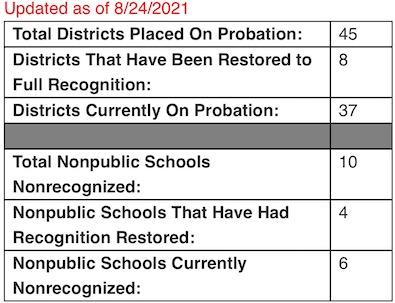
Of three suburban private schools that had their recognition status pulled by the Illinois State Board of Education last week after officials said they flouted a COVID-19 mask mandate, just one has been reinstated.
Bethany Lutheran School in Naperville and Lutheran School of St. Luke in Itasca remained on ISBE’s list of sanctioned schools as of Tuesday, the agency reported.
Most epidemiologists say they still believe that in-person school can be conducted safely, and that it’s important considering the academic, social and emotional damage to students since the pandemic slammed into American schools in March 2020.
In some cases, experts say, the reversals reflect a careless approach among districts that acted as if the pandemic were basically over.
“People should realize it’s not over. It’s a real problem, a real public health issue,” said Dr. Tina Tan, a Northwestern University medical professor who chairs the American Academy of Pediatrics Section on Infectious Diseases. “You have to do everything to prevent the spread of COVID in the school.”
Tan and others say that means not just masks in schools but a push for vaccination, social distancing, ventilation and other precautions, providing multiple layers of protection.
* IDES press release…
The Illinois Department of Employment Security (IDES) announced today that it will begin the phased restoration of in-person workforce and limited unemployment services at American Job Centers throughout the state on an appointment-only basis starting Thursday, August 26. In-person appointments will be available at the following locations as part of the first phase of the plan:
Rockford | 303 North Main Street
Harvey | 16845 South Halsted
Champaign | 1307 North Mattis Avenue
Mt. Vernon | 333 Potomac Boulevard, Suite E
To schedule an appointment, individuals should call via the IDES Scheduling Hotline at 217.558.0401 and request a callback. Appointments must be scheduled a minimum of 24 hours in advance of the appointment time. An appointment may be scheduled for one of the following reasons:
Identity verification for an unemployment insurance claim
Assistance registering with IllinoisJobLink.com
Assistance documenting work search activities
Employment services, including resume and job search guidance
Request to use the Resource Room to use computers with internet and other resources
Appointments will be available Monday through Friday between 8:30am and 5:00pm. To ensure efficiency, each appointment will be 20 minutes in length and visitors will be afforded a 10-minute grace period. Visitors who schedule an appointment must bring a photo ID and any other documentation required for the appointment. A scheduled appointment is required for entrance into one of the offices. Individuals who arrive at an office without an appointment will be asked to schedule an appointment via the Scheduling Hotline for a later date.
Masks or face coverings are required when entering an office. If a visitor has been experiencing any symptoms or has been exposed to someone with COVID-19 within 14 days prior to their appointment, they will be required to reschedule the appointment.
In the coming weeks, IDES will continue to reopen additional offices on a phased basis and will announce the availability of phone appointments to further assist claimants.
Claimants are strongly encouraged to use the IDES website to apply and certify for benefits, enroll in direct deposit, change passwords, engage in work search, and connect with an employment services professional, among other services. Claimants can also continue to speak with an IDES expert over the phone, by requesting a callback at 800.244.5631. As a reminder, if a callback is received at an inconvenient time, claimants may reschedule the callback for a specific time with a call center agent.
* More…
* Quinnipiac: 6 In 10 Floridians Support Requiring Masks In Schools, Quinnipiac University Poll Finds; 61% Say Recent Rise In COVID-19 Cases In Florida Was Preventable
AN IMPORTANT MESSAGE FOR AFSCME MEMBERS IN ILLINOIS STATE GOVERNMENT
RIGID VACCINE MANDATES WON’T WORK
Vaccinations are an essential tool in halting the spread of the coronavirus and our union has worked diligently to educate members about the importance of getting vaccinated to protect themselves, their families, and their co-workers. Thousands have already done so.
Oppose Rigid, Universal Mandate
However, we know there are union members who remain fearful of the COVID vaccine, as well as others who have medical contraindications or religious objections. That’s why AFSCME opposes rigid, universal vaccine mandates that effectively threaten employees with termination if they do not get vaccinated.
And that’s why our union is opposed to the plan Governor Pritzker recently put forth to mandate COVID vaccinations for all state employees who work in congregate facilities in DOC, DJJ, DHS, and DVA.
Employees in these facilities have been on the job daily since the onset of this pandemic, providing care for some of our state’s most severely disabled individuals and ailing veterans, as well as maintaining order and providing rehabilitative services in prisons and youth centers.
A punitive universal mandate only serves to undermine morale and heighten the stress of these already stressful jobs.
Bargaining Required
While the courts have consistently affirmed that employers have the right to mandate vaccinations (as they have done in the past to address other types of health threats), both private sector (NLRA) labor law, as well as state public employee labor laws (e.g. IPLRA), require employers to bargain over the impact (implementation) of such a decision.
In announcing this employee mandate earlier this month, Gov. Pritzker recognized the administration’s duty to bargain with unions representing state employees and quickly moved to initiate such negotiations with our union.
With a union bargaining team that includes all members of the Council 31 Executive Board who currently work in a state congregate facility, those negotiations are now underway.
A Better Path
Based on input from local union leaders from around the state, the AFSCME team pointed out to management that a key problem in controlling the spread of the virus is operational laxity in the administration of some of the congregate facilities: Too often safety protocols are neglected, testing is not rigorous, visitors are often not required to wear masks, and quarantines are frequently not put in place in the wake of exposure to the virus.
AFSCME argued that the State should work with the Union to address these unsafe conditions before turning to employee vaccination mandates. CMS responded that they are prepared to work cooperatively to address these safety problems, but they want to do so in conjunction with a mandatory vaccination program.
The union bargaining team has also pointed to the federal government and other state governments that have put more flexible forms of vaccination programs in place, such as providing for a strict testing regimen as an alternative for those who object to vaccinations.
In addition, we have expressed serious concern that if a significant number of employees are discharged as a result of this plan, understaffing in these agencies—which are finding it increasingly difficult to hire new employees—would be greatly exacerbated and overtime pressures on the remaining employees would grow.
Noting that it is now well documented that the Delta variant can also strike the vaccinated, as well as the unvaccinated, the Union is also urging that if the Employer is serious about combatting COVID in these settings, it should act immediately to restore the policy whereby employees who become sick with COVID—or are quarantined by the employer or a public health body—are granted paid time off rather than having to file workers’ compensation claims.
Bargaining Should “Freeze” Implementation
The governor’s plan sets October 4th as the deadline for employees to be fully vaccinated—and the relevant agencies have been notifying employees that they must get vaccinated in the next few weeks in order to be in compliance. That’s flat-out wrong. AFSCME has informed Management that pursuant to state labor law, the employer cannot proceed to implementation of its plan while negotiations are ongoing.
Standing Together
Our union will continue to push for flexibility rather than the rigid, universal vaccination plan that the State is now proposing for state employees. We take very seriously our obligation to safeguard the health and safety of union members, as well as the public they serve. Our actions have been—and will continue to be—guided by the conviction that encouragement and education, not punitive measures, are the best path forward in combatting the deadly coronavirus and its variants. Our best hope of achieving that goal is rooted in the grassroots solidarity that has long been the hallmark of our union.
Pandering of the worst sort.
*** UPDATE *** OK, let’s go through this a bit. First, a religious exemption is required under Supreme Court rulings, so AFSCME knows it will be in there. And federal law requires medical exemptions. Those are red herrings.
Second, who controls actual access to prisons and other congregate settings? Well, that would be AFSCME members. If they have a beef about visitors not wearing masks, then enforce the policy. Also, while testing is being performed pretty frequently right now, it could be ramped up more. But, really, this should go beyond testing, particularly in the veterans’ homes and homes for mentally and developmentally disabled. AFSCME should stop pandering to IDOC workers.
Third, unlimited extra paid time off for unvaccinated workers seems just bizarre to me. If you’ve got a legit exemption, fine. If you get a little sick after taking the shot, fine. If you have a breakthrough case and you’re sick, fine.
Mayor Lori E. Lightfoot today announced that, effective October 15, 2021, the City of Chicago will require all City employees to be fully vaccinated against COVID-19, joining many other major municipalities and government agencies in taking this important preventive step. While masking and social distancing requirements in the workplace remain, the best protection against COVID-19 is vaccination.
“As cases of COVID-19 continue to rise, we must take every step necessary and at our disposal to keep everyone in our city safe and healthy,” said Mayor Lightfoot. “Getting vaccinated has been proven to be the best way to achieve that and make it possible to recover from this devastating pandemic. And so, we have decided to join other municipalities and government agencies across the nation, including the U.S. military, who are making this decision to protect the people who are keeping our cities and country moving. We have also been in close communication with our partners in the labor movement to create a vaccination policy that is workable, fair and effective,”
“Fully vaccinated” means two weeks past the second dose of a two-dose mRNA vaccine (Pfizer, Moderna) or two weeks past a single dose of the Johnson & Johnson vaccine. Employees will be asked to submit their proof of vaccination via a secure, online COVID-19 Vaccine Portal.
“We have worked closely with our partners to ensure that the reporting system is secure, effective, and confidential,” said Commissioner Christopher Owen, Chicago Department of Human Resources. “Human resource leads within every City department are prepared and available to assist employees through this process and answer their questions.”
This policy applies to all City employees and volunteers. Employees can apply for medical or religious exemption from this policy. Such requests will be reviewed by the Department of Human Resources on a case-by-case basis.
“The data shows that getting vaccinated is the best way to protect yourself and those you come in contact with from serious illness, hospitalization, or death from COVID-19,” said CDPH Commissioner Allison Arwady, M.D. “Adopting and implementing this requirement is the responsible, common-sense approach, which is why we’re seeing so many other government agencies, companies, institutions, and organizations pursue this course of action.”
More than 70 percent (more than 1.6 million) of Chicago residents over 18 have received at least one dose of a COVID-19 vaccine. COVID-19 vaccines are widely available at pharmacies, health care offices, and through special events across the City at no cost to the public. No insurance or government ID are required to receive a vaccination. To learn more, visit Chicago.gov/COVIDvax or call 312-746-4835.
The FOP is about to flip its lid. But, whatever.
Your move, Gov. Pritzker.
*** UPDATE 1 *** CFL sides with anti-vaxer union members…
Chicago Federation of Labor President Bob Reiter released the following statement regarding the announcement of a vaccine mandate for City of Chicago workers:
“City of Chicago and other public employees have been sacrificing their health from the very beginning of this crisis, putting their own safety on the line to keep this city moving. The Chicago labor movement has worked tirelessly to protect these heroic workers, from fighting for proper safety procedures to holding vaccination clinics for thousands of union members that were hailed as a ‘model for the country’ by Vice President Kamala Harris.
“We believe in the benefits of vaccination to help protect workers and residents, but we do not believe punitive mandates are the right path to significantly increase vaccine uptake. In fact, we believe this announcement may harden opposition to the vaccine instead of protecting the workers who have sacrificed so much over the past 18 months. We are still in very preliminary discussions with the city about a proposed vaccination policy and we hope this process can be resolved through policymaking, not public communications. However, any discussion around a vaccine policy should include not only medical and religious exemptions, but also testing alternatives as we continue to build trust around the benefits of voluntary vaccination.”
*** UPDATE 2 *** Fraternal Order of Police President John Catanzara in the Sun-Times…
“This has literally lit a bomb underneath the membership. They’re more engaged in this than they were even in the contract. And what are they gonna do when four or five thousand coppers say, ‘Screw you. I’m staying home. You’re not making me get this f—ing vaccination. Don’t pay me. That’s fine. We’ll see you in court.’”
Catanzara said he’s not threatening a blue-flu style protest. He claims the city is literally talking about “putting people on no-pay status who refuse to get” the vaccination.
“You’re not gonna pay me. You’re gonna make me stay home. But you’re gonna have thousands of coppers willing to stay home, not getting paid to not get a vaccine and then, what are you gonna do for manpower on the streets?” he said.
“They’ll be drowning in the creek. They won’t just be up a creek. They’ll be sinking in the creek.” […]
“We’re in America, G-ddamn it. We don’t want to be forced to do anything. Period. This ain’t Nazi f—ing Germany, [where they say], ‘Step into the f—ing showers. The pills won’t hurt you.’ What the f–k?” he said.
*** UPDATE 3 *** CFL President Reiter called and said he took umbrage with my characterization of his statement. From our conversation…
We believe in vaccines. We’re very clear in our statement. We are saying we have to negotiate a policy with the city. And we believe that testing should be provided as an alternative as we educate people more on the vaccine because government intervention in a punitive way could set us back as we look to get people vaccinated going forward and getting booster shots. … And the way to build trust and confidence is not to announce a mandate on anything before we’ve had an opportunity to work through what the policy actually is. We’ve barely sat down with the city to move forward with this. So we are still at the beginning of this. I don’t think it’s fair to put us in the same category as other people that are rejecting the advocacy of vaccines.
Illinois Speaker of the House Emanuel “Chris” Welch is pleased to announce the appointment of Justice Marcus Salone to serve on the Legislative Ethics Commission’s search committee.
“Justice Salone is a man of integrity who brings with him a resume filled with accomplishments and experience in our legal system,” said Speaker Welch. “Between his credentialed background and consistent commitment to professional ethics, I am confident Justice Salone is uniquely qualified to vet applicants for our next Legislative Inspector General. He understands the weight of this appointment and will ensure we fill the position with someone who will hold elected officials to the highest of ethical standards and work diligently to restore trust in Springfield.”
Justice Salone currently serves on the Cook County Board of Ethics and is a retired Presiding Justice of the Illinois Appellate Court, First District, and 3rd Division. Prior to that, Justice Salone served 10 years as a Chicago Police Officer before he began his legal career as a Cook County Assistant State’s Attorney. He has also served as an Associate Judge of the Circuit Court of Cook County and a Judge in the Criminal Division of the Circuit Court.
“I humbly accept and am incredibly honored to be chosen as Speaker Welch’s nomination for the Legislative Ethics Commission search committee,” Salone said. “The importance of the role of Legislator Inspector General is not lost on me and I am committed to ensuring we fill this position with a qualified candidate who holds sacrosanct transparency, integrity and the rule of law.”
During his time as a Judge in the Criminal Division of the Circuit Court from 1993 until March 2011, Justice Salone presided over criminal matters ranging from felony theft to death penalty cases. On March 8, 2011 the Illinois Supreme Court appointed Justice Salone to the Illinois Appellate Court.
Civically, Justice Salone has served on a number of boards as a director, including: the Cook County Board of Ethics, The John Marshall Law School Alumni Board of Directors, the John Howard Association and the Ancona School. He has also participated in the Chicago Public School’s “Principal For A Day” program since its inception and is a mentor in the “We Care” mentoring program coordinated by the Chicago Police Department, in conjunction with the Chicago Public Schools. Recipient of numerous honors and accolades, Justice Salone received the 2018 Presidential Award from the National Bar Association.
The youngest of seven children, Justice Salone was born into Chicago Housing Authority public housing and raised on Chicago’s Westside until going away to college. He attended the University of Illinois at Chicago where he graduated with a Bachelor of Arts degree in Liberal Arts and Sciences in 1974. Justice Salone’s formal education was interrupted by a stint in the United States Army, which included a tour in the Republic of Viet Nam. In 1978, Justice Salone enrolled at The John Marshall Law School and passed the Illinois State Bar examination in 1981. Two years later, he and his wife, Valée, formed The Law Offices of Salone and Salone.
One of the recently elected associate judges to the Cook County Circuit Court once infiltrated community organizations for the Chicago Police Department to determine if their members were communists.
Marcus Salone, 41, who was elected to one of 10 associate judge posts by the vote of full circuit judges Wednesday, infiltrated the Organization for a Better Austin, and was its president from 1972 to 1974, during his assignment to investigate civic groups.
Salone was one of four police officer recruits deemed the ‘’Red Squad,'’ whose duties were so secret the four bypassed police academy training to ensure their identities as police officers would be kept unknown.
Illinois Secretary of State Jesse White is reminding the public that beginning the first week of September, customers will be required to make an appointment for behind-the-wheel road tests, REAL IDs, standard driver’s licenses and ID cards at three Chicago facilities. The facilities are Chicago North, 5401 N. Elston Ave. beginning Sept. 1; Chicago West, 5301 W. Lexington St. beginning Sept. 2; and Chicago South, 9901 S. Dr. Martin Luther King Jr. Drive beginning Sept. 3. Vehicle services, such as renewing a license plate sticker or applying for a vehicle title, do not require an appointment.
The week of Sept. 7, many other metro Driver Services facilities will also require appointments. These facilities and the dates they go live include Schaumburg and Bridgeview on Sept. 7; Lombard and Des Plaines on Sept. 8; Waukegan and Naperville on Sept. 9; and Aurora, Plano and Joliet on Sept. 10.
Lake Zurich, Melrose Park, Midlothian and Woodstock have been serving as appointment facilities since early this year and will continue requiring appointments.
All 16 appointment-based facilities will have the same standardized days and hours of operation: Tuesday through Friday from 7:30 a.m. to 5 p.m. and Saturday from 7:30 a.m. to 2 p.m. Customers and employees are required to wear masks. Customers are encouraged to bring their own masks.
Customers can visit www.cyberdriveillinois.com to schedule an appointment up to 10 days in advance during this phase of the program. New appointment slots will be available each day at www.cyberdriveillinois.com.
Secretary White emphasized that seniors, veterans, persons with disabilities and expectant mothers will be served as walk-ins at all 16 of the designated appointment facilities. They also have the option to make an appointment.
Beginning in September, customers can schedule an appointment online or by calling the appointment helpline at 844-817-4649. The Secretary of State is partnering with the Chicago Lighthouse to provide these call center services. The Chicago Lighthouse’s call centers offer career opportunities for people who are blind, visually impaired, disabled, veterans and economically disadvantaged.
White is launching a comprehensive media campaign this week, which includes television, radio, newspapers, digital display and social media ads that will run in English and Spanish in the Chicago metro area.
White noted that not all facilities will go to the appointment-based system. Many small, rural facilities will not require the appointment system because they do not encounter the heavy customer volume that large facilities encounter.
Larger central and downstate Illinois facilities will implement a customer scheduling system in the near future.
* Valencia Running for Illinois Secretary of State: More than a year before the election, one of the candidates for Illinois secretary of state is visiting the Quad Cities. Anna Valencia met with local Latino leaders Sunday, and Monday is talking with labor, faith, and Democratic party leaders. Valencia was first elected City Clerk for the city of Chicago in 2017, and says her main goal for state wide office is to modernize it so more services are available online. “So you don’t have to take a day off of work, drive thirty miles, wait in line, find child care, and transportation. You can do things on your mobile device. Whether that’s you taking your vision test, paying online, appointment dates, all your renewals should be on your mobile services so that’s priority one.”
* I told subscribers this morning about this week’s climate/energy bill negotiations and the governor’s stance and the warnings he’s sending to the Senate Democrats and others in the room. Here’s Politico…
The most powerful player in the complicated negotiations for a clean-energy bill isn’t state Senate President Don Harmon, state House Speaker Emanuel “Chris” Welch, labor leaders, trade unions, coal plant owners, Exelon or environmentalists. It’s Gov. J.B. Pritzker.
He wants the bill done right and isn’t going to waver to accommodate the whims of any one constituency. Pritzker doesn’t need to. The drawn-out discussions on the energy bill don’t hurt the governor politically, observers say.
The nuclear and coal plants that hinge on staying open because of the clean-energy bill are located in areas of the state that don’t exactly favor Pritzker. He’s not losing votes there. If anything, Pritzker looks like the good guy standing up against Exelon, which wants state funding to keep nuclear plants open.
Sticking to his guns on decarbonization targets (Pritzker wants zero emissions by 2045) and making sure Illinois is a leader on climate is a win with the environmentalist voters who matter to the Democratic governor.
Point being: The folks at the table don’t have a Michael Madigan to massage and maneuver legislation to make it work their way. The guy with the power is the governor.
The Prairie State Energy campus is in St. Clair County, which has a whole lot of Democrats. That plant is a big reason why Assistant House Majority Leader Jay Hoffman is at the table.
What the three Democratic leaders need to do very soon is meet and bring this thing home.
States that withdrew early from federal unemployment programs pushed few people back to work and fueled a nearly $2 billion cut in household spending, potentially hurting their local economies, according to new research.
Twenty-six state governors — all Republican, except one — opted out of the pandemic-era programs several weeks before their official expiration on Labor Day. Enhanced benefits were keeping the unemployed from looking for jobs and fueling a labor shortage, they claimed.
That bet seems to have had a limited payoff so far, according to a paper authored by economists and researchers at Columbia University, Harvard University, the University of Massachusetts Amherst and the University of Toronto. […]
States that ended federal benefits early saw larger job gains among the unemployed: Their employment jumped 4.4 percentage points relative to jobless individuals in states that kept benefits flowing, according to the paper, which analyzes data through the first week of August.
However, that translates to just 1 in 8 unemployed individuals in the “cutoff states” who found a job in that time period. The majority, 7 out of 8, didn’t find a new job. [Emphasis added.]
Illinois Gov. JB Pritzker has quietly extended a statewide ban on residential evictions after many residents indicated they fear they could face homelessness in the coming months.
While there is already a Centers for Disease Control and Prevention health order banning all evictions nationwide through October, that ban only applies to areas with high COVID-19 transmission rates.
The recently extended statewide moratorium applies to all Illinois counties, even in areas reporting low transmission rates.
Tucked away in the Governor’s COVID-19 Executive Orders signed this past Friday, the residential eviction moratorium was extended through Sept. 18. A previous iteration of the moratorium lasted through Sept. 3.
Pritzker’s office did not respond to NBC 5 Responds’ questions about the moratorium extension.
Executive Order 2021-13 (Residential eviction moratorium):
Sections 1, 4, 5, 7, and 8 Executive Order 2021-13, as amended by Executive Order 2021-14, are re-issued and extended through September 18, 2021.
Executive Order 2021-13 is further amended and revised as follows:
Section 9. Nothing in this Executive Order shall preclude a person or entity with a legal right to pursue an eviction or possessory action from challenging the truthfulness of a tenant’s, lessee’s, sub-lessee’s, or resident’s Declaration in court, as permitted by law and the applicable Court’s rules.
A bill requiring student ID cards to include suicide prevention hotline numbers — legislation proposed by a Naperville Central High School teen and her student-led organization — has been signed into law by Gov. J.B. Pritzker.
“It’s amazing just to see the impact it will have on over 1 million students,” said Aparna Ramakrishnan, who came up with the idea after seeing something similar on her sister’s college ID. “It will provide easy resources that could be life saving.”
All school IDs issued for junior/middle school, high school and college/university students will be required to include the suicide prevention information starting in the 2022-23 school year.
* Press release…
Illinois Doctors Support Governor Pritzker for Snuffing Out Youth Vaping!
Statement Attributable to Illinois State Medical Society President Regan Thomas, MD
The Illinois State Medical Society (ISMS) has a long history of opposing smoking in any form, so are grateful to see the governor and state legislature acting to prohibit underage persons from engaging in the use of electronic cigarettes. This new law, supported by ISMS, seeks to stop the dramatic rise in teenage smoking rates by increasing the state and local law enforcements’ ability to crack down on persons who sell or distribute electronic cigarettes and other vaping products to anyone under the age of 21. It also targets those industries that include dangerous flavored additives and market those products in a manner attractive to kids.
The scientific evidence is clear and has been for nearly 60 years – smoking and tobacco use of any kind is harmful to one’s health. One of the most important steps we can take to improve the health of young people is to stop them from starting to use tobacco products of any kind.
* Press release yesterday…
Today Illinois Governor J.B. Pritzker celebrated the passage of critical legislation that expands contraceptive care for thousands of Illinois women who lack access to high-quality reproductive health services. Senate Bill 697 expands the Illinois Medicaid plan, through enactment of a Family Planning State Plan Amendment, so that individuals who don’t qualify for full-benefit Medicaid still have coverage for preventive contraceptive care.
Illinois Contraceptive Access Now (ICAN!) is an organization that works to close the contraceptive coverage gap in Illinois through an integrated model of health care that lowers financial barriers for patients. 1 in 4 reproductive-aged women in Illinois still have an unmet need for contraceptive services. In the first year, ICAN! estimates that 70,000 individuals who otherwise would not qualify for traditional Medicaid will become eligible for coverage that will include contraceptive services and supplies, as well as preventive care (such as STI or cervical cancer screenings).
Below is a quote from Kai Tao, Principal with ICAN!:
“The Family Planning SPA supports individuals’ rights to decide if and when to be pregnant while removing the burden of any financial barriers related to accessing all FDA contraceptive methods,” said Kai Tao, Principal, Illinois Contraceptive Access Now (ICAN!). “It is a fiscally prudent policy as the federal government covers 90% of expenses for all family planning services while the state is responsible for the remaining 10%. Most importantly, the SPA is crucial to expanding family planning services to BIPOC communities and rural areas. ICAN! is committed to improving contraceptive quality so care is trauma informed, respectful, unconscious-bias checked, evidence-based, and reproductive well-being centered.”
* Charlie Watts knew all the way down to his very soul that it isn’t so much the notes you play, it’s the spaces between those notes that truly matter. He also knew when to just sit quiet and when to come in hard and drive a song - and his band - forward. He does both so impeccably well here…
Feel your mouth kissing me again
What a beautiful buzz, what a beautiful buzz