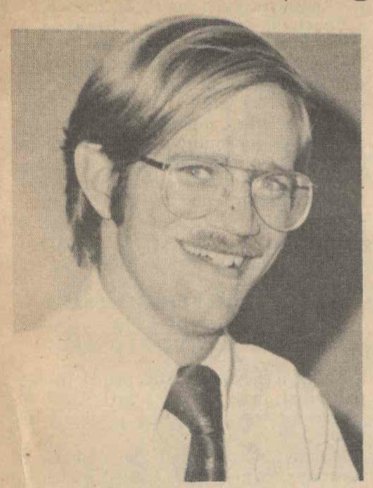
* At a time when the governor is cutting the State Police, human services and schools, this has to rank as one of the goofier hires of all time…
A longtime advisor to Gov. Pat Quinn has been hired to be the state’s first canoe czar.
Claude Walker, who has served as an aide to Quinn dating back two decades, will coordinate kayaking and canoeing for the cash-strapped state Department of Natural Resources.
He will earn $85,000 annually.
The new job for the 57-year-old self-described kayaking enthusiast raised eyebrows among some lawmakers, who are in the midst of debating how to keep the state afloat during though budget times.
Claude is a great guy. But Quinn cannot claim on one hand that the state is broke and then pay somebody $85K to be a “canoe czar.”
*** UPDATE *** That didn’t last long. From a DNR spokesperson…
I wanted to reach out to you and let you know that the watertrails coordinator position has been recinded at the request of the Governor’s office today. The IDNR realizes that while watertrails are an important and growing aspect of outdoor recreation in Illinois, the timing was just not right in these tough fiscal times.
* 1:03 pm - The US Attorney’s Rod and Rob Blagojevich prosecutorial roadmap will be made public, despite objections by defense attorneys…
U.S. District Judge James Zagel just issued an order granting “immediate access” to an evidentiary document in the [Blagojevich corruption] case and denies the defense’s request to black out portions of it. […]
Zagel says in his ruling: “The case for redaction has to be proven not presumed. It is not proven here. If the excerpt of a conversation would have a different meaning if more of the conversation were to be reproduced, the defendants here can reproduce it if either believes that the additional language would help defeat the claim of admissibility made by the prosecution.”
The events which are the subject of this case are not those which make a lasting impression on the mind of readers. The words in papers and magazines and the words read by an anchor on radio or television will not be retained in significant detail by members of the public.
I expect that many members of the jury pool will have an impression about the case to be tried. Many have such impressions even now. I do not expect that the printed words in the proffer reprinted or read aloud by news readers will affect the ability of a significant number of potential jurors to comply fully with the rule that they must decide the case on the basis of the evidence heard in court without any reliance on whatever they remember that they read in or saw on the news.
For the foregoing reasons, the motion by Sun Times Media LLC, Associated Press, and Chicago Tribune Company to intervene and for immediate access to the Santiago proffer filed under seal is granted.
* 1:22 pm - A spokesman for the US Attorney’s office says the proffer will be distributed as soon as it is publicly docketed. That should be pretty soon. Stay tuned.
Blagojevich, Rezko, Kelly, and Monk had conversations, individually and collectively, about how the four of them could make money from their control over the State of Illinois government. In those conversations, Blagojevich, Rezko, Kelly, and Monk discussed a number of specific ideas for making money, such as through operating businesses that would get state money in different ways or receiving fees from people who did business with the state. Blagojevich, Rezko, Kelly, and Monk did not expect to have to invest significant money in any of these deals; instead, they were simply looking to collect money from the deals in the form of a finder’s fee or from revenue that might be generated from the deals. As a general matter, Rezko was the one who was trying to set up the money-making arrangements and Kelly and Rezko were the most knowledgeable about how the plans would work. Blagojevich and Monk would then use their power and authority in state government as needed to assist whatever plans Rezko and Kelly put in place. […]
There were occasions after Blagojevich became Governor that Blagojevich, Kelly, Monk, and Rezko all met to discuss their efforts to make money from state action. For example, the four men met in a conference room at the offices of one of Rezko’s businesses in about mid to late 2003.
During the meeting, Rezko led the discussion, standing at an easel or chalkboard and listed at least three or four different ideas or plans to make money being developed by Rezko that involved some kind of state action. At times, Kelly got up during the meeting and clarified or added to things that Rezko was saying. Blagojevich mostly listened during the meeting, but was engaged. As Rezko talked, he indicated how much money Blagojevich, Kelly, Rezko, and Monk could hope to make from the different ideas. The amounts that were associated with the different ideas were typically in the hundreds of thousands of dollars per deal, which would be evenly split four ways.
* The Bear Stearns pension obligation deal, you will recall, involved an $809,000 finders fee for then-Republican National Committeeman Bob Kjellander from Bear Stearns. Kj loaned $600,000 of that to an associate of Tony Rezko, who then paid Kj back from the proceeds of another loan Rezko helped obtain “from another associate of Rezko’s who did business with the State of Illinois.”
Sheesh.
Chris Kelly was apparently upset that Rezko was dipping into the finders fee cash because that money was supposed to eventually be split among the big players, including Gov. Blagojevich…
In about 2004, Kelly told Monk that Kelly was “pissed off” at Rezko because Rezko needed $100,000 and took it from the Individual A account. Kelly indicated that he was upset because he thought Rezko’s withdrawal of the money would somehow alert the authorities to the existence of the account, so Kelly said he told Rezko to put the money back. Kelly was not concerned that Rezko was taking money that belonged to Blagojevich, Monk, Rezko, and Kelly, but that Rezko’s taking of the money might alert the authorities. Kelly mentioned on more than one occasion to Monk that he was upset with Rezko over this matter. Kelly subsequently indicated to Monk that Rezko put the money back in the account.
* Mrs. Blagojevich…
In around October 2003, Blagojevich’s wife entered into a contract on behalf of her company with Rezmar in which Blagojevich’s Wife’s Firm agreed to perform unspecified real estate brokerage services to Rezmar in exchange for a monthly retainer of $12,000 plus the possibility of additional commissions depending on the amount of deals brokered. Beginning in October 2003, at Rezko’s direction, Individual B prepared a series of $12,000 checks pursuant to that agreement, which Individual B delivered to Rezko or his assistant. Ultimately, Rezmar issued 8 separate $12,000 checks, totaling $96,000, to Blagojevich’s Wife’s Firm on approximately a monthly basis from October 2003 through May 2004. Those checks were deposited into a bank account held by
Blagojevich’s Wife’s Firm. […]
Blagojevich was concerned that there might be the perception that his wife was a ghost payroller if she did not go into Rezko’s offices. Monk had conversations with Blagojevich and his wife about the need for her to actually go into the office to work on a regular basis. The problem with that approach, however, was that Blagojevich’s wife was taking care of their infant daughter.
More…
At the closing of the two units, on January 19, 2004, a check for $40,000 was made payable to Blagojevich’s Wife’s Firm. That check was sent back to the title company with instructions that the check be issued to Rezmar. On January 21, 2004, the title company issued a new $40,000 check to Rezmar Realty. After Rezmar received the $40,000 check, Rezko directed Individual B to deposit the check into a Rezmar account and to write a $40,000 check to Blagojevich’s Wife’s Firm. On January 22, 2004, Individual B wrote a check to Blagojevich’s Wife’s Firm for $40,000. The check stub indicates that it was “assignment of funds.” On January 23, 2004, that check was deposited into a bank account held by Blagojevich’s Wife’s Firm. On the same day, Blagojevich’s wife wrote a $40,000 check to herself from her company’s bank account and deposited the check into her personal bank account. On or about January 24, 2004, Blagojevich’s wife then wrote a series of checks totaling $38,010 from her personal bank account to a number of vendors who had performed work on the Blagojevich home.
Disgusting.
* The despicable attempt to sell Obama’s Senate seat…
Blagojevich complained to Deputy Governor A that Blagojevich’s “upward trajectory” was stalled because of Obama’s election. Blagojevich told Deputy Governor A that Blagojevich had made “decisions at the expense of [his] family’s best interests for . . . [his] job as governor.” Blagojevich informed Deputy Governor A “now is the time for me to put my f___ing children and my wife first, for a change.” […]
Harris suggested that Blagojevich tell Labor Union Official that Blagojevich wanted to accommodate the president-elect, but also wanted to take care of the people of Illinois. Blagojevich responded by stating “Yeah. And, and, and my, and me, do I say me.” Harris stated “Right, by, by keeping me strong.” Blagojevich responded to Harris “But I don’t want that. I’m not looking for that. I’d like to get out, the f___ outta here.” Shortly thereafter, Blagojevich stated that “the objective is to, to get a good gig over there.” […]
Based on Harris’s prior conversations with Blagojevich, Harris informed Blagojevich that Harris had told Deputy Governor A that they were looking for a “reasonable ask” in exchange for the Senate seat that “takes care” of Blagojevich’s family and keeps Blagojevich’s future political ambitions open. […]
Deputy Governor A stated that the director of one foundation was “on two corporate boards and makes around $250,000 a year on the, in addition to her salary.” Blagojevich responded “Yeah, see that’s what we’d want. That’s it.” Deputy Governor A told Blagojevich that Blagojevich should make clear during the negotiations for the Senate seat that being on other boards “would be another part of the game.” Blagojevich responded “That’s right.” […]
Blagojevich’s wife had trouble finding the salary information on-line. Blagojevich responded “Don’t worry about it. Yeah, that’s, you negotiate that. I’d like a 4-year contract for a million a year or somethin’. . . . Or 750 or whatever. It’d have to be good. Obama’s got excess money, he just gives them more money.” […]
Later on November 12, 2008, Blagojevich talked to Robert Blagojevich about filling the Senate seat. Regarding filling the Senate seat, Robert Blagojevich stated his advice was that Blagojevich “make sure it’s tit for tat, man you get something. I wouldn’t give anything away.”
But the tapes will clear him. Right.
* The clearest indication yet that Blagojevich is lying about his constant refrain that he really wanted to appoint Attorney General Lisa Madigan to the vacant Senate seat in order to cut a deal with Speaker Madigan on the capital bill and health care…
During the meeting, Labor Union Official advocated that Senate Candidate B be named to the Senate seat. In response, Blagojevich lied and informed Labor Union Official that Blagojevich was in “active” discussions with Individual L and her father about making Individual L the senator. […]
Blagojevich asked whether the Change to Win idea was better than trying to work out a deal to provide the Senate seat to Individual L. Advisor A indicated the Change to Win idea was better to help Blagojevich financially and his future politically. Blagojevich agreed. […]
Blagojevich stated that he was still leaning towards choosing Individual L for the Senate seat because it would help get things done for the people of Illinois, but complained “there’s nothing left there for me” regarding filling the Senate seat. Blagojevich noted “[Senate Candidate A] wants it badly and desperately and he’s the only one who’s willing to, like, offer stuff.”
Shortly thereafter, Blagojevich spoke to Deputy Governor A. Blagojevich told Deputy Governor A that he was trying to elevate Senate Candidate A with the Washington D.C. establishment to help with getting Individual L named senator, although Deputy Governor A believed that Blagojevich was lying to him. Blagojevich told Deputy Governor A he was not “gonna completely” rule out naming Senate Candidate A.
Approximately seven minutes later, Blagojevich spoke to Robert Blagojevich. Blagojevich told Robert Blagojevich that Blagojevich was elevating Senate Candidate A.
*** 4:02 pm *** Statement by Rod Blagojevich…
“There is nothing new. It’s the same old false allegations and lies. I’m looking forward to trial so the truth comes out and everyone will see that I am innocent.”
* The photo below was published in 1971 as part of a story about how SIU student Steve Brown had been named “Outstanding Graduate in Journalism” by the SIU chapter of Sigma Delta Chi…
Brown’s selection was based on character, scholarship and competence to perform journalism tasks, according to William Epperheimer, SDX chapter adviser.
Brown is, of course, the longtime press secretary for House Speaker Michael Madigan. He is no stranger to controversy.
* As I told you last week, former Gov. Jim Edgar is keeping up the public pressure on Sen. Bill Brady’s proposal to cut state spending by 10 percent across the board. But the report I linked to didn’t include this quote by Edgar about the Brady plan…
[Edgar] does not agree with the Republican candidate for governor Bill Brady’s “across-the-board 10 percent cuts in programs. It’s too simplistic.”
A governor must set priorities, Edgar said.
“Some programs are just more essential than others. (But) every section of society will be affected and pay part of the price for the fiscal mismanagement for the past 10 years,” he said.
Edgar offered up a mixed review of Gov. Quinn…
Edgar said he has come around to thinking that Quinn has pretty good first instincts.
“His second instincts are lousy. He needs to say, ‘Here’s what I think we ought to do,’ and stick with it. The last thing (the legislature) wants from a governor is unpredictability,” Edgar said.
He’s absolutely right about that. The constant flip-flopping is a nightmare.
Auditor General William Holland reported Tuesday that as of last June 30, the state was renting office space in 116 locations where its leases had expired. That’s 22 percent of the state’s 525 leases. Ten percent have been “holdovers” for five years or more, Holland said. […]
Procurement reform that took effect Jan. 1 prohibits any holdover lease of more than six months. Beginning July 1, the comptroller is to withhold payment for any rented space where the lease has been expired that long.
All but 19 of the 116 holdover leases as of June 30 had expired at least six months previously. Fifty-seven had been expired at least five years. The oldest had run out in 1998. […]
“The [Department of Central Management Services] has not assessed effective utilization of the space and has not negotiated terms that may be more favorable to the state,” Holland wrote.
CMS is supposed to be a manager. It’s supposed to help the state save money with its huge purchasing powers. Screwups like this are just inexcusable.
* The United Republican Fund is using frustration over a proposed tax hike to build its cellphone call list. From a press release…
When it comes to Pat Quinn’s tax hike, Republicans don’t just need to be the party of “No.”
We need to be the party of, “Hell, no!”
After mortgaging our state’s future through eight years of pension schemes, Big Labor giveaways, waste, fraud and abuse — it’s simply wrong that the Democrats in Springfield want to punish us in a bad economy with higher taxes.
By texting “NO” to 77007, you will receive an immediate link on your phone allowing you to immediately call Pat Quinn’s office.
We’ve already sent him thousands of emails in the past few months — now it’s time to hit the phones.
* Related and a roundup…
* Lots of Questions Still Need Answers in Youth Prison Merger
* Andy Shaw, the executive director of the Better Government Association, has penned a new Tribune op-ed…
The Better Government Association doesn’t endorse political candidates but we heartily embrace good government reform principles of fairness, accountability, integrity, transparency and honesty — the acronym is FAITH.
Then he goes on to gush about Claypool…
That’s why we’re excited about Forrest Claypool’s decision to run as an independent candidate for assessor of Cook County. If he collects enough valid signatures to get on the ballot, voters will be treated to the kind of campaign they deserve.
Assessor James Houlihan is stepping down after three impressive terms. He has repeatedly incurred the wrath of power brokers by putting taxpayers and transparency ahead of politics and patronage. That’s virtually unprecedented in an office with a history of corruption. So when Houlihan says Claypool is infinitely more qualified than Democratic nominee Joseph Berrios, our ears perk up.
And he thoroughly disses Berrios…
Could it be that House Speaker Michael Madigan and Senate President John Cullerton were sympathetic to the lobbying pitch [by Berrios for video poker] because they moonlight as tax lawyers whose firms ask Berrios to reduce the tax bills of their well-heeled corporate clients? And who gets hit with higher tax bills when Berrios decides to reduce the tax liability of the clients of Madigan and Cullerton? Could it be the rest of us? Duh.
This is all perfectly legal in Illinois, but it’s also eminently unethical and a giant conflict of interest. Anyone who games the system instead of reforming it is suspect. And that means Joe Berrios.
* The Question: Did Shaw, who runs a non-partisan group that isn’t supposed to get into campaigns, go too far here, or was he justified in pointing out the issues and players as he sees them? Explain.
* Gov. Pat Quinn plans to sign the new pension reform bill into law today. But the Civic Committee of the Commercial Club claims a new study shows the pension funds will be insolvent in 10 to 14 years unless something is done about the benefits of current employees ASAP…
According to former Illinois Tool Works chief W. James Farrell, all of the funds definitely are headed toward insolvency, “we estimate by 2020 to 2024.”
The study used fund values as of June 30, 2009 for its estimate, which was pretty near to the bottom of the stock market. Stocks have risen sharply since then. The study also didn’t include changes made by the bill about to be signed into law.
AFSCME, however, told Crain’s that it agreed with the general outlook of the study. The funds are, indeed, heading towards insolvency relatively soon.
* But what to do? AFSCME wants a tax hike and more money pumped in. The civic committee wants deep cuts to current employee benefits. They say it can be done, but Eric Zorn has a long and very good report this week about how that can’t be done.
The analysis, compiled by a former appellate justice for the Quinn administration, looks at Constitutional Convention debates and case law to pretty much demolish the notion that benefits for current employees can be cut. From one such ruling, which was eventually adopted by the Illinois Supreme Court…
In affirming the trial court, the Illinois Appellate Court rejected that argument and held that “a Pension Code modification changing the basis upon which pension benefits are directly determined cannot be applied to diminish the benefits of those who became members of the system prior to the statute’s effective date.” See Kraus, 72 Ill. App. 3d at 850. This holding unambiguously forecloses the analysis in the Sidley Austin memorandum.
The Civic Committee will spend “millions of dollars” this year to raise awareness among voters and put pressure on officials running for office, Farrell said.
* The Illinois Senate overwhelmingly passed a bill last month that effectively deletes a decades-old moratorium on new nuclear power plants. Proponents said the legislation would create new jobs and help Illinois capture bigtime federal money. Opponents aren’t so sure…
“Everybody can create all these imaginary ‘horribles,’ ” said state Sen. Mike Jacobs, D-East Moline, who has sponsored legislation to allow new plants in the state. “We should be thinking about how we can ensure that Illinois, with its leadership in nuclear power, keeps that.”
But opponents worry that the state, already home to the nation’s highest nuclear capacity, would become a natural destination for nuclear waste from other parts of the country if more plants are added.
“There shouldn’t be any more new ones until you’ve dealt with the waste from the old ones,” said Dave Kraft, director of the Nuclear Energy Information Service, a nuclear power watchdog group in Chicago. The ban, Kraft noted, “was put in place to protect us from becoming a de facto nuclear waste dump. … The (ban) has done its job.”
The feds just awarded $8 billion to help a new nuclear plant get going in Georgia and is looking at 12 more sites. Jacobs’ bill would put Illinois in the running for those federal subsidies. Interestingly enough, Sen. Jacobs claimed that the need for subsidies was one reason he opposed wind power legislation…
A bill that extends for 5 years a preference for Illinois wind has stalled in the General Assembly’s Energy Committee, headed by Sen. Mike Jacobs, D-East Moline. Jacobs says electricity customers shouldn’t be forced to subsidize an industry that can’t stand on its own.
“I’m not anti-wind, … but the industry can’t survive without subsidies,” Jacobs said. “There’s plenty of room for everybody. If the wind farms make sense, then build it.”
* A massive jobs and technology bill or a consumer ripoff that will provide an excuse not to upgrade the state’s communications networks? Those are the questions being posed by AT&T’s push to throw off state laws that have required it to invest big money into its landline network. The rewrite of the state’s Telecommunications Act has been put off for several years, but now AT&T is pushing hard for changes this session.
Progress Illinois has a pretty good look today at what’s at stake. AT&T points out that cellphones, Voice Over Internet Protocol, cable companies, etc. have sharply reduced the need for landlines. A quarter of households don’t even have landlines today, but state law still requires big investments in that “legacy” technology…
According to AT&T, the Telecommunication Act’s quality control standards require local phone carriers like themselves to make investments in older technologies when they would rather spend that money on new digital or wireless infrastructure.
These “legacy regulations” (as the Illinois Technology Partnership calls them) also deter burgeoning tech companies from entering the local market. A study commissioned by the Illinois Chamber of Commerce and some of its allies estimates that easing regulations across the board would create or save 105,622 jobs while boosting what ITP’s Lindsay Mosher calls “consumer choice” and helping to ease the state’s persistent digital divide.
Consumer groups are urging more caution. For starters, they argue that the landline quality control standards are in the public interest, particularly for vulnerable Illinois residents — namely the poor and elderly — who aren’t yet linked into the digital world and still face a limited choice of providers.
The consumer advocates also challenge the notion that complete deregulation of the telecom network — which ITP is basically pushing for (PDF) — will automatically create jobs. “AT&T has tried to pitch this as a jobs bill,” says Citizen Utility Board Executive Director David Kolata. “I think this is Orwellian at best.” Indeed, during testimony yesterday at a joint hearing down in Springfield, AT&T Illinois President Paul LaSchiazza could not specify how many jobs would be created if his favored regulatory reforms were enacted.
On the issue of jobs, Kolata provides a contrary perspective. He says that when the General Assembly mandated that AT&T follow standards for their landline systems, the company was given a financial incentive to hire more workers to maintain that system. Service improved, too.
CUB thinks the state ought to update current law and broaden it to include investment requirements in new technologies. Without that requirement, some feel that AT&T won’t have any real incentives to put the bucks into the systems.
AT&T is holding a Statehouse press conference today to unveil its plan and push for passage. From a press release…
The Illinois Chamber, Chicagoland Chamber, and more than 30 additional Chambers call to modernize Illinois’ outdated telecommunications laws in order to create jobs and attract economic investment to fuel Illinois economy.
* Perhaps the most important player in all this is the attorney general. Without her OK, it’s doubtful that Speaker Madigan will move the legislation ahead. At the moment, the AG’s office isn’t exactly thrilled with the AT&T plan…
Illinois does not regulate either cells phones or the Internet. The law being proposed, with backing from AT&T, would focus on land lines and service.
Susan Satter with the Illinois Attorney General’s Office said that’s the problem. She said loosening regulations could allow telephone companies to essentially abandon customers who don’t want to buy higher-priced cell phone/Internet bundles while also charging them more.
Satter told lawmakers there is a need to update Illinois’ telecom law, but not at the expense of nearly 40 percent of customers across the state.
“I think we can get to where we want to get to, in terms of modernizing, without so radically the structure.”
The proposed re-write does include protections for land line only customers, and requires phone companies to continue service to those customers. But Satter fears other changes would allow the companies to offer poorer service.
* And the governor isn’t fully on board as of yet…
Gov. Pat Quinn said his goal is to help negotiate a proposal that improves service but also helps boost investment in telecommunications.
“We want to have more jobs in telecommunications and we have to make sure we protect consumers,” Quinn said.
* Related…
* Quinn signs tax credit for new hires at small businesses
* Quinn approves tax credit for small businesses that add employees
Sneed hears rumbles former lieutenant governor candidate Scott Lee Cohen is angling for a comeback. The millionaire pawnbroker is “intending to run again for high public office” in Illinois, a source said.
Word is Cohen is eyeing a bid to run for . . . governor on an independent ticket!
Ya gotta be kidding?
• But hold on: Cohen spent $2 million on a well-orchestrated race, which he won. After getting bareknuckled by top Dem partymeisters, Cohen — saddled with scandal — withdrew.
A candidate for whom a nomination paper has been filed as a partisan candidate at a Primary Election, and who is defeated for nomination, is prohibited from being listed on the ballot at the General Election as an independent candidate or as a candidate of another political party, and may not file a Declaration of Intent to be a Write-In Candidate at that General Election.
Cohen won the primary, so the “sore loser” provision doesn’t apply to him. If he does run, he’ll need to file 25,000 valid signatures by Monday, June 21.
Candidates for Illinois governor and lieutenant governor would run as a team in their party’s primary under legislation that gained unanimous support from a Senate panel Tuesday.
The Senate Elections Committee endorsed a measure by an 8-0 vote Tuesday to pair the two candidates rather than allowing them to run separately in the primary. The House earlier approved the measure, and it now moves to the full Senate.
The move comes just months after Chicago pawnbroker Scott Lee Cohen, the initial Democratic nominee for lieutenant governor, withdrew from the race after embarrassing revelations surfaced about his private life. […]
Raoul passed an identical bill out of the Senate, which is awaiting a vote in the House. As a result, he expects this bill to have little resistance in the Senate.
There won’t be another SLC-like saga again, unless a gubernatorial candidate picks an unvetted running mate.
* Suspended Daley aide lands new six-figure gig at police department
As a deputy director, Picardi will oversee the police department’s general support division, which includes the city auto pound, equipment and supply, and document services and graphics, according to police department spokesman Roderick Drew.
The new gig comes after Mayor Richard Daley suspended Picardi without pay for three months in January for contracts involving Central Auto Body in the Logan Square neighborhood. The shop’s owner, John Szybkowski, was convicted nearly 30 years ago of faking work orders on police department vehicles and giving kickbacks to city workers.
The post the aldermen want to create would be so ineffectual that it can achieve little beyond attracting ceaseless scorn. As Ald. Joe Moore, 49th, told the Tribune, “It is probably worse than doing nothing at all. It tries to give the impression that we’re doing something, and I think that just breeds public cynicism because it’s transparently a paper tiger.”
Thirty-first Ward Alderman Ray Suarez says most massage parlors are legit, but he’s proposed an ordinance to eliminate the questionable ones by banning new massage businesses in areas that are mostly residential.
Crawford and its sister station, the Fisk Generating Plant in nearby Pilsen — a decidedly Mexican neighborhood — date back to the 1920s, making them the “oldest, dirtiest plants located in any urban neighborhood” in America, according to the Chicago Environmental Law and Policy Center.
The investigation, led by the Internal Revenue Service, charges that Robert C. Blum, 57, bought a 37-foot yacht and built his personal home in New Lenox with money from his business. Blum claimed they were business-related expenses, charges say….In 2005, the Chicago Sun-Times reported that Blum — a friend and business associate of the late Chris Kelly, who was Blagojevich campaign fund-raising chief at the time — had been awarded nearly $25 million in state contracts.
* Contractor Robert Blum slapped with tax fraud charges
* Hainesville votes to outsource police protection
Hainesville Mayor Linda Sota cast a tiebreaking vote Tuesday night in favor of shutting the village’s 2-year-old police department and contracting for patrol service from Grayslake or the Lake County sheriff’s office.
* Mark Kirk’s US Senate campaign takes a big whack at Alexi Giannoulias. The Internet spot is called “Downplay - A Brief History of Broadway Bank.” Rate it…
* The Giannoulias campaign ridicules Kirk’s claims that he’s an “independent” in its brief video. Rate it as well…
Mayor Richard Daley defended Democratic U.S. Senate nominee Alexi Giannoulias [yesterday], saying the candidate should not step aside despite revelations about family-owned Broadway Bank.
“Why should he step aside? Tell me,” Daley said. “He went through the primary.”
“Everybody knew that, what was happening to the bank, so why?” the mayor added.
Daley then made a pointed reference to Scott Lee Cohen, whom Daley also defended during the post-primary debacle….
“You forced one candidate out for Lt. Governor because you didn’t like his profession or his personal life, so are we going to? It’s interesting, really interesting how people go through a primary, and they have to step aside because we don’t like what happened. Everybody knew that was happening to the bank, right? So why?”
While the Daley defense was likely welcomed news at Camp G, dredging up Cohen probably stung more than a bit.
* Gov. Pat Quinn was asked today by my intern Barton Lorimor when he was planning to hire a campaign manager. The guv said “the campaign stuff will come after we finish the governing,” adding that “we did OK in the primary.” Watch it…
That’s music to Bill Brady’s ears.
* And when will the session end so Quinn can get back onto the campaign trail? The schedule says May 7th, but the guv says it may take longer, although he could also deal with the earlier adjournment…
* The governor was also asked about AT&T’s deregulation proposal and protecting consumers. Here’s his response…
Members of the Illinois National Guard who fought alongside Polish forces in Iraq and Afghanistan gathered with Gov. Pat Quinn at Chicago’s Polish Consulate this morning to pay their respects to the eastern European country still reeling from a weekend plane crash that killed the president and some of the nation’s highest military and civilian leaders.
“It has been rough,” said Lt. Colonel Matthew Voyles of the Illinois National Guard, who served with one of the generals who died in Saturday’s crash. (Separately, Mayor Richard Daley expressed his condolences to the family of Polish President Lech Kaczynski.) […]
“Our hearts are heavy,” said Quinn, who said that he had visited Poland twice. “The people of Poland know firsthand how precious democracy and freedom and liberty are. They have struggled under oppression for many centuries, resisted the fascism of the Nazis. They resisted the Communists. They resisted all of those who would take away the right of the people to speak.”
* I’ve struggled to come up with a way to deal with this here. Illinois has so many Polish immigrants and they’ve been such an important part of our history that this unspeakable event demands something be done. But what? Maybe that should be the question: What should Illinois’ response be?
Illinois higher education officials next week likely will stop approving applicants for the state’s largest need-based college scholarship program.
The state awards money from the Monetary Award Program to students on a first-come, first-served basis until the amount of money they think they’ll have available runs out.
It could run out as early as next week, said Illinois Student Assistance Commission Executive Director Andrew Davis.
University of Illinois Extension offices are on the move.
As part of a cost-cutting measure, 76 county offices will be reduced to 30 by April 2011. The Extension’s current budget of $65 million was reduced by $5.5 million for 2011.
Extension offices have until May 10 to submit proposed multicounty partnership plans, said Roger Larson, director of the Peoria County Extension office.
Troopers on two wheels could become a thing of the past if lawmakers approve Gov. Pat Quinn’s budget proposal for the Illinois State Police.
Along with laying off 460 troopers and closing several Illinois State Police regional headquarters, Quinn’s budget plan would idle the state’s fleet of Harley-Davidson Police Electra Glides.
Those motorcycles are extremely cool. Yes, budget problems are budget problems, but I, for one, would be sad to see them go.
* Let’s turn to economic development, or the lack thereof.
I did some research on plasma arc technology years ago and found it to be pretty darned incredible. Why the NASA-developed process is really being stalled is anybody’s guess…
A group of south suburban mayors will head to Springfield on Wednesday in hopes of resurrecting a plan that would bring a new type of municipal waste-to-energy plant to the south suburbs.
Blue Island Mayor Donald Peloquin, Alsip Mayor Patrick Kitching and state Rep. Monique Davis (D-Chicago) will be among those who will attempt to change the minds of state Rep. Robert Rita (D-Blue Island) and other opponents of a proposal to build a plasma arc gasification plant in Blue Island.
A plasma arc gasification plant uses a plasma arc like a lightning bolt to vaporize solid waste at very high temperatures. There are two byproducts, a glass-like granular slag that can be used in road paving projects and a synthetic combustible gas that can be used to fuel electric turbines and generate electricity.
The bill died last month in committee, but Rep. Davis is trying to revive it. Exelon, of course, is attempting to kill off a wind power program, so that might possibly be the case here as well. More on the technology can be found here.
* Chicago Public Radio ran a very good story today about a plan to lessen the schooling requirements for African-style hair braiders…
State law says that hair braiders like Wague must have a full cosmetology license. That could cost about $10,000 and includes 1,500 hours of training. Like many hair braiders on major streets in Chicago such as Halsted or 79th, Wague doesn’t have a license. Some observers say only 10 percent do have one. Women less as bold have shuttered their businesses.
WAGUE: We don’t feel safe operating when the government is really saying to us to close. We want to respect the law but the law is not easy to follow.
She says it’s not easy to follow because it’s too cumbersome. Hair braiders say hours of cosmetology training are unnecessary because they don’t use chemicals or do anything unrelated to braiding. Wague’s shop doesn’t even have a shampoo bowl.
She’s hoping a new law gets on the books that would require only 300 hours of training in sanitation methods to receive a hair braider’s license. Current hair braiders with experience would be able to get grandfathered in. Later they’d have to get yearly continuing education.
Illinois is looking to become the 15th state to allow medical marijuana.
The measure’s chief sponsor, State Representative Lou Lang (D-Skokie), said Saturday that he is working behind the scenes to line up the needed votes, and is waiting for the right moment to call it for a vote in the Illinois House.
The bill—already passed by the state senate—would allow doctors to prescribe marijuana to chronically ill patients in lieu of narcotics like oxycontin and vicodin. Patients who receive the prescription and garner state licensing would end owning up to three plants under the proposed legislation according to WBBM.
House members are pretty timid sorts and this is an election year.
* You learned yesterday that Rod and Rob Blagojevich objected to a federal judge’s ruling that a prosecution blueprint be made public. One of the objections was that the Blagojevich brothers would be unfairly harmed in a potential jury’s eyes by the release…
It is manifestly unfair to make public only portions of sealed tape recorded conversations, which are taken out of context by the Government.
The prosecution responded today with their own brief and it includes our quote of the day…
Notwithstanding the recent airing of a national television show in which he repeatedly proclaimed his innocence, Rod Blagojevich now argues that he would be unfairly prejudiced by the publication of the actual evidence that will be heard at his trial.
Touché, federales. Touché.
* Our fundraising plea of the day award goes to Congressman Mark Kirk…
“Had Enough? Has someone laughed at you because you are from Illinois?”
Joe Ryan points out, however, that Bolingbrook Mayor Roger Claar recently held a fundraiser for Kirk at Bolingbrook’s “posh” town-owned golf course…
Claar has taken heat for both his campaign fundraising and spending. In 2000, in resigned from the Illinois tollway board after controversy over taking campaign contributions from tollway contractors.
Claar, whose tenure heading Bolingbrook dates back to the 1980s, has taken in more than $5 million in the last decade, a big sum for a suburban mayoral campaign, according to news reports.
A Chicago Tribune review of Claar’s fundraising showed that nearly half of his campaign cash comes from companies or individuals who have done business with the suburb. Those contributors received more than $300 million in such work, more than half of the money Bolingbrook taxpayers spent on contractors in the last 10 years, according to the August news report.
But in addition to questions about where the campaign money comes from, Claar has faced heat over how he spends it - on international trips to destinations like the Bahamas and China and on a Jaguar to get around town.
Glass houses, etc.
Runner-up goes to the Illinois Republican Party for its e-mail blasting Alexi Giannoulias for hypocrisy. On the one hand, Giannoulias whacks Mark Kirk for accepting corporate PAC money. But Giannoulias’ “campaign chairman” US Sen. Dick Durbin, rakes in the PAC cash. Among its list of questions for Giannoulias is this one…
Do you think your campaign chairman, Senator Dick Durbin, is owned by special interests since he has accepted corporate PAC contributions?
Despite his campaign pledge not to take corporate PAC contributions, the Giannoulias Campaign Chairman, Senator Dick Durbin, accepted more than $6.5 million in campaign contributions from federal PACs – $4.4 million from corporate PACs alone. (Source: Center for Responsive Politics)
The Giannoulias Campaign Chairman, Senator Dick Durbin, accepted $663,000 in campaign contributions from lobbyists, $1.46 million from Big Banks and Securities, and $1.45 million from the health care sector. (Source: Center for Responsive Politics)
That’s a fair question.
*** UPDATE *** Mark Kirk has reported raising $2.2 million in the first quarter of the year for his US Senate race. Alexi Giannoulias just released his own totals, which show he pulled in $1.2 million during the same quarter. From a campaign fundraising plea…
Together, without corporate special interest and federal lobbyist money, we raised $1.2 million, an outstanding amount that will allow us to get our message out.
The campaign disclosed in a follow-up call that it had $1.2 million in cash on hand. That’s way below Kirk’s $3 million or so in the bank. Giannouolias, of course, had a hotly contested primary.
“This is a competitive number and we’ve seen a surge in growth in recent weeks,” said a Giannoulias campaign spokesperson. The fundraising “surge” came after Kirk’s now infamous pledge to “lead the effort” to repeal the new healthcare bill.
* I’m not sure who did this, but somebody put together a Web video slamming Sen. Bill Brady for proposing a bill to re-legalize mass euthanasia of dogs and cats. Check it out…
* SEIU Healthcare is running a new TV ad demanding no state cuts to healthcare. Rate it…
* Eric Zorn makes an important point about polling in his column today. He notes that four years ago, much like this time around, polls showed Democratic Gov. Rod Blagojevich trailing his Republican opponent, Treasurer Judy Baar Topinka.
The big difference between then and now was that Blagojevich began running TV ads in mid April bashing Topinka…
Less than one month after the primary, he was on the air with a series of “What’s she thinking?” TV commercials attacking Topinka’s opposition to a hike in the minimum wage and to an assault weapons ban.
Even though Topinka was fairly well-known to voters — three-term state treasurer, suburban social moderate — the Blagojevich campaign defined her as an erratic extremist before she could define herself, thus forcing her to play defense through the summer and fall.
Those ads tanked JBT’s numbers for good. She dropped to ten points behind and never moved any closer. Another difference between then and now, Zorn rightly notes, is that Gov. Quinn doesn’t have the sort of campaign apparatus that RRB had back then. He’s also lacking Blagojevich’s giant pile of cash…
But when Quinn does finally hit the campaign trail, he’ll do so with far less money than Blagojevich had, in part because of new state ethics laws that block major state contractors from filling political coffers. Though updated campaign-finance reports aren’t yet available, we know Quinn entered the last few weeks of the primary season with a cash balance of about $3 million, compared to an estimated $14 million Blagojevich had heading into his lightly contested 2006 primary. Blagojevich ended up spending $27 million on his re-election bid.
Topinka and Blagojevich raised nearly identical amounts of money during the stretch run, roughly $4.9 million, but Blagojevich had more than $12.2 million in the bank at the end of June, compared to $1.5 million for Topinka.
Quinn likely spent every dime he had in the primary. And because he has angered the public employee unions to no end, he doesn’t have access to their cash right now when he may need it most. And then there’s this…
Furthermore, 2006 was a good year for Democrats overall — they picked up six seats in the U.S. Senate and 30 in the U.S. House, running against the party of a Republican president with sagging approval ratings. Today, every projection has 2010 being a good year for Republicans — they figure to pick up dozens of seats running against the party of a Democratic president with sagging approval ratings.
2006 was a great year for the Illinois Senate Democrats, who picked up a super majority. Speaker Madigan refused to go on offense, believing Blagojevich would be a drag on the ticket. Blagojevich’s close pal Tony Rezko was, indeed, indicted just days before the election, but Madigan was dead wrong about the environment and he picked up just one seat. That inaction could cost him the House this fall if the Republicans manage to pull off another landslide year, but I digress.
* Trying to read the tea leaves: The Tea Party, the incipient movement that claims to be committed to reining in what they perceive as big government, appears to be motivated by more than partisanship and ideology. Approximately 45% of Whites either strongly or somewhat approve of the movement. Of those, only 35% believe Blacks to be hardworking, only 45% believe Blacks are intelligent, and only 41% think that Blacks are trustworthy.
Lenders who say they are owed more than $3.6 billion by Tribune Co. are calling a purported global settlement that the media company announced last week “dead on arrival.”
Last week, Watson’s hired gun, N’Digo publisher Hermene Hartman, posted a scathing article on Huffington Post about my columns denouncing the manner in which acclaimed publisher and poet Haki Madhubuti left the university. […]
Although she picked me apart, the magazine publisher did not disclose the contract she was given by Chicago State University.
What she said was: “Dr. Wayne Watson, the president of Chicago State University, and I were vice chancellors at City Colleges together. He is my friend.”
What she should have added is: By the way, before Watson could get his bags unpacked at Chicago State, I had already landed a $19,000 contract for marketing consulting work.
Defying Mayor Daley, the City Council’s License Committee agreed today to give businesses a two-year reprieve from the costly demands of Chicago’s 1991 landscaping ordinance.
After a barrage of complaints from hairdressers, nail salons and health clubs, the City Council’s Zoning Committee on Monday watered-down the ordinance championed by Ald. Ray Suarez (31st).
There are many reasons to be doubtful of the ordinance Chicago aldermen plan to put forward today for a separate inspector general empowered for the first time to investigate the City Council.
The biggest reason may not actually be in the proposed ordinance itself, but in how it’s expected to be put into practice.
It seems the aldermen are envisioning the new inspector general as a part-time job.
The south suburbs own a dubious honor. According to the South Suburban Mayors and Managers Association, our area is known for the highest rate of vacant homes in the state.[…]
The next step from a vacant home is an abandoned one. And abandoned properties quickly can become blights, attracting crime and vandalism. Ignored and unkempt, they make an entire neighborhood look bad.
Consumer confidence in the Peoria area improved a little over the last six months, but still hasn’t reached positive levels in some areas.
That’s according to the Spring 2010 Index of Consumer Sentiment produced by the Center for Business and Economic Research at Bradley University, to be released Tuesday.