* My friend Tom Irwin’s new musical project is fascinating. Tom found a diary in the attic of his family’s farmhouse written by a teenager named Harry Glen Ludlam over a hundred years earlier...
As I read through the pages, Harry’s world again came to life through his daily, personal recollections. Shucking corn, a trip to the 1893 Chicago world’s fair, Gypsies on the farm, walks in the woods, lessons on his cornet, the tragic death of a schoolteacher, his grandma’s passing and the family’s decision to sell the farm and move to the state of Washington were all recorded in a plaintive and sincere style.
* Tom started a KickStarter account to fund his “Sangamon Songs” project and he’s just a few hundred dollars shy of his $3,500 goal.
* Joe Walsh and his ex-wife will both have to appear in court next month over allegations about Walsh owing $100K in back child support, according to the Sun-Times.
* Jack Coladarci, the lawyer for Laura Walsh, answered questions today about Walsh’s claim that he had a “verbal agreement” to lower his child support payments…
“He would tell Laura, ‘I’m not making any money. I can’t afford to pay child support.’ So she would agree to take a reduction in the support. But she never gave up her right to collect that support,” Coladarci said. “She had to use her own money to cover him and his expenses at the times when he wasn’t making payments for the kids’ education and everything else. She had to get something to help out, and it was still tight. There were still tuition issues with the schools. Him treating her like a bank isn’t fair — taking out an interest-free loan, we think that payment in full is appropriate.”
* Coladarci also disputed that copies of Walsh’s canceled checks prove anything…
Coladarci said Friday that his initial review of the checks show they were for other obligations — and not for the monthly child-support obligations.
* And Coladarci criticized the congressman for using his taxpayer funded office to send out press releases about the case…
Under his congressional seal on a statement sent Wednesday to reporters around the country, Rep. Walsh said Coladarci and Laura Walsh “broke Illinois state law” by “blatantly and knowingly submitting false information in her pleading.” […]
“We’ll stand behind everything that’s filed,” Coladarci said. “Congressman Walsh is having his congressional office issue statements against her — that’s an interesting use of taxpayer money. She doesn’t have those resources.”
Frankly, either way this looks bad for Walsh. He should’ve settled this thing quietly and moved on rather than doing his usual oppressed victim schtick.
* The folks at School District 300 who oppose an extension of the Sears Economic Development Area are making some big promises…
If the EDA is allowed to expire in 2013, the District will realize a minimum of $14 million per year in increased revenue - our share of payment of property taxes on the EDA properties.
Not if Sears leaves, you won’t.
* But this is fascinating. The Village of Hoffman Estates controls the Economic Development Area money. It acquired the failing Sears Centre Arena two years ago via a Deed in Lieu of Foreclosure process. The Sears EDA extension legislation includes language that allows Hoffman Estates to buy up public buildings with the cash it gets from the fund. So, the antis have an interesting theory…
We believe that Hoffman Estates is desperate to extend the EDA so that they can use it to pay for the Sears Center and pay to operate it over the next 15 years and here is why:
Hoffman was recently forced to purchase the flailing Sears Center Arena for somewhere in the area of $70 million dollars because it has become a white elephant and its owners were ready to abandon the property and walk away;
Hoffman has promised THEIR tax payers that they would do whatever they could to not put the burden of the failing Sears Center on them;
Suddenly Hoffman files legislation to re-write the EDA statute to let them use the EDA to pay for the Sears Center for them and to pay to operate it for the next 15 years – AT OUR EXPENSE! They have NO problem putting the burden of their white elephant on us;
* Buried in a bill introduced this week by House GOP Leader Tom Cross is a provision that allows Mayor Rahm Emanuel and Cook County Board President Toni Preckwinkle to take control of public worker pension funds…
The legislation would give Emanuel control of the pensions funds for police officers, firefighters, municipal employees, city laborers, park district workers and Chicago Public Schools teachers. Preckwinkle would hold sway over the pensions for county and forest preserve employees. […]
The police pension board has four mayoral appointees and four trustees chosen by the union’s 17,000 members, including about 10,000 officers and almost 7,000 retirees. The legislation, House Bill 3827, would dissolve the board within 90 days of passage and set up a new panel with four mayoral appointees and only three representatives of pension fund members.
Also voicing opposition to the measure Thursday was Anders Lindall, a spokesman for the Chicago-based Council 31 of the American Federation of State, County and Municipal Employees, which represents 5,000 county employees and about 3,500 City Hall workers. Lindall said the blame for the pension crisis belongs to politicians who avoided contributing government’s share to the funds.
“To consolidate power in the hands of politicians is a recipe for disaster,” Lindall said. “It would take the funds in the opposite direction of the transparency and accountability that Mayor Emanuel says he wants in city government.”
Illinois ranks first nationwide when it comes to nonprofit groups reporting late payments from the government, according to a survey last year by the nonpartisan Urban Institute. More than 80 percent of Illinois groups say their money doesn’t come on time.
Not to be nitpicky, but those sentences should probably be past tense since the study was conducted before the tax hike.
* Roundup…
* Hearing scheduled for teachers union’s complaints about longer school day pilot
From the end of the spring session until now, Quinn and legislators have met to discuss the gaming legislation, said state Rep. Lou Lang, D-Skokie, who sponsored the gaming package in the House.
“We’ve had a lot of conversations, but there’s been no negotiation. The governor’s office is unwilling to negotiate and unwilling to tell us exactly what he wants in a bill,” Lang said.
Hawthorne Race Course president Tim Carey says top track officials lobbied Quinn Friday on the bill, which would allow slot machines at their racing venues. They say that’s key to their survival because it would make purses bigger and make them more competitive with tracks in other states.
But Carey says Quinn didn’t divulge his position on slot machines. He says the governor listened to what they had to say.
* The Question: Do you think Gov. Pat Quinn should have been actually negotiating the gaming bill details this past summer, or is he right to wait until the veto session to lay out his positions? Take the poll and then explain your answer in comments, please.
* This is essentially the heart of the entire federal case against Bill Cellini…
Stuart Levine testified Thursday at Bill Cellini’s corruption trial that when he was seeking payback for state investments being made with a movie producer’s company, he wanted Cellini to be the go-between.
Levine, who has admitted using his position on state boards to seek bribes, said he had engineered a hold on a new $220 million investment from the Teachers’ Retirement System, where he was a trustee, with Capri Capital principal Thomas Rosenberg — producer of the Academy Award-winning movie “Million Dollar Baby.” He said he was trying to squeeze out a $2 million finder’s fee to be split, or $1.5 million to the campaign of then-Gov. Rod Blagojevich.
“I asked Mr. Cellini to deliver a message that Mr. Rosenberg was going to be expected to make a political contribution (to Blagojevich) and he (Rosenberg) should call me.”
Assistant U.S. Attorney Christopher Niewoehner asked if Cellini agreed to send that message.
“Yes,” Levine said, adding later that, based on his conversation with Cellini afterward in May of 2004, he thinks the message was delivered.
But Levine also said he didn’t tell Cellini how much that contribution should be, and he also didn’t tell Cellini about the alternative possibility — the $2 million finder’s fee. That’s because, Levine said, he didn’t want to get another person involved to share the proceeds.
But later there was more laughter. Cellini had talked to Rosenberg, and he was giving a full report to Levine. Rosenberg was balking at the prospect of forking over cash in exchange for state business, saying he didn’t want to deal with Rezko.
It’s really not much when you just read the transcript. Without the sound, it’s bloodless. Here’s what it looks like:
Levine: If Tom [Rosenberg] feels that he’d rather walk away from the money than deal with Tony, then there it is (laughs).
Cellini: (laughs).
Levine: I mean this ain’t me (laughs).
Cellini: Well, it was a, he said, he said I’m sick at my stomach. Tom said I’m sick at my stomach. This is, this is makin’ me sick at my stomach.
Levine: (chuckles)
Cellini: And I said, well, hey, I said it sure ain’t as hell didn’t make me feel too good ’cause I figured I’ve been kinda flyin’ under the radar here, you know.
They’re funny guys, amusing. But those are the words. When you hear it on tape, as we in the courtroom heard it Thursday, there’s a remarkable difference. They’re ridiculing someone who faces a choice: Pay up or walk away.
How could they laugh?
Because they were the guys with the juice, they were the ones who allegedly controlled the government, and when you can use the government as your hammer, that’s better than a dozen tough guys because the government carries the force of law. So corruption is only a piece of it. That’s just money. But corrupting the government, which is supposed to be fair, and the effect that corruption has on the people, that is stealing something too. It steals the presumption of honest treatment.
Federal prosecutors Thursday presented the most direct evidence yet that power broker William Cellini allegedly took part in a scheme to force a Hollywood film producer to contribute to ex-Gov. Rod Blagojevich or lose a $220 million state investment deal.
Jurors in Cellini’s corruption trial heard a secretly recorded phone call from May 7, 2004, in which Cellini told the government’s main witness, Stuart Levine, about producer Tom Rosenberg’s initial reaction to getting caught up in the Blagojevich shakedown attempt.
“After that conversation with the defendant on May 7, did you believe the defendant had delivered the message to Rosenberg you asked him to deliver?” prosecutor Chris Niewoehner asked Levine over the objection of defense attorney Dan Webb.
After Judge James Zagel overruled Webb, Levine offered jurors a one-word answer: “Yes.”
* Not much Tweeting from the courtroom today, so no live blog. But Dave McKinney did send this one out…
Prosecution now playing pivotal 5/8/04 tape between Levine and Cellini. Cellini says Rosenberg says of Kelly, Rezko: “I’ll take them down.”
* Related…
* First wiretaps played in trial of longtime Springfield power broker
* Cellini tapes go back to early days of Blagojevich investigation: Prosecutors are playing tapes that are more than seven years old at the corruption trial of millionaire businessman and Blagojevich co-defendant Bill Cellini. The tapes are conversations Stuart Levine had on secretly recorded phone calls.
Public employee unions balked at pension reform when it was introduced this spring because they claim government workers already have “paid their fair share” by kicking in “8 percent, 9 percent or more from each paycheck” to their retirement funds.
But when it comes to public school teachers in Illinois, paying their own way to retirement isn’t the norm.
An analysis by the Illinois Policy Institute of data from the Teachers’ Retirement System, the Illinois State Board of Education and hundreds of teacher contracts found that in nearly two-thirds of districts across the state, teachers don’t contribute the full “employee share” toward their pensions. In fact, most of these districts don’t require their teachers to contribute anything toward their own retirement. Instead, the contributions are paid for or “picked up” by school districts – and by extension, local taxpayers. During the 2009-10 school year alone, this little-known perk cost taxpayers more than $430 million. This subsidy is on top of what the state – and by extension, state taxpayers – pay into the teachers’ retirement funds through district-paid employer contributions and state funding. To give a recent example, in 2010, the state paid more than $2.2 billion toward TRS to cover the “employer share” of the benefits.
What they don’t say is that taxpayers are gonna pay one way or another. These pension pickups were negotiated by teachers unions, usually in lieu of pay raises. So, the districts will either pay for raises or pick up pension payments. It’s a wash.
*** UPDATE *** Actually, it’s not a wash. This saves taxpayer money in the long run. As a commenter noted, by not taking a pay raise, the teachers are foregoing higher pensions. Their pensions are based on their salaries, not their salaries plus a pension pickup. No salary increase means their future pensions aren’t increased.
CPS Reimbursement: $32.5 million in increased pension reimbursement from CPS
All government agencies need to stand on their own financial footing. The City should not be paying for pensions for employees of other agencies. CPS should be responsible for all of its own pension obligations. This is the smokes and mirrors way of budgeting of the past.
* Receive reimbursement of 50 percent of pension costs for CPS non-teacher pensions, and commitment for full reimbursement in future years.
So, the mayor moves that pension funding off his budget, but the schools will have to find a way to pay for it with more cuts.
Also, over 21 percent of Emanuel’s $238 million “Investments, Financing and Growth” section of his budget is from a one-time source - refinancing city debt. And then there’s this…
When Mayor Rahm Emanuel trotted out his city vehicle sticker fee hike, he billed it as a modest $15 increase aimed at those who drive SUVs and trucks that cause the most damage to city streets.
What the mayor didn’t highlight is a change he’s pushing in how those large passenger vehicles are defined. Instead of setting the bar at 4,500 pounds, as it is now, Emanuel wants it set at 4,000 pounds.
Such a change means 184,000 more Chicago vehicles would fall under a pricier sticker class. And their owners would pay $60 more for a sticker.
On Thursday, the union said the running tally nationally was 3,256 in favor and 3,915 against.
Oy.
* The Tribune has a story about a suburb contemplating banning drivers from eating. It’s your basic he-said, she said, and not once is this finding mentioned from the National Highway Traffic Safety Administration…
Eating while driving is about as dangerous as manually dialing a cell phone, but less distracting as reading or changing CDs.
Lots of Illinois Democrats believed after the 2010 national Republican landslide that the worst had passed. They harkened back to 1996, when President Bill Clinton rallied from humiliating midterm losses and decisively won re-election. The Illinois House had been taken over by the Republicans in 1994, but the Democrats wrenched it from their control two years later. The Senate Democrats just barely missed winning a majority in their chamber that same year.
The Democrats also were comforted after last year’s election because they knew they would be redrawing the new district maps this year. Last year’s Republican surge gave them a road map for how to avoid 2012 trouble. They could shore up their weaknesses and create new opportunities in General Assembly and congressional districts.
But the economy has worsened and, unlike Clinton did during the government shutdown, President Barack Obama hasn’t yet managed to turn the tables on the Republicans.
Obama’s job approval rating in his home state is below 50 percent, according to a recent poll. And Obama’s approval rating is way lower than that outside of Chicago and Cook County. Nothing has worked. His policies have fallen short and his recent move to the left, demanded by the rank and file, has not stemmed his slide in the polls.
The whole environment is just cruddy for the Democrats. On top of the national problems, there was that big state income tax increase back in January, which has stuck in everybody’s craw. It’s almost constantly in the news because of a steady parade of corporate CEOs threatening to leave Illinois. The last tax increase disappeared from the zeitgeist pretty quickly because it had bipartisan support. The Republicans refused to lend a hand this time around, and the Democrats are getting all the blame.
Gov. Pat Quinn’s job approval ratings have never been all that high, but they slipped below 30 percent in the most recent poll. His unsteady leadership isn’t helping matters much. And the General Assembly isn’t doing itself a whole lot of favors by failing to reverse the madness.
As a consequence, the Democrats could easily be looking at a bloodbath next year, particularly Downstate. The House Democrats caught a break in 2010 when the Republicans wasted most of their energy in suburban Cook County. The Republicans could’ve picked up a lot more seats if they had fielded decent Downstate candidates and spent more cash in the region. They’re not making the same mistake this time around.
Top legislative Democrats are saying this has been the worst candidate recruitment year they’ve seen. They had been counting on a backlash against the Republicans (a la 1995-96) to help recruit good candidates, but instead they’re encountering malaise, indifference, fear and even hostility.
The situation may be worse than they realize. My father went door-to-door for Obama in his U.S. Senate race. Obama used to call him “Brother Miller.”
Dad loved him.
When Obama decided to run for president, Dad attached giant, custom-made “Obama ’08” stickers to both sides of his vintage 1963 Cadillac convertible. He christened it the “Obamallac” and drove all over Iowa to advertise his guy before the 2008 caucuses.
I called Dad on Tuesday night and he told me he was watching the Republican presidential debate. I asked him why and he said he’s so bitterly disappointed in Obama that he is looking around for someone else to support.
If Obama has lost the Obamallac owner, he’s in gigantic trouble, and so is the rest of the Democratic Party.
Illinois Democratic Rep. Jesse Jackson, Jr. told The Daily Caller on Wednesday that congressional opposition to the American Jobs Act is akin to the Confederate “states in rebellion.”
Jackson called for full government employment of the 15 million unemployed and said that Obama should “declare a national emergency” and take “extra-constitutional” action “administratively” — without the approval of Congress — to tackle unemployment.
“I hope the president continues to exercise extraordinary constitutional means, based on the history of Congresses that have been in rebellion in the past,” Jackson said. “He’s looking administratively for ways to advance the causes of the American people, because this Congress is completely dysfunctional.”
* Rival Democrat Debbie Halvorson’s response via press release…
“In Rep. Jackson’s entire congressional career, he has never introduced a single jobs bill,” said Halvorson. “Now, he’s calling on the President to suspend the constitution? As a representative of the people, you don’t give up when you hit a roadblock and throw the constitution out the window – you keep working to get something done. The people of the 2nd district deserve real leadership, not rhetoric.”
In Jackson’s sixteen years in Congress, Jackson has proposed ten separate amendments to the Constitution – none have passed.
* Jackson video…
* Meanwhile, Raja Krishnamoorthi’s latest press release tries to put the best spin on his latest fundraising numbers…
Raja (RAH-jah) Krishnamoorthi (krish-nuh-MOOR-thee) has raised nearly three quarters of a million dollars since launching his campaign for Congress in the 8th District of Illinois–a figure that puts him well ahead of his Democratic primary challenger, Tammy Duckworth.
Krishnamoorthi holds a lead over Duckworth in both funds raised and cash on hand. According to his campaign’s latest filing with the Federal Election Commission, Raja raised $726,184 and has $635,997 cash on hand.
Trouble is, Tammy Duckworth outraised Krishnamoorthi in the most recent quarter, $476,894 to $313,536. However, federal candidates almost always do their best fundraising in the first quarter because their money is coming from longtime friends and supporters. This is Duckworth’s first quarter. The second quarter is more difficult because their buds are often capped out and they have to find new sources, ergo the decline for Krishnamoorthi.
Duckworth had David Axelrod and that entire crowd helping her raise funds, so it was expected that she’d do well.
Also, we don’t know how much of this money is for the primary and how much was raised for the general. Those are two different pots and they are rarely ever disclosed in press releases.
…Adding… Duckworth’s campaign says $24K was raised for the general.
…Adding More… Krishnamoorthi’s campaign refuses to disclose how much was raised for the general.
Bottom line: If Team Tammy hoped to bluff Mr. Krishnamoorthi out of the race, it’s not going to happen, not with these kind of numbers.
But they’d still like him to pick up his war chest and run instead in the north suburban 10th District, where the Dems so far have not been able to recruit a top-tier contender and his odds of winning might be better.
* There are a couple of people Tweeting from the Cellini trial today, so maybe we’ll have more updates. As always, BlackBerry users click here and everybody else can kick back and watch. I’ll be posting stories from earlier this morning so you can catch up with what’s going on…
Thursday, Oct 13, 2011 - Posted by Advertising Department
[The following is a paid advertisement.]
“The Governor’s veto was a great disappointment to the business community and consumers alike. Opportunities for this kind of investment don’t come around every day. Our elected officials should seize it.”
-Jerry Roper, President and CEO, Chicagoland Chamber of Commerce
Businesses looking to relocate or expand can’t afford to rely on an electrical system designed more than 100 years ago. They need a stronger, smarter grid.
“We depend on a steady stream of electricity around the clock to meet the demands of our customers. Even the most minor outage can cost thousands of dollars. We need a modern grid that offers increased reliability to meet the demands of the 21st century economy.”
A modern, reliable grid is essential for Illinois’ effort to rebound from the recession.
“A modern smart grid is necessary to avoid outages that cost local businesses money and hurt their ability to compete. A modern grid will position Illinois to attract new business and new jobs.”
-John Estey, President and CEO, S&C Electric Company, Chicago
For more information on the benefits of grid modernization through SB 1652, visit www.SmartEnergyIL.com.
House Speaker Michael Madigan says he’s guarding the sanctity of the state constitution, but he’s actually protecting a cherished legislative perk.
To nobody’s surprise, the speaker says he won’t allow his chamber to vote on whether to accept Gov. Pat Quinn’s amendatory veto of a bill that purported to reform the shamelessly abused General Assembly scholarship program. That means lawmakers can keep gifting friends, relatives, staffers, lobbyists, political donors, campaign workers and others with free tuition to state universities.
Madigan’s spokesman says the governor overstepped his authority by rewriting a bill that would have prohibited lawmakers from awarding scholarships to their own families. The version Quinn returned to the legislature would instead eliminate the program entirely. Without a vote to accept or override that change, the bill will simply die. So it’s back to the status quo: Anything goes.
Madigan would have us believe that’s the lesser of two evils. The speaker himself has voted to eliminate the scholarships on a number of occasions, after all. But we can’t have the executive branch stepping all over the legislative branch, can we?
That’s a self-serving dodge. We agree that the amendatory veto has been a vehicle for all sorts of gubernatorial mischief over the years. But the constitution grants the governor authority to recommend specific changes to legislation, and it’s not as if Quinn attempted to graft a pet cause onto an unrelated bill.
* Subscribers know more details, but Gatehouse picked up my story on a working document that’s being discussed by House Democratic appropriations chairpersons…
Gov. Pat Quinn, the Illinois Gaming Board and other state agencies want the legislature to restore hundreds of millions of dollars in spending to the state budget when the General Assembly returns later this month for its annual veto session.
The chairs of the five House appropriations received a document — first reported in Capitol Fax, a political newsletter and blog — laying out dozens of requests.
Rep. Sara Feigenholtz, D-Chicago, chairwoman of the appropriations committee that allocates money for human services, said the list simply lays out potential options. Whatever additional spending is eventually approved will have to be offset, however, to remain within the $33.2 billion spending cap approved by the House earlier this year. The same cap was adopted by the Senate, by default, when it approved the House budget.
“This is a moving target. There are a lot of things on the table,” Feigenholtz said. “We have a great deal of pressure from a variety of agencies that got cut.”
Kelly Kraft, a spokeswoman for the governor’s budget office, described the requests as “a mix of discussions, draft calculations and requests.”
Keep in mind that while the list totals $700 million, the General Assembly won’t go above its spending limit. Some things will have to be cut even if all of the governor’s vetoes are upheld. Gatehouse didn’t go into the cut details. Subscribe for the full list, but here is their shorter one…
$17.2 million for the Monetary Award Program (grants to college students)
$35 million for a backlog in estate tax refunds
$49 million for the Illinois Gaming Board, requested if the governor signs the pending gambling bill
$89 million to restore school transportation reimbursements
$36 million for the Department of Corrections
$10 million for indigent burials
$75 million for the transition of people with mental health and developmental disabilities out of state institutions to community-based facilities
Not all of those requests were made by the governor. The restoration of funding for indigent burials, for instance, was made by the funeral directors’ association. The school transportation reimbursements were vetoed by the governor and some want that veto overturned.
* In other news, Gov. Pat Quinn said yesterday that US Sen. Mark Kirk’s report on the state debt situation was exaggerated…
Quinn said the state is making progress in cutting its unpaid bills.
“I think (Kirk) probably exaggerated some of the numbers. We have whittled down the bills we have to pay, we still have a long way to go. You know if it’s just woe is me and a doomsayer - I don’t think that’s particularly helpful,” Quinn told reporters Wednesday at an unrelated news conference.
* Roundup…
* Deal struck on Medicaid asset transfers: The agreement, approved unanimously by the General Assembly’s Joint Committee on Administrative Rules, deals with the practice of “gifting” assets to relatives and other people. The new rules, which take effect Jan. 1, make Illinois one of the last states to implement the federal Deficit Reduction Act of 2005.
* Bad move by Quinn on IPA boss: Juracek is the fox in the electricity hen house, with a record of dragging consumers behind her ComEd pickup truck. Her role as a ComEd employee in the 2006 power auction would have cost Illinois consumers about $1 billion until federal regulators forced a refund. The Illinois Power Agency was born directly because of that rip-off, in which ComEd’s parent company, Exelon Corp., won 97 percent of ComEd’s 41-month contracts. The price was $70.14 per megawatt hour, although an Argonne National Lab and University of Illinois study found that the cost to supply electricity in the region was from $20 to $28 per megawatt hour.
* Crain’s has a story online about how Mayor Rahm Emanuel is “stepping up efforts to keep CME Group Inc. from moving out of town” because of its high tax burden. Emanuel told the magazine’s editorial board yesterday that he has repeatedly met with CME Chairman/CEO Terrence Duffy…
“They came and asked me to help them in Springfield. That’s what I’m doing,” Mr. Emanuel said. “One company should not represent 6% of the corporate income tax (payments).”
But this is what caught my eye…
The mayor declined to be drawn into a discussion of rumors that Mr. Duffy increasingly is frustrated that Gov. Pat Quinn has not yet presented a plan to help the exchange. “I’m not answering any hypotheticals,” he said, adding, “I’m working on” getting the company relief in Springfield.
I checked around yesterday and, indeed, Duffy is upset at Quinn for not getting off the dime. I called Gov. Pat Quinn’s spokesperson yesterday, but didn’t receive a return call. I’ll let you know if they see this post and want to say something.
“We have very viable alternatives. The traders can stay wherever they want, but the company can certainly go to wherever it suits its best interests…
“Being a good steward [of shareholders’ money] is not paying six percent of the aggregate tax bill of the state of Illinois in corporate taxes. We are the number one taxpayer in the entire state of Illinois… but we are far from the largest company in the state of Illinois.”
Duffy also explained why his company is paying state income taxes even though people are trading out of state, or even out of country…
“We dont’ know who our ultimate end user client is. They have to go through one of our [intermediaries]… so we don’t know who their clients are. So, their client could be trading out of Mumbai or trading out of Asia, but because of the apportionment laws in Illinois, we are getting taxed on all those particular trades. They have to have the mailing addresses where our clearing entity is. Our clearing entity happens to be in Illinois.”
His conclusion…
“First, they don’t deserve these tax dollars, but we are being treated completely unfairly.
Members of Ford Motor Co.’s UAW locals are being instructed to prepare to strike as votes to ratify a proposed labor contract have turned sour.
Rejection of the pact would undo the company’s plan to add at least 1,100 jobs through a third shift at its Torrence Avenue plant on Chicago’s Far South Side as part of pledge to hire 12,000 workers nationwide over the life of the four-year contract. […]
In the first ratification vote Tuesday, workers at one of the Ford’s two assembly plants in Wayne, Mich. rejected the pact, with 51.1% of them voting no. The UAW Local 900 represents nearly 4,000 workers in Wayne. […]
“If we strike, they will use whatever resources necessary to continue operating their plants including the use of scab labor.” [according to a Facebook post by the UAW’s Ford Department.]
Another Chicago-area union member characterized the strike call as a typical bargaining tactic. “Chicago is in the process of voting,” said the member. “They were picked to do an early vote with the hopes of turning it around to use as a tactic for reassurance to vote for it.”
A strike at Ford involving scab labor would be a gigantic mess for everyone involved.
Workers at Ford Motor Co.’s Chicago assembly plant voted overwhelmingly to reject a tentative four-year contract agreement with the automaker — setting the stage for a possible national strike, said a local union official early Thursday.
Seventy-seven percent of 2,317 workers at the Torrence Avenue plant who voted rejected the contract, said Grant Morton, United Auto Workers Union Local 551 plant chairman. The plant employs 2,700 UAW workers.
With the Chicago voting results in, the contract proposal now has more no votes than yes votes nationally, Morton said.
“We were given direction earlier today to prepare for a strike,” said Morton, who added the national union’s executive board will take a strike authorization vote if the deal is rejected nationally.
But union leaders have said the Ford offer was a good deal.
* ComEd has a new TV ad running in Chicago. The Adelstein Liston spots started last night on cable TV news stations and will run through next Tuesday in the evenings. Rate it…
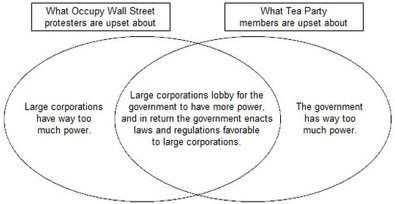
The problem, and I suppose this was inevitable, is that Occupy Wall Street is being portrayed as some kind of anti-Tea Party. Left vs. right, blue vs. red, rock vs. country, et cetera—it’s the only way we know how to draw battle lines anymore. But how are the two movements meaningfully different? I sure as hell can’t figure it out. There are plenty of minor differences, mostly concerning priorities and demographics, but the similarities are much more substantial. Both are popular uprisings against powerful-but-nebulous entities believed to be responsible for America’s economic struggles. Both are defined not by easily-identified leaders, but by the sum total of countless unique viewpoints, and thus are not capable of articulating their goals with any cohesiveness or specificity (nor should they be expected to). And both movements, to borrow the classification scheme created by Bill O’Reilly, are teeming with both pinheads and patriots. […]
We should pay less attention to the individual lunatics, and more attention to what a movement is really about. Occupy Wall Street, at its core, is a reaction to the increasing power and influence of large corporations. The Tea Party, at its core, is a reaction to the government’s constant interference with private enterprise. But wait a minute—aren’t those things connected?
* As expected, House Speaker Michael Madigan will block a vote on Gov. Pat Quinn’s amendatory veto of a legislative scholarship reform bill. Quinn rewrote the bill to abolish the program in its entirety. The Speaker’s spokesman was not kind…
It’s not in compliance with the constitution as it relates to the use of the amendatory veto. That’s very clear,” Madigan spokesman Steve Brown said. “This is something the speaker has worked on for two decades in terms of keeping the coequal branches of government intact.”
Referring to Quinn, Brown said, “You can’t sit around in one little place, one office, and say, ‘Here’s what I think the legislation should be.’ You have to engage in the legislative process. You can’t decide in the summer this is the bill I want. That’s not the way it was designed. There are three equal branches of government, regardless of the topic.”
A Quinn aide said the governor is intent on getting rid of what one aide repeatedly characterized as the “political scholarship program.”
“Obviously the governor doesn’t agree,” Quinn spokeswoman Brooke Anderson said when told of Brown’s comments regarding the governor’s use of the amendatory veto.
As I’ve said before, the scholarships should be abolished. But I have always been uncomfortable with the way governors try to stretch their amendatory veto powers.
* The Northwest Municipal Conference has proposed some changes to the way ComEd responds to storms, including forcing the company to set up regional 24-hour operations centers to inform customers what’s going on. The company’s response reputation is horrid, for good reason…
“I would receive messages from them that they had a crew on site, on scene, working on the repair, not realizing apparently that I was physically standing at the scene, watching the fact that there was nobody there, no work was being done,” said Wilmette Village Manager Tim Frenzer. “And in fact, the work wouldn’t be done for days.”
Busted. Cold.
* The super-intense storms last summer knocked out power for thousands of people. Without a smart grid, power outages cannot be contained and can become wider blackouts. Also, no smart grid means the company has to rely on customers to tell them when their power is out. But the company was clearly overwhelmed and residents had a right to be angry. And now, nobody wants to listen to the company’s ideas. This suburban editorial sums up a lot of the baby with the bathwater anger…
Until ComEd can get service returned quickly in the wake of power outages, residents should not be saddled with the bells-and-whistles-filled smart grid.
Too many people lost too much food in the last string of outages to reward ComEd with its coveted prize. Too many people suffered through days without air conditioning and nights with lights to give the power company a new gadget and higher electric rates. Too many traffic signals were dark, creating dangerous intersections, and too much emergency manpower was needed to baby-sit downed wires for state lawmakers to hand the power company yet another golden egg.
No one is saying that ComEd’s equipment should have withstood the powerful storms that rolled through the region this summer, but for residents in the northern suburbs to be without power for two, three and four days in the storms’ aftermath is simply unacceptable. Not being able to get power restored in a timely manner has to have consequences.
Keeping the smart grid from ComEd is not punishment, it is practicality. It is like your teen-age son asking for a Mercedes after he gets his driver’s license when he hasn’t mastered driving the 10-year-old mini-van yet. Any smart grid talk has to wait until ComEd proves itself worthy of the upgrade.
The editorial completely ignores the fact that we need both upgrades. The old grid needs to be shored up and the smart grid added to provide extra protection. But, ComEd is so unpopular that people just don’t want to listen. I can’t really blame them.
ComEd would probably be wise to go back to the drawing board, come up with a very big “dumb grid” and service upgrade and use that to justify the smart grid. And it should drop all that other crud about executive salaries and the like out of its bid to get around the Illinois Commerce Commission. If it doesn’t and its bill doesn’t pass, Illinois will be missing out on a chance to bring itself into the 21st Century.
ComEd’s new president said recently that Alexander Graham Bell wouldn’t recognize the telephone today, but Thomas Edison would be quite familiar with our existing 19th Century power grid. Enough with the games, already. And the AARP ought to back off the silliness about how “dangerous” smart meters are. It’s like the fluoridated water goofiness all over again.
* Craig Clausen penned a rah-rah op-ed for the Tribune today. Despite the exuberance, he makes good points…
In other states, smart meters are set to become the smartphones of the electricity business. Your current home electric meter knows one trick — dial spinning. If a human doesn’t read it each month, you end up receiving an estimated bill that may take months to reconcile to your actual usage. A smart meter is electronic, not mechanical. It can accurately bill you each month, week or day — your choice. It allows you to buy market-priced power at any given moment and even at tomorrow’s likely price.
A smart meter can tell you how much power each appliance is using and what your carbon footprint is. Want to ask your appliances how they’re feeling and whether the fridge might be headed for a motor failure? There’ll be an app for that.
Those inconvenient power outages we all endure will shorten because ComEd will instantly know who has power and who doesn’t. Crews can go to exactly the place they can do the most good. If a squirrel has his last meal chomping into your power connection, the meter can tell ComEd to restore service before you get home. You’ll know about it because the meter contacted you too. There’ll be an app for that.
Working late? Send your meter a message to save hours of cooling time if you want. There’ll be an app for that too.
Electric vehicles need smart meters to make sure that battery recharges are done during the wee hours of the night when prices are low. That app could come free from Ford or GM.
A law on the books for more than a decade sounds like it might have helped people like Sheldon Langer, who last year lost $600 of groceries after five days without power. And the village of Glenview, which spent tens of thousands of dollars in overtime this summer for firefighters and police officers who baby-sat downed wires and helped open emergency cooling centers.
The law was intended to compensate victims by holding Commonwealth Edison financially accountable for extreme outages, defined as those that leave more than 30,000 customers without power for at least four hours and could have been prevented.
But 14 years after the law’s passage, ComEd has never had to pay out for such losses.
ComEd simply found a way around the law. It’s a very crafty company, that one. And that’s why it shouldn’t be allowed to draft legislation like this smart grid thing.
* Exelon: Good for shareholders, not always customers: Sunday’s column was about why the Maryland Public Service Commission should reject Exelon Corp.’s applicaiton to take over Constellation Energy and BGE. One reason is what knowledgeable people describe as Exelon’s and utility ComEd’s unstated motivation to close their Zion Station nuclear plant: to decrease the supply and increase the price of electricity.
* Mike Boland is dropping out of the congressional race and will run for state Senate. This will be one of the most-watched primaries of the year…
Former state Rep. Mike Boland is dropping out of the Democratic primary in Illinois’ 17th district and will pursue a challenge against state Sen. Mike Jacobs.
The state Senate race would pit two longtime rivals against one another. And it would also pare the already lengthy slate of Democrats seeking to unseat U.S. Rep. Bobby Schilling, R-Ill. […]
Boland acknowledged he hasn’t done much fundraising, and he said he’d only raised about $6,000, far less than what some of his rivals are expected to report. Still, he said it wasn’t lack of money that is behind his exit.
He said he is challenging Jacobs because he’s unhappy with his record, particularly his sponsorship of a bill to let utilities raise rates to improve the electrical grid.
The feud between Boland and the Jacobs family goes back decades. He and Mike’s father despised each other, and the enmity continued when the son got the seat. Attempts were made in the past to dislodge Boland by both parties, but he’s always held on. He’s not all that popular at the Statehouse, but he was popular back in the district.
However, Boland has no money in his state campaign account. He drained it during his feckless bid for lt. governor last year, but he raised only a few thousand dollars for that campaign. Most of his money came from loans made by himself and his wife. Sen. Jacobs had $88K in the bank at the end of June and has raised about $48K since then.
Jacobs sponsored the much-hated “Smart Grid” bill. Jacobs’ father lobbies for ComEd. There’s plenty of fodder for Boland if he can run even a half-real campaign.
“I’m surprised,” Sen. Jacobs said. “He announced he was dropping out of the (Illinois) House where he had served 20 years to spend time with his grandkids. Then he ran for lieutenant governor and finished fifth. Then he ran for a Black Hawk College trustee position and then he announced a campaign for Congress.
“Now he’s going to drop out of the congressional race to run for (state) Senate. He makes me wonder if he knows what he wants to be when he grows up. I feel sorry for him. He has some issues.”
Sen. Jacobs said he doesn’t know Mr. Boland very well, but questions his motivation to run for the Illinois Senate.
“I don’t know what he could possibly offer the folks,” Sen. Jacobs said. “He hasn’t been very effective. … Thirty years ago, Boland ran against my father (for state Senate) and lost and endorsed a Republican after my father (Denny Jacobs) beat him. I don’t know what his motivation is. But anyone can run. It’s America.”
* Meanwhile, Democratic state Rep. Tom Holbrook has taken himself out of the race to replace retiring Democratic Congressman Jerry Costello. Others aren’t exactly climbing over each other to run, either…
St. Clair County State’s Sttorney Brendan Kelly and state Rep. Jerry Costello II, the congressman’s son, have told the News-Democrat they don’t plan to run for the seat Costello is giving up.
St. Clair County Board C hairmanMark Kern also has decided not to run for the 12th District seat, according to the St. Louis Post-Dispatch. Kern couldn’t be reached for comment. […]
Holbrook predicted “There’ll be a Democrat running.”
As to who that Democrat would be, “I would have to refer you to the party chairs,” he said.
* In other campaign news, there’s been a lot of talk about House Republican Leader Tom Cross thinking about endorsing Rick Perry’s presidential campaign. But Cross’ political godfather has just endorsed Mitt Romney…
“During my years in the House, I was an advocate for balanced budgets and low taxes,” Hastert said in a statement. “Mitt Romney stands up for these principles….From his success in the private sector, Mitt Romney understands how to create jobs and turn around this economy.”
* Everybody knows that Congresswoman Jan Schakowsky is intensely hated by the right wing. This post by Rebel Pundit is no exception…
#OccupyChicago: thousands of anarchists, union members, and Democrats–and not one American flag.
Just like the Tea Party!
Rep. Jan Schakowsky (D-IL) was on hand. She addressed a mob outside the Hyatt Regency Chicago, where some activists apparently attempted to disrupt a meeting of the Mortgage Bankers Association. She then led them in one of five feeder marchers that combined into a sea of pot-smoking, bongo-drumming, flea-infested dreadlock lunacy outside the Art Institute of Chicago.
We caught up with Jan, and asked for her thoughts on the patriotism of the protest, since we could not find one American flag in her parade of nearly 1000 liberal loons.
* Elk Grove Mayor Won’t Run For Congress: “I have no desire to run for Congress or state senate, as long as you give me the privilege, nothing makes me prouder than to say I’m the mayor of Elk Grove,” said Mayor Craig Johnson at Tuesday night’s village board meeting, putting to rest talk he might mount a run as a Republican in the newly remapped 8th Congressional Dist.
* Resident to Biggert: ‘I am Seething‘ About Job Cuts - Protesters came to Rep. Judy Biggert’s office in Willowbrook to encourage her to support the jobs bill that was before the U.S. Senate Tuesday.
Calling it a “misguided attempt” to exploit his new position as a member of Congress, Joe Walsh says his ex-wife is lying about not receiving some of the $117,437 in missing child support funds she says she’s owed.
In fact, he says he paid extra from November 2005 to June 2007.
The McHenry Tea Partyer, however, admits he did not pay child support from March 2008 to December 2010, but says he and his former wife had a verbal understanding that they would divide the children’s expenses but neither would pay the other child support. The couple’s children are ages 24, 20, and 16.
In the 31-page filing submitted to the Cook County circuit court’s Domestic Relations Division Tuesday afternoon, Walsh, the freshman who in the last eight months has catapulted onto a national stage with his charismatic candor and caustic rhetoric decrying government spending, argues that he’s been “pummeled by the media” since allegations he owed years of child support first broke in July.
* Mr. Walsh was able to prove (backed up with checks cashed by Laura Walsh) that he did in fact make years of payments at a time in which Laura Walsh claimed she received no payments from Mr. Walsh.
* Mr. Walsh did in fact pay his share of the education costs for all of his Children to attend Catholic school; despite the claim that Laura Walsh claims she incurred all of the costs.
* By blatantly and knowingly submitting false information in her pleading Laura Walsh and her attorney’s not only broke Illinois state law, but it is clear that the only point in submitting these allegations was an attempt to tarnish the Congressman’s reputation.
From 2007 on, the children lived with Mr. Walsh half the time.
* Over a five year period, Mr. Walsh and his wife agreed to both increases and decreases in child support changes, without modifying them in court.
* In fact for almost a full year while Laura Walsh was making $140,000 a year and living in another state, Mr. Walsh provided full time residential custodial care for his youngest son, despite making significantly less money than Laura Walsh.
* At no time did Mr. Walsh ever ask Laura Walsh for child support despite her high salary and the fact that he was the full time care giver of their only remaining dependent child. […]
I have unfairly endured two months of media ridicule as a “deadbeat dad.” My children have had to endure this as well. Yesterday’s pleading proves this charge is unfounded and shows that I have been a loving, supportive, involved Dad from the beginning. I understand that politics is a rough business and I have been an outspoken member of Congress who has clearly become a target. But to lie about me, especially my worth as a Father just isn’t right and I won’t put up with it.”
* The attorney for the former Mrs. Walsh denied there was a verbal agreement and added…
Laura Walsh’s attorney, Jack Coladarci, said his client stands behind everything she said in her December pleaading, which they began working on back when Walsh was largely unknown.
After years of not trying to collect money from Walsh, Laura Walsh went to her attorneys after she saw that the then-candidate had lent his campaign $34,000, Coladarci said.
“Last year, when she came to us, nobody thought he was going to win that race,” Coladarci said. “This wasn’t going after a congressman — it was about a guy who had enough money to donate to his campaign.”
* These stories about union leaders taking advantage of their positions and an obscure state law continue to make me sick to my stomach…
Among those in line to reap multiple pensions with the blessing of city pension fund officials is Liberato “Al” Naimoli, president of Cement Workers Local 76.
Naimoli retired in 2010 from a $15,000-a-year city job that he hadn’t worked at in a quarter-century. He now receives a city pension, based on his union salary, that pays him about $158,000 a year, more than any other annuitant in the city laborers’ pension fund.
In order to get that inflated city pension, Naimoli signed an application in 2009 that stated he was not receiving credit in any local union pension plan. Yet information obtained by the Tribune and WGN-TV shows that the local has been sending pension contributions on his behalf to the union fund since 1977. He is now eligible to receive about $60,000 a year.
His second pension will come from the Laborers’ Pension Fund for Chicago and Vicinity, a plan established by hundreds of private employers as well as the Construction and General Laborers District Council of Chicago and Vicinity. The council is an umbrella group composed of nearly two dozen Chicago-area unions affiliated with the Laborers’ International Union of North America, or LIUNA.
Naimoli’s continued participation in the union pension plan has the blessing of Heiss and of James Capasso Jr., executive director of the city laborers’ pension fund. Years ago, Capasso was booted from another LIUNA affiliate for receiving contributions to the district council pension fund despite never holding a paid job with a union.
James Capasso Jr. walked into a union pension fund office in 2002, announced he was retiring from Laborers’ Local 1001 and applied for a pension.
The request was curious, considering Capasso had never held a paying job with Local 1001. In fact, he had been making more than $100,000 a year working full time as executive director of the Laborers’ Annuity and Benefit Fund of Chicago, a city pension plan with more than $1 billion in assets.
It turned out that dues from union members had been set aside for Capasso with the Laborers’ Pension Fund for Chicago and Vicinity as if he had been working for the local 30 hours a week for 18 years, union documents show.
The union pension fund eventually rejected Capasso’s pension request. But the episode raises serious questions about how a college dropout with no prior experience became the executive director of a city pension fund — and why he was allowed to keep that job after the laborers union threw him out for attempting to collect a pension he was not entitled to receive.
At the city pension fund, Capasso is the official who allowed employees of Local 1001 and other unions affiliated with the Construction and General Laborers’ District Council of Chicago and Vicinity to land inflated city pensions on top of their union pensions.
Ugh.
* From a press release…
As the Chicago Tribune and WGN-TV continue to uncover gross abuses in the Chicago’s pension funds, Illinois House Minority Leader Tom Cross (R-Oswego) filed legislation today to ensure that Chicago union officials cannot collect multiple pensions, one through the City of Chicago and one through other labor organizations for pension credit earned for the same period of service.
Rep. Cross filed House Bill 3832 to strengthen current law, because according to the news reports, some top union officials circumvented the law to allow double dipping in the Chicago Municipal Pension Fund and the Chicago Laborers’ Pension Fund.
“This is double-dipping on steroids—and it was meant to be illegal. Unfortunately, top union officials used a questionable interpretation of the pension law that allowed them to use a loophole in to grab two or sometimes three pensions,” said Cross. “This is a disgrace—and must be remedied immediately.”
The reports are slightly different than what were in the news last month when the Chicago Tribune and WGN reported that city of Chicago union bosses were double dipping a city pension with a union pension by falsifying their City pension applications—stating they were only receiving one pension, but were collecting both.
Current State law provides that the deliberate falsification of documents in an attempt to defraud a public pension system is a Class 3 felony, and a conviction for this type of fraud will disqualify the individual from receiving municipal pensions.
Even though Illinois law was violated, the union officials were allowed to keep their inflated City of Chicago pension as long as they disclaimed the union pension they had also been receiving. It was a decision by the Executive Director of the Chicago Municipal Fund to not go after the violators of the current statute.
* Mayor Rahm Emanuel began rolling out his budget yesterday. Best line of the day…
“If you think you’re gonna balance a budget with a $637 million deficit that’s about 20 percent out of whack and you’re … gonna do it without controversy, call me. I’m really interested in the idea,” Emanuel said facetiously.
Emanuel made that comment at a press conference to announce that Accenture Financial Services is adding 500 new Chicago jobs. Those new jobs may help take a bit of the sting out of all the bad news.
If Mayor Rahm Emanuel gets his way and closes three police districts, the people who live in those communities will be short-changed, Fraternal Order of Police President Mike Shields said Tuesday night.
Under the mayor’s budget proposal, first reported Tuesday afternoon by the Chicago Sun-Times, three of the oldest stations — Belmont, Wood and Prairie — would be closed and its personnel consolidated into adjacent buildings.
“There’s going to be longer response time on 911 calls. There’s going to be less police officers in those neighborhoods, and it’s going to happen over time,” said Shields.
Some neighbors who live in the affected 13th District also challenge the plan.
“It’s an absolutely terrible idea,” said one resident.
* Explaining this won’t be easy, but they’re trying…
Sources said the stations were chosen because of their relatively low crime statistics and the ability of nearby stations with similarly low numbers to absorb the operations.
Chicago has 25 police districts, each with its own station. O.W. Wilson, the city’s first civilian superintendent, bit the bullet in 1960 and closed several stations, leaving only 20. Five more have been added since then.
For every station closed, McCarthy estimated that 20 officers could be made available for street duty. The move would also free scores of additional officers now assigned to police areas who support those district operations.
“At the end of the day, the consolidated districts will have the largest police forces — meaning by district manpower,” the mayor said.
“As it relates to libraries, you should know two things: I know what other cities are doing is closing them. I know the important role that libraries play in the educational and cultural life of our city, and I’m going to stay committed to the goal of libraries in our communities so our kids have an opportunity to go and to learn — not just in school, but at home and at their libraries.”
Even the city’s libraries would be impacted. They’re currently open just 8 hours a day. Those hours could be shortened again. “No! Not here. It’s used too much. It’s always busy,’ said Arlene Rosado, library user.
* The city’s hotel tax will jump from 3.5% to 4.5%, putting Chicago “on an equal level with other major cities,” according to mayoral aides. But look for big squawks from the hotel industry, because the overall tax (including levies by the state and other governments) will jump to a lofty 16.4%.
* A “congestion fee” — a higher tax on certain central area parking lots during certain portions of the day — will be imposed. Team Rahm isn’t yet saying how much the levy will be, but is reporting that funds will be used to rebuild two downtown el stations and pay for an express bus system known as bus rapid transit. […]
* The city’s “condo rebate fee,” a $75-a-unit annual payment used to compensate owner-occupied condo residents for the cost of private garbage collection, will be abolished. That likely will pass, but only over the opposition of lakefront aldermen.
Reported projected annual savings are $10 million.
* Not-for-profit institutions, from churches to schools, will lose free water. The only partial exception will be hospitals which primarily serve the poor, which will get a 20% discount on their water bill.
After initially rejecting the idea, Emanuel now will tap some surplus TIF dollars to help balance the city budget and also fund Chicago Public Schools and other local taxing districts, sources told the CNC. […]
Emanuel had said he preferred to avoid one-time fixes for deficits and instead would enact long-term changes.
“The TIFS are one time,” the mayor said in August.” “They don’t solve the problem. They don’t deal with the problem. Next year, we’d be back at it like Groundhog Day.”
Country music fan Gov. Pat Quinn is welcoming singer Martina McBride to Chicago.
Quinn will be at Union Station on Wednesday morning to greet McBride. The crooner is on an 11-city, cross-country train tour promoting her new album, “Eleven.”
* So, the Republicans believe 17,000 Illinoisans [typo fixed] are gonna pay $5 each to vote in a straw poll? Good luck…
Illinois Republicans hope to raise at least $85,000 via a presidential straw poll that gets under way later this month.
The state party’s first-ever straw poll — modeled on similar GOP fundraisers in other states — will allow voters to cast their unofficial ballots online beginning Oct. 29 at IllinoisStrawPoll.com.
Voters wanting to cast actual physical ballots will have to wait until Nov. 5. The in-person paper voting, run by county party organizations wishing to participate, will take place from 9 a.m. to 7 p.m. that day.
The cost to cast a ballot: $5, payable at the voting sites or via a credit card if voting online. […]
Blessing said he is not sure how many people might participate in the poll, but he hopes Illinois can surpass totals set in Iowa this summer, in which nearly 17,000 Republicans cast ballots and gave Bachman an early boost.
It’ll be one heckuva feat if they meet their goal.
Rainbow PUSH joined with Attorney General Lisa Madigan to expose the targeting and steering of Blacks and people of color into sub-prime loans, and to demand appropriate remedies from Countrywide and other banks that engaged in discriminatory lending practices.
What Rev. Jackson forgot to mention is that he opposed a state predatory lender law back in early 2007, before all heck broke loose. Jackson said back then that the law, which targeted areas hardest hit by the scammers, had “the smell of apartheid.”