|
*** UPDATED x1 *** Shimkus won’t run again
Friday, Aug 30, 2019 - Posted by Rich Miller * KMOX with the exclusive…
Well, he finally term-limited himself. /s Any idea who might run for that seat now? …Adding… Scott Kennedy fills us in… 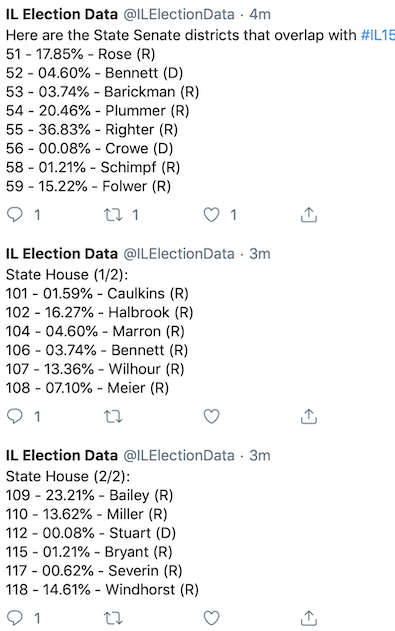 Sen. Jason Plummer has wanted that seat for a very long time. …Adding… Keep an eye on retiring Sen. Dale Righter. Yes, he voted for the 2017 income tax hike, but he voted against the tax hikes to fund the capital bill this year. Why would he do that if he wasn’t running again and needed help for his district? Food for thought. …Adding… From his Facebook page…
*** UPDATE *** Not sure what to make of this…
Durbin received 53.5 percent of the vote in 2014. …Adding… Press release…
|


|
*** UPDATED x2 *** Lightfoot: “We can’t keep taxing the hell out of all of our people who make substantial income. That’s not right. That’s not fair. It’s not gonna work.”
Friday, Aug 30, 2019 - Posted by Rich Miller * At one point in her Sun-Times editorial board interview yesterday, Mayor Lori Lightfoot had this to say about her idea to create a progressive rate on the real estate transfer tax, for which she’ll need Statehouse approval…
* But Lightfoot was also asked if she thought it was politically tough to get Downstaters on board for pension help for the city at the same time that the Democrats are trying to pass a progressive income tax…
What I think she’s trying to say here is that if upper-income folks get hit with two big property tax hikes between now and next November, they’re gonna rebel at the polls against the progressive income tax. OK, but they’re still a minority, including in the city, and Lightfoot herself is trying to impose her own progressive tax. And that last little bit about the poor put-upon rich people was a big political mistake. You can probably bet a lot of money that this quote is gonna wind up in a TV ad against the Pritzker graduated income tax. And you can also bet that the legislators who voted to put that tax proposal on the ballot are not going to be pleased with the mayor. [Hat tip: Rachel Hinton *** UPDATE 1 *** Good questions by Tina…
* Meanwhile, over at Crain’s Chicago Business…
Pick a lane, please. *** UPDATE 2 *** Michael Crowley at the mayor’s office…
|
|
*** LIVE COVERAGE ***
Friday, Aug 30, 2019 - Posted by Rich Miller * Follow along with ScribbleLive…
Comments Off |
| « NEWER POSTS | PREVIOUS POSTS » |