“So help me God”
Tuesday, Jan 15, 2019 - Posted by Rich Miller
* The last question at Gov. Pritzker’s press conference today…
I noticed yesterday that when you took the oath of office that you did not in the traditional way, as many governors have, say ‘So help me God.’ Can you explain that?
Pritzker immediately raised his right hand and said “So help me God.” Some folks chuckled.
* From the Illinois Constitution…
SECTION 3. OATH OR AFFIRMATION OF OFFICE
Each prospective holder of a State office or other State position created by this Constitution, before taking office, shall take and subscribe to the following oath or affirmation:
“I do solemnly swear (affirm) that I will support the Constitution of the United States, and the Constitution of the State of Illinois, and that I will faithfully discharge the duties of the office of …. to the best of my ability.”
Background on the phrase is here.
Thoughts?
22 Comments  
|
* Press release…
Standing with working families on his first full day in office, Governor JB Pritzker took important first steps to raise Illinoisans’ wages by signing a robust initial package of legislation and executive orders designed to raise and protect their wages.
“This administration is putting Springfield back on the side of working families and these measures are a critical first step in the work that will define my administration, especially as we move toward raising the minimum wage to $15 an hour,” said Governor JB Pritzker. “On the first day of a new administration, we’re enshrining our state’s values to create real and lasting opportunity for the middle class.
“For hardworking people across Illinois, know that your state government has your back. Whether it’s pay equity for women, prosecuting employers who engage in wage theft, instituting prevailing wage requirements, using project labor agreements, restoring state employees’ steps, or promoting diversity in state contracts, these steps are the first of many to take bold action to support working families. This work is far from done, and I look forward to continuing to work with the General Assembly to advance core priorities so working families across Illinois can thrive.”
Today, Governor Pritzker signed Executive Order 2019-02, which will:
* Require that the Department of Central Management Services and the Department of Human Rights shall review the state’s pay plan to eliminate bias generated by asking employees for salary history, which often disadvantages women, particularly women of color. The State of Illinois will no longer ask prospective employees questions about salary history, because of historic salary disadvantages women face.
* Help protect workers from wage theft. The order directs the Illinois Department of Labor to expeditiously handle all cases of wage theft and day labor exploitation, including referring appropriate cases to the Attorney General. This will allow the administration to hold bad actors accountable and protect workers.
Require that all state agencies comply with the Project Labor Agreements Act.
“As the sponsor of the no salary history bill, I am proud to stand with our new governor today as he takes strong, immediate action to close the gender pay gap and move towards pay equity,” said Rep. Anna Moeller. “Governor Pritzker is making it clear to women across our state that they have a staunch ally and advocate in the governor’s office.”
“Surrounded by workers of all backgrounds, Governor Pritzker is delivering on his promise to stand up for working families with his signature on critical legislation today,” said Sen. Cristina Castro. “The action taken by Governor Pritzker today will protect wages, help close the pay gap for women, and improve the wellbeing of thousands of hardworking Illinoisans across our state.”
“I applaud Governor Pritzker for taking immediate action to lift up the middle class and those striving to get there,” said Mike Carrigan, president the Illinois AFL-CIO. “Signing this package of legislation and executive orders on his first full day in office shows that Governor Pritzker is putting working families first.”
Governor Pritzker also took the following measures to support working families:
* SB 203: The governor signed legislation passed by the General Assembly to protect the wages of workers and promote gender and racial diversity in companies with state contracts. The legislation ensures that the Illinois Department of Labor (IDOL) engages in collective bargaining with local labor stakeholders to establish prevailing wage rates. It also requires the IDOL to release reports on the diversity of workers employed on public works projects and provide recommendations to increase employment of women and people of color on projects.
* Steps: Today, the state will initiate a process to bring state employees to their appropriate salary step level. Under this measure, union employees, many of whom have not received step increases since 2015, will be placed at their appropriate step for purposes of their pay going forward. This action does not address significant outstanding issues, including backpay. The administration will continue to work toward solutions to manage taxpayer resources effectively and compensate state employees fairly.
The EO is here. SB203 is here.
…Adding… AFSCME Council 31 Executive Roberta Lynch…
Governor Pritzker’s announcement represents important progress toward ending Bruce Rauner’s illegal four-year freeze on step progression for state employees.
The process of placing employees on the appropriate step should be completed without delay.
It’s critical that the state also move quickly to make employees whole for the wages they have been wrongfully denied since 2015.
…Adding… IFT President Dan Montgomery…
By signing agreements that ensure fair pay for state workers and move toward pay equity for women, Governor Pritzker has shown more respect for workers and our unions on his first day in office than Bruce Rauner did during his entire term.
We applaud Governor Pritzker for making sure the state fulfills its end of the bargain in negotiated contracts, and we encourage that deliberate steps be taken to address the back-pay issue.
We look forward to continuing to work with the new administration to improve the lives of Illinois workers, provide high-quality public education and services for all, and ensure that the wealthiest pay their fair share to help run our great state. It truly is a new day in Illinois.
…Adding… ILGOP Chairman Tim Schneider…
Governor Pritzker has barely been in office for 24 hours, and he’s already signed an executive order spending an undefined amount of taxpayer dollars on state employee pay increases. Yesterday, we heard promises from Pritzker that he would work with Democrats and Republicans to balance the budget. Yet today, Pritzker unilaterally made reckless spending promises without specifying the costs, creating more budget uncertainty. It’s clear - the Pritzker agenda is the same agenda that has dragged our state down for decades - borrow, tax, spend, repeat.
63 Comments
|
All rise
Tuesday, Jan 15, 2019 - Posted by Rich Miller
* I mean, he is a Republican and he did lose the election, but both Republican legislative leaders rose…
…Adding… Legit classiness from Rauner’s staff…
* How do they say “bon voyage” in New Zealand?…
45 Comments
|
The “Middle Class March” that wasn’t
Tuesday, Jan 15, 2019 - Posted by Rich Miller
* An Illinois News Network story from earlier this month…
Kristen Wiley, who is organizing a “Middle Class March” outside of Democratic Gov.-elect J.B. Pritzker’s inauguration in Springfield next week said the ad is out of touch.
“Making Madigan the last shot in this ad is completely tone deaf to people who believe in term limits, and would like to see him out of office,” Wiley said. “That was completely off-putting. Democrats know that 45,000 residents left Illinois last year, and that number will grow this year if they can’t keep their hands out of our pockets.”
She said Democrats are trying to rehab their image.
“They’ve been trying to sell taxing the upper-middle class and the rich in order to pay down the debts in this state and they’ve failed miserably at it for decades,” Wiley said.
* The “march” totaled just six people…
Outside an entrance to the convention center as the crowd of about 5,000 filed out, six demonstrators carried signs with messages included “Read my lips; No new taxes,” and “Enough is enough.”
Kristen Wiley, 33, of St. Jacob in Madison County, said the message the “middle class march” was bringing was “no new or increased taxes” and “stop the overspending.”
She said the messages are in response to Pritzker’s call for a progressive income tax and funding for an infrastructure program. Wiley said wasteful programs can be cut to pay for the state’s needs.
Ah, a firm believer in magic beans.
* Illinois News Network…
Illinois Gov. J.B. Pritzker said he’ll work with minority Republicans, but warned that partisan opponents to the idea of a progressive tax will be met with “considerable political will.”
After taking the oath of office, the Democratic billionaire governor took direct aim at opponents of taxing higher earners a higher percentage of their income. He said anyone who joins the tax conversation in good faith has a seat at the table.
“But if you lead with partisanship and scare tactics, you will be met with considerable political will,” Pritzker said. […]
Standing with a handful of protesters wearing yellow vests outside the inauguration, Kristin Wiley said Pritzker’s rhetoric was “terrifying.”
“Anything different from what he thinks is going to be smacked down and that is not working together at all, that’s ‘my way or the highway,’ that’s what he said,” Wiley said.
OK.
* By the way, these “yellow vest” copycats may or may not know that many of the “real” yellow-vesters are a bunch of hooligans. From the Columbia Journalism Review…
In late November, as the Gilets Jaunes—or Yellow Vests—protest movement took hold in France, Martin Goillandeau and Makana Eyre wrote for CJR that participants were harassing, and even assaulting, journalists. Since then, the protests have become a weekly occurrence. So, too, have threats against reporters. “The harassment and violence have got worse,” Eyre told me this morning. “I went to the Saturday protests in Paris to shoot photos and see how big it would get. This was the first time that I really felt nervous with my camera… I saw people interfering with broadcasts, shouting at media teams, and getting in their faces. For much of it, I had my camera in my coat.”
This past weekend, a group of Yellow Vests in the northern city of Rouen set upon two journalists working for LCI, a French TV news broadcaster; they were spared by two bodyguards, one of whom ended up in hospital with a broken nose. Protesters aggressed another LCI team in Paris. In Toulon, two Agence France-Presse reporters were chased by about 10 people, while in nearby Marseille, photographers were hassled and blocked from taking pictures. In Toulouse, a group of protesters trapped a 31-year-old local journalist in her car and threatened her with rape. “They wanted me to open my window. I told them it wasn’t possible, that I had to go and pick up my son,” she recalled. “A man threatened me that I had two seconds to get out.” Organized groups have hampered newspapers’ core operations, too: overnight on Friday, for example, about 30 Yellow Vests blocked regional newspaper La Voix du Nord’s distribution depot and threatened to burn a truck, stopping 20,000 copies of the paper from being delivered. On Sunday, trash cans were set on fire outside the same paper’s offices. While no motive was immediately established, its director doesn’t think it was an accident.
53 Comments
|
* Press release…
In his first official act as the 43rd governor of Illinois, Governor JB Pritzker will sign his first executive order today at 1 p.m. to usher in a renewed era of transparency among state agencies. This is a “back to basics” focus on serving the public and a requirement that all agencies ensure they are in compliance with the law.
Making good government a top priority, the first executive order of the Pritzker administration will direct state agencies, boards and commissions to immediately review their compliance with statutory mandates, come into compliance with data transparency laws and release all data that is required to be disclosed under state law, as well as review potential voluntary disclosures that would improve transparency and provide plans to address all audit findings of the past four years.
“Good government starts with making the state accountable to its people and ensuring every Illinoisan has access to the services they need,” said Governor JB Pritzker. “Our state’s hardworking residents deserve to know how taxpayer money is being spent, and I will ensure that transparency is a core value of my administration. By shining a light on how the state is and isn’t living up to its responsibility to our citizens, we can start making real improvements in the lives of families across Illinois.”
The elements of the executive order include:
A requirement that every agency, board and commission review all statutory obligations and audit findings from the past four years and provide a plan within 60 days to address findings;
A requirement that every agency board and commission review laws and regulations on publishing data and ensure compliance within 30 days;
A requirement that every agency, board and commission review their data publishing practices – including past practices – within 60 days to move toward greater voluntary data disclosure.
“Governor Pritzker is beginning his term by providing bold leadership with a commonsense measure holding state government accountable to its people,” said former Governor Jim Edgar. “This initial action by Governor Pritzker shows Illinoisans that he will prioritize high quality services to residents that are provided effectively, efficiently and transparently.”
“Illinoisans deserve to have a state government that is open and accountable to the people, and focused on delivering needed services effectively and transparently,” said U.S. Senator Dick Durbin. “Bringing the state into compliance with transparency requirements on day one in office shows this governor is working to move beyond our past and chart the right course for Illinois.”
“Every resident of our state should know how their state government is meeting or falling short of its obligation to provide quality services for all,” said Senator Melinda Bush. “Governor Pritzker’s action today shows he’s putting the people first and ensuring we are fulfilling the needs of all Illinoisans.”
“Taxpayers ought to know how their money is being used and if the state is actually serving its residents, and Governor Pritzker understands that,” said Senator Andy Manar. “In his first act as governor, he is demonstrating leadership and inviting accountability into the crucial services our state provides, and that will help all Illinoisans restore trust in their government.”
“For too long, the state has withheld critical data on how human services are functioning, but Governor Pritzker’s executive order writes a new chapter of good government for the state of Illinois,” said Thomas Yates, Executive Director of Legal Council for Health Justice. “We think everyone — providers, recipients, and the public — should be able to see accurate, up-to-date information about how human services and health care are administered by the state. With this executive order, state agencies will be on track to provide data to better inform policy for programs that improve the lives of millions of people in Illinois.”
The EO is here. [Fixed link.]
Any other EOs you’d like to see?
36 Comments
|
Do better, dude
Tuesday, Jan 15, 2019 - Posted by Rich Miller
* I haven’t interacted much with Illinois Supreme Court spokesman Chris Bonjean, but I sure hope when I do he responds better than this. From a Tina Sfondeles Sun-Times story…
Illinois Comptroller Susana Mendoza — who has joined a long list of those vying to replace Mayor Rahm Emanuel — avoided some controversy by being sworn in by Cook County Circuit Court Judge Rossana Patricia Fernandez — not Illinois Supreme Court Justice Anne Burke, whose husband Ald. Ed Burke was charged earlier this month in an attempted extortion case. Justice Burke, a close friend, gave Mendoza the oath of office in 2016. WBEZ first reported the switch on Jan. 11.
Asked for comment on why Burke did not administer the oath, Illinois Supreme Court spokesman Chris Bonjean declined to elaborate, simply saying, “I hope the Sun-Times has better news judgement [sic] than that.”
Wow. That was a pretty condescending non-response.
* So, what, then, could possibly be the difference between Tina’s news judgment and that of WBEZ’s Dan Mihalopoulos? Because Dan called the court about the same story just a few days ago and Bonjean had no patronizing retort…
And state Supreme Court spokesman Christopher Bonjean told WBEZ that he spoke with Anne Burke, and she said Mendoza had invited her to swear her in again — then withdrew that request recently.
Bonjean said he did not know when exactly the invitation was withdrawn or why.
Was that so hard?
…Adding… Sfondeles tells me that Bonjean called and apologized.
28 Comments
|
* Gov. Pritzker mentioned some Downstate communities as examples of what the state can be during his speech yesterday. He also said this…
As we enter Illinois’ third century, we must bring a renaissance to downstate Illinois which has been deprived of some basic resources for education and business building that are taken for granted elsewhere in our state. To begin, we will work to deliver high speed broadband internet coverage to everyone, in every corner of Illinois. Today every new job and every student is dependent upon connectivity, and no part of our state should be left out.
Broadband access is not just a Downstate concern, of course. It’s also an issue in poorer areas across the Chicagoland area.
* Pritzker seems to be reaching out to legislators in the region…
As Pritzker begins [the budget] process, Sen. Dale Fowler, R-Harrisburg, is confident he’ll keep Southern Illinois in mind.
“I’ve had numerous conversations with the governor about Southern Illinois,” said Fowler, who’s been named to Pritzker’s job creation and economic opportunity transition committee. “Projects in my district, like the Cairo river port terminal, I know he’s got that on his radar.”
The phone calls from Pritzker and his transition team have been frequent, Fowler said, and the governor has suggested he’ll tour Southern Illinois in March. […]
“Almost all of the policy proposals that he outlined are things I’ll probably be on the opposite side of,” Schimpf said, “But when he talks about listening to everybody, as long as you come to the table with good faith, I think that’s the way the process is supposed to work.”
Gov. Rauner traveled all over Illinois, but he didn’t actually do much for anyone and he listened to almost nobody. So even the appearance of giving a darn is naturally going to be met with welcoming arms. We’ll just have to wait and see how Pritzker follows through.
* Sen. Fowler even said he’s keeping an open mind about the graduated income tax…
Fowler said he’s willing to listen.
“There hasn’t been any numbers attached to those yet,” Fowler said. “We’ll be open-minded. If it’s a tax on the rich, we’ll take a good look at it, but if it’s going to a challenge or a detriment to the middle class, then I’m going to have an issue with that.”
* Meanwhile…
On the day that Democrat J.B. Pritzker was inaugurated as governor, the two Republican state representatives who live in Springfield sent him a letter highlighting the new state law that makes Sangamon County the default location for many new state jobs.
“As you begin the process of filling various positions across the agencies of state government, we hope you will keep this new law in mind as positions are filled,” wrote Reps. Tim Butler and Mike Murphy. “Springfield is a wonderful city to live, work, and raise a family. The contributions made to the economy of our area by state employees are tremendous. We hope that your administration will continue the work of prioritizing Sangamon County and recognizing the city of Springfield for being the capital of our great state.”
Monday’s letter, which also offered congratulations to Pritzker, referred to legislation signed in August by then-Gov. Bruce Rauner. Sponsored by then-state Rep. Sara Wojcicki Jimenez, R-Leland Grove, the bill makes Springfield and Sangamon County the default location for employees in most state agencies. The director of Central Management Services would have to establish a geographic location for each state job and specify why positions located outside the capital city need to be there. […]
At the Bank of Springfield Center Monday before the inauguration ceremony got underway, Butler characterized the letter as “just a reminder” and said he’s had “a few quick conversations” with Pritzker and looks forward to “sitting down with him and talking about the needs of not only Sangamon County but the 87th District.
“I’ve been impressed so far with the folks that he’s brought into the administration,” Butler said. “Hopefully, we’re going to have a good working relationship.”
Your thoughts on this law?
* Related…
* Champaign County State’s Attorney: Pritzker Should Take Downstate Concerns To Heart: “We have some different issues (than Chicago). We have some similarities. But we can’t just let what’s going on in Chicago with the Chicago Police Department, the issues that they face necessarily are not the same and shouldn’t entirely run the conversation,” Rietz said.
31 Comments
|
That was some party last night
Tuesday, Jan 15, 2019 - Posted by Rich Miller
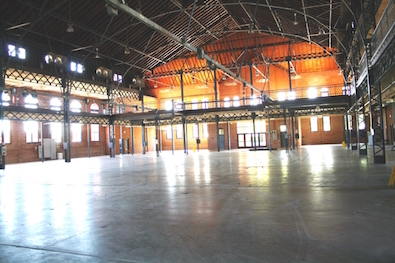
* I have no idea what the future will bring, but here’s the one thing of which I am certain: JB and MK Pritzker know how to throw a party. This, my friends, is the Expo Building on the state fairgrounds…
Yeah. The Expo Building. You know that place. It’s the one with all the little commercial booths. Unrecognizable last night.
…Adding… If you’ve never been to the Expo Building, here it is in its “natural state”…
* SJ-R…
A large crowd of Pritzker supporters and others mingled, took selfies and danced to various bands, including a surprise appearance from Maroon 5, an internationally known, three-time Grammy Award-winning band usually seen playing large arenas and stadiums.
In fact, just a day earlier, the NFL announced Maroon 5, fronted by Adam Levine, will be the main act of the Super Bowl halftime show on Feb. 3. But there they were on the stage in the Expo Building Monday night, playing hits such as “Payphone,” “One More Night,” “Sunday Morning” and “Harder to Breathe.”
Speculation over the identity of Monday’s headlining act circulated around town all day. Inauguration officials remained tight-lipped about who it was.
Just before Maroon 5 came out, the new governor and his wife, M.K. Pritzker, came out on stage for their first dance as the first couple. They danced to “How Sweet It Is (To Be Loved By You).”
I had to Google Maroon 5 to see who they were. I told people I’d done that and almost all of them said, “Dude, they’re playing at the Super Bowl.” My response was, “Yeah, I realized that during my Google search.” Turns out, I knew several of their songs.
* The crowd went crazy…
* I don’t know how much the Pritzkers spent on last night’s shindig, but they also did some good…
“This is amazing. It is for the people, all the proceeds are being donated to charity from what I understand, so we are all here just to have a great time,” said Sanovia Reynolds Parks, campaign volunteer.
One of the charities is the Illinois State Fair Foundation; the other is Cabrini Green Legal Aid, which helps low income Chicagoans maneuver the legal system. The executive director of the organization was a colleague of Lieutenant Governor Julianna Stratton.
“Being the recipient of this award was quite a surprise um Juliana called me during the week at like 10 o’clock at night and gave us the big news and so I was like ‘What is going on!’ Um, this is so exciting,” said Esther Franco-Payne, executive director CGLA.
With over 1,000 people in attendance, the ball raised at least $250,000 for those charities.
* The one thing I didn’t expect to see was a ton of Republicans. I think I’d been at the ball five or ten minutes before I finally talked to a Democrat.
Both Republican legislative leaders were also there and they didn’t just make a quick appearance and leave. They stuck around and partied. I talked to them and they were clearly having a good time and were both very hopeful about the future.
So, I wouldn’t put much stock into this analysis…
And while [JB Pritzker’s inauguration] speech was imbued with the bipartisanship that’s been running throughout inauguration weekend, the GOP didn’t buy it. Before Pritzker had left the building, Illinois GOP Chairman Tim Schneider released a scathing statement.
He said Pritzker delivered “the same agenda that has dragged our state down for decades—borrow, tax, spend, repeat.” And he accused Pritzker of failing to mention “promised” support of legislative leadership term limits and an independent redistricting commission. Both initiatives are supported by the Illinois GOP. “We didn’t hear anything about them today. Why? Because they were only a ploy to win votes,” Schneider said.
The honeymoon seemed over with Republicans, but Dems were swooning.
Um, what?
It’s going to take a whole lot more than one silly press release from the state party to poison the well. People on both sides appear to be legitimately hungry for peace and progress. I don’t know how long this will last, but party hacks are gonna party hack. The real work is being done in Springfield, not GOP headquarters in Chicago.
43 Comments
|
Rhymes with bracism
Tuesday, Jan 15, 2019 - Posted by Rich Miller
* Sun-Times…
Police asked to conduct searches of vehicles driven by black motorists nearly twice as often as those driven by whites in 2017, according to the report. Police asked to search cars driven by Latinos 1.4 times more often those driven by whites.
At the same time, white drivers were found with contraband about 1.3 times more often than black or Latino drivers. The report, titled “Racism in the Rear View Mirror,” was released Monday.
“The data shows that law enforcement officers throughout the state of Illinois continue to stop black and Latinx drivers at rates beyond their representation in the driving population and continue to perform searches of black and Latinx drivers at higher rates than white drivers,” the ACLU said. “In short, biased policing continues to be a problem in Illinois.”
The report examined data collected by the Illinois Department of Transportation between 2015 and 2017 from more than 900 law enforcement agencies statewide. Police made about 6.5 million traffic stops and performed more than 283,000 searches in that time.
In certain cities, such as Aurora and Champaign, black drivers were stopped at rates more than twice that of the population of black people who lived there, according to the report.
Go read the whole thing, plus there’s much more here.
* ACLU’s recommendations…
* Make permanent the Illinois Traffic and Pedestrian Stop Statistical Study Act
* Abolish consent searches during traffic stops
* Review and report data on police dogs
* Consistent statewide use of body cameras
* Investigate and report all outcomes of complaints against officers
32 Comments
|
|
 Support CapitolFax.com
Visit our advertisers...

 ...............
 ...............
 ...............


|
   
|
Hosted by MCS |
SUBSCRIBE to Capitol Fax |
Advertise Here |
Mobile Version |
Contact Rich Miller
|



