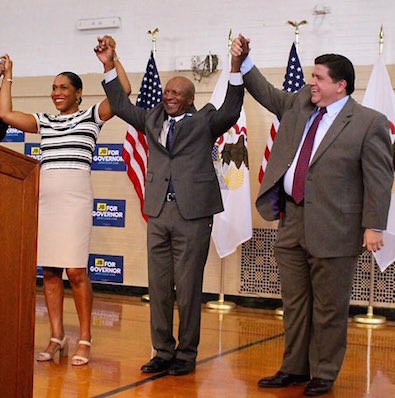
Declining to offer specifics on the deal “out of respect for leaders in the legislative process,” Mayor Rahm Emanuel said the state is “finally being fair.”
Asked if the deal in principle would net CPS the same benefits as the original bill Rauner used his amendatory veto on, Emanuel said: “That, and more.”
Asked if the tentative deal included all the funding increases for CPS that were in the original Democratic bill, Mayor Rahm Emanuel responded, “That and more.”
I’m hearing the same thing through the grapevine.
* So we go through all that turmoil and CPS apparently gets what it wanted anyway?
* So after decrying the “false rumors” about staff exits earlier today and telling his own staff that rumors about Dennis Murashko leaving were false, his general counsel did, in fact, resign. From the governor’s office…
General Counsel Dennis Murashko will leave the Administration at the end of August to pursue opportunities in the private sector. As part of the legal team’s succession planning, Kenton Skarin will assume the role of Acting General Counsel to the Governor. He currently is serving as the Governor’s Deputy General Counsel and is responsible for managing all aspects of legal operations within the Administration.
“One of the most talented and creative lawyers, Dennis has been my trusted senior adviser for almost three years, and I have always valued his good counsel,” Gov. Rauner said. “On behalf of the residents of our great state, I wish him well in his future endeavors.”
Before assuming a role in the Administration, Kenton worked in the Issues and Appeals Practice of Jones Day’s Chicago Office. There, he practiced complex litigation and appeals in trial and appellate courts in Illinois and across the country. Kenton also previously served as law clerk to the Honorable Justice Clarence Thomas on the United States Supreme Court and to Judge J. Harvie Wilkinson III on the United States Court of Appeals for the Fourth District. Kenton graduated first in his class from Northwestern University School of Law and summa cum laude from North Central College in Naperville. He is a lifelong resident of Illinois.
*** UPDATE *** From this morning’s press conference…
REPORTER: “Are you keeping your chief of staff?”
RAUNER: “We announced some changes in the communications department, and that’s all the changes there are.”
* No details yet, but unless there’s some last-second glitch I’m told an announcement is coming momentarily from the leaders. Stay tuned.
While we wait, I should note that I told subscribers yesterday that reaching an agreement was “all on” House GOP Leader Jim Durkin’s shoulders. He obviously needed a deal to prevent yet another member revolt, but he had the unenviable task of convincing Gov. Rauner to go along. That’s never easy. So, kudos.
*** UPDATE 1 *** Press release…
Joint Statement from House and Senate GOP Leaders on School Funding Reform
Chicago, IL - House Republican Leader Jim Durkin (R-Western Springs) and Senate Republican Leader-designee Bill Brady (R-Bloomington) today released the following statement on school funding reform negotiations:
“This afternoon the four legislative leaders and the governor reached an agreement in principle on historic school funding reform. Language will be drafted and details of the agreement released once the drafts have been reviewed. The leaders will reconvene in Springfield on Sunday in anticipation of House action on Monday.”
*** UPDATE 2 *** Press release…
Statement from Democratic leaders on school funding negotiations
House Speaker Michael J. Madigan
Senate President John J. Cullerton
“The legislative leaders appear to have reached a bipartisan agreement in concept and will meet again on Sunday in Springfield. The Illinois House is expected to be in session on Monday at 4:30 p.m.”
*** UPDATE 3 *** Press release…
The following statement can be attributed to the Governor’s Office:
“Governor Rauner applauds the four leaders in coming to a consensus on historic school funding reform that reflects the work of the School Funding Reform Commission. He thanks them for their leadership and looks forward to the coming days when the legislation is passed by both chambers.”
*** UPDATE 4 *** Sen. Andy Manar…
“I am encouraged that the legislative leaders appear to have reached an agreement in concept on school funding reform. As many have reiterated time and again for years on end, the inequities that deepen with each passing day in our public schools are a horrible stain on our great state. The status quo is unjust and immoral. Our goal is simple: create a system that is both adequate and equitable for all children. I look forward to continuing to work with my colleagues on both sides of the aisle to get this job done.”
* The Illinois Business Immigration Coalition has a pretty good summation of the TRUST Act bill. And since there’s so much opposition from people who don’t know what’s actually in it, I thought I’d share part of their press release with you…
Trust ACT SB 31 is a ” very reasonable” bill, as Governor Rauner said on Friday, August 18 on WBEZ’s morning shift program. It has the backing of business leaders and support from some big names in state law enforcement like Cook County Sheriff Tom Dart and Lake County Sheriff Mark Curran. Trust Act will make our communities safer and our economy stronger.
SB 31 was negotiated from 40 pages down to 2 pages, see the actual language SB 31 (and amended by HA#3) HERE. These changes and amendment have led to some confusion about what SB 31, as approved, does and does not do.
SB 31 was negotiated with law enforcement and immigrant advocates, with the Illinois Association of Chiefs of Police in support, and the Illinois Sheriffs Association neutral and prominent law enforcement officials, such as sheriffs Tom Dart (D-Cook County) and Mark Curran (R-Lake County) actively in support.
What IS in TRUST ACT SB 31-HA#3 See the actual language HERE
1) State and local police would not arrest or hold a person based solely on immigration status.
2) State and local police honor ICE detainers sanctioned by a judge.
3) State and local police are allowed to communicate with federal agents, and fully compliant with federal statutory requirements.
What is NOT in TRUST ACT SB 31-HA #3 See the actual language HERE
1) SB 31 does NOT create “safe” zones such as hospitals and schools
2) SB 31 does NOT create “sanctuary” state or municipalities
3) SB 31 does NOT prohibit law enforcement communications with federal agents
WHY TRUST ACT SB 31 is a Good Step Forward for Illinois
1) The core duty of local police is community safety, not federal immigration enforcement. Immigrants are more likely to report crimes and come forward as witnesses to crimes when they are not afraid. Trust Act SB 31 promotes trust between immigrants and local police which strengthens community safety for all Illinois residents.
2) Reduce unnecessary disruption to the workforce - our economy depends on immigrants as workers, business owners and entrepreneurs. Efforts to repair our broken immigration system have been stalled in Congress for well over a decade, with no resolution in sight. That’s the reality that makes the Trust Act a smart move for Illinois.
Cook County Sheriff Tom Dart
Lake County Sheriff Mark Curran
Illinois Association of Chiefs of Police
Melrose Park Chief of Police Sam C Pitassi
Stone Park Chief of Police Christopher P. Pavini
Franklin Park Chief of Police Michael Witz
Chicago Heights Chief of Police Tom Rogers
Elgin Chief of Police Jeffrey Swoboda
Berwyn Chief of Police Michael D. Cimaglia
Elmwood Park Chief of Police Frank Fagiano
Evanston Police Chief Richard Eddington
*** UPDATE *** From the Welcoming Illinois Campaign…
Hey Rich, we thought you’d also like to have the list of over 80 organizations that make up the Welcoming Illinois Campaign, which actually wrote SB31, negotiated with law enforcement and legislators, and successfully passed it this spring by working closely with Senate President Cullerton, Rep. Chris Welch, and Rep. Lisa Hernandez. This began and will end as a community driven victory.
Here’s the list:
Access Living
ACLU Illinois
Alliance of Filipinos for Immigrant Rights and Empowerment (AFIRE)
American Immigration Lawyers Association - Greater Chicago Chapter
Apna Ghar Inc.
Arab American Action Network
Arab American Family Services
Asian Americans Advancing Justice | Chicago
Brighton Park Neighborhood Council
Casa Michoacan – FEDECMI
Centro Romero
Centro Trabajadores Unidos
Champaign Urbana Immigration Forum
Chicago Coalition for the Homeless
Chicago Federation of Labor
Chicago Irish Immigrant Support
Chicago Legal Clinic
Chicago Metropolitan Battered Women’s Network
Chicago Religious Leadership Network
Chicago Teacher’s Union
Chinese Mutual Aid Association
Coalition for a Better Chinese American Community
Communities United
Community of Congregations
Council on American Islamic Relations - Chicago
Council of Islamic Organizations of Greater Chicago
Chicago Teachers Union
Enlace Chicago
Erie Neighborhood House
Faith Coalition for the Common Good
Family Focus Aurora
Famil Federacion de Hidalguenses en Illinois
Fedenaymo Nayaritas at Midwest
Federacion Internacional de Morelenses
Fight For $15
Gamaliel of IL/Iowa
Gamaliel of Metro Chicago
Grassroots Collaborative
Hamdard Center
Hana Center
Hanul Family Alliance
Healing to Action
Hispanic Lawyers Association of Illinois
Illinois AFL-CIO
Illinois Coalition Against Domestic Violence
Illinois Coalition for Immigrant and Refugee Rights
Illinois People’s Action
Illinois Women’s March
Indo-American Center
Instituto del Progreso Latino
Interfaith Leadership Project
Jobs With Justice
Latino Organization of the South
Latino Policy Forum
Life Span Center for Legal Services and Advocacy
Logan Square Neighborhood Association
Mano a Mano
Mexican American Legal Defense & Educational Fund (MALDEF)
Mujeres Latinas En Accion
National Association of Social Workers (NASW) Illinois Chapter
Northern Alliance for Immigrants
Northern Illinois Justice for Our Neighbors
National Immigrant Justice Center (NIJC)
North Suburban Teachers Union
Northwest Suburban Organizing for Action
Pan Asian Voter Empowerment (PAVE) Coalition
PASO West Suburban Action Project
Peoria No Ban No Wall
Planned Parenthood Illinois
Project Irene
Quad Cities Interfaith
Sargent Shriver National Center on Poverty Law
SEIU Local 1
SEIU HCII
Southern Illinois Immigrant Rights Project
Southwest Organizing Project (SWOP)
Southwest Suburban Immigrant Project (SSIP)
Syrian Community Network
The Resurrection Project
The Young Center of the University of Chicago
United African Organization
United Congregations of Metro East
United Congress of Community and Religious Organizations
UNITE HERE Local 1
The Teachers’ Retirement System Board of Trustees this week reduced the State of Illinois’ annual funding contribution to the System for fiscal year 2018 by $530.8 million; reluctantly adhering to a new law that changes the statutory pension funding formula.
The revised state contribution for TRS is now $4.034 billion. The previous FY 2018 contribution, certified by the TRS Board last October, was $4.564 billion.
“The changes enacted this year in the pension funding formula move TRS further away from financial stability and continue to kick the can down the road. Period,” said Dick Ingram, executive director of TRS. “Cutting the state’s contribution only increases our concern that TRS will eventually become insolvent.”
Ingram added that the System’s $71 billion unfunded liability – one of the largest in the country – is a direct result of decades of underfunding by state government. In FY 2018, the state’s contribution will fall $2.839 billion short of what the System’s actuaries say is “full funding” for the year, or $6.873 billion.
“For every dollar that the state cuts from the TRS contribution now, they will have to spend $3 down the road to replace that revenue because of the interest costs,” he said. “A $530 million funding cut today just puts off the inevitable and will create a payment of $1.6 billion in the future.”
A new state law approved in July by the General Assembly changed the pension funding formula in two significant ways that reduce the state’s allocation to the System:
TRS must retroactively “smooth” the fiscal effect of any changes made in the TRS assumed rate of investment return over a period of five years. The “smoothing” applies to any assumption changes from 2012 on.
Local school districts will pay more of the cost of a member’s pension if that member’s salary is equal to or greater than the governor’s statutory salary of $177,412. The district will be responsible for paying the actuarial cost of the benefits earned on the portion of the member’s salary that exceeds $177,412.
The new state contribution does not include any potential cost savings from the creation in July of the Tier III “hybrid” retirement plan because Tier III is still being developed. When Tier III will be implemented will be decided by the Board at a future meeting.
The TRS Board is required each year to certify the state’s annual contribution to the System for the next fiscal year. That contribution is reviewed by the State Actuary before it is included in the state budget for the upcoming year.
For lawmakers, that means they had an additional $500 million to spread around on school spending and other popular items. But for TRS, as Ingram summaries, “For every dollar that the state cuts from the TRS contribution now, they will have to spend $3 down the road to replace that revenue because of the interest costs,” he said. “A $530 million funding cut today just puts off the inevitable.”
Now, some of you may be inclined to blame those no-good union-loving Democrats, since the measure involved was enacted after a heavily-Democratic supermajority overrode Rauner’s veto of the bill involved. Blame away.
But if you check a little further, you’ll discover, as multiple GOP sources confirm, that Rauner proposed just such a stunt himself in his budget. I guess ducking tough decisions so you can eat your dessert not is a bipartisan endeavor.
And beyond that, guess who else proposed doing such a thing in its plan to curb state spending? Answer: the Illinois Policy Institute, the libertarian outfit that by some accounts has taken control of much of Rauner’s administration. In its 2018 plan (see Section B, last bullet of the second series), IPI says its plan “phases in the costs of any pension funds’ actuarial changes over a five-year period. This will reduce the required $800 million increase in state contributions (for TRS and other pension funds) by nearly $650 million in 2018.”
Clunk. Listen closely and you’ll hear the sweet sound of providing taxpayers relief today by kicking that ol’ can down the road to deal with tomorrow.
* Rep. La Shawn Ford (D-Chicago) has been an outspoken critic of the Illinois Policy Institute during the cartoon controversy. Ford was at an event today with Gov. Rauner and things were going pretty well at first…
Rep. La Shawn Ford asked Gov whether he'll apologize to black community over cartoon; said he's not apologizing for something he didn't do. pic.twitter.com/UXM6jCXKRz
Landmark juvenile justice reform legislation signed Thursday by Gov. Bruce Rauner will clear roadblocks to success for tens of thousands of Illinoisans whose youthful mistakes have restricted access to education, jobs, and housing.
House Bill 3817 strengthens confidentiality protections against the sharing of juvenile records and expands the number of juvenile records eligible for automatic expungement. The new system of erasing past mistakes and protecting public safety is similar to an American Bar Association model statute and implements most of the recommendations of the Illinois Juvenile Justice Commission’s 2016 report “Burdened for Life: The Myth of Juvenile Record Confidentiality and Expungement in Illinois.”
“As one of the first juvenile justice systems in America, the Illinois system was built on the principle that mistakes made by children should not brand them for life,” said Paula Wolff, Director of the Illinois Justice Project. “However, confidentiality protections eroded over time, and a complicated and expensive expungement system has made record clearing uncommon, rather than the norm.”
“Loose confidentiality laws and arrest records that follow kids for life make it extremely difficult for youth to overcome their mistakes – can cause families to become homeless, can stall or end a youth’s education and can make every road to a job a dead end,” said Julie L. Biehl, Director of the Children and Family Justice Center at Northwestern Pritzker School of Law. “This broken system has made our neighborhoods less safe, but this new, balanced law will eliminate some of the burdens for young people attempting to leave their past behind them and lead productive lives.”
The Illinois Justice Project commended the HB 3817 sponsors, Rep. Elaine Nekritz, D-Northbrook, and Sen. Michael E. Hastings, D-Tinley Park, as well as Cook County Board President Toni Preckwinkle, who championed these reforms and was a strong advocate of the reforms.
* JB Pritzker is fully self-funding his campaign. So, instead of asking for small-dollar contributions to boost his e-mail contact list (as well as mailing addresses and mobile phone numbers for further outreach and volunteer recruitment), he’s now giving out free swag…
Hey there–
Summer’s almost over, but you can still show your support for JB today with a pair of free JB sunglasses!
This has been a big summer for our campaign—we’ve rolled out plans for healthcare and early childhood education, marched in a ton of awesome parades, and announced our amazing Lieutenant Governor candidate, Juliana Stratton—and we’re just getting started.
We want to thank you for continuing to support us on this journey.
Tell us where to send your JB sunglasses – and we’ll get them to you as soon as we can!
Thanks for everything,
JBPritzker.com
P.S. Nothing’s holding you back from passing this along to friends and family in Illinois so they can get some matching shades!
Maybe they shoulda handed out free eclipse glasses last week. Also, click here if you didn’t understand the headline.
Top lawmakers are discussing giving CPS the authority to raise its property tax levy above a state cap, which limits an increase to 5 percent or the rate of inflation, whichever is lower. The state granted similar power last year, paving the way for a $250 million tax increase to boost contributions to the pension fund for CPS teachers.
The state also would pick up much more of CPS teacher pension costs, which now top more than $700 million per year. Illinois already covers pension costs for school districts outside the city. However, that change might not be written into the school code but instead included with laws governing the state’s retirement systems — reflecting a change Rauner wanted.
Meanwhile, voters in school districts with a surplus of education money may be allowed to determine via a referendum if they want to cut property taxes. This would apply predominately to communities in the suburbs and collar counties, and a decrease would likely be limited to no more than 10 percent.
Another possible change would require the property value in any new TIF districts to be counted toward a school district’s ability to generate property taxes. It’s a nod to a change pushed by Rauner, who has argued that Chicago is using a large number of TIF districts to hide property wealth and is therefore getting more than its fair share of state money.
The head of the Illinois Chamber of Commerce says the state has a real shot at luring a huge new Toyota plant here, believe it or not.
In an interview, chamber President and CEO Todd Maisch confirmed talk that the automaker, in partnership with another Japanese car manufacturer, Mazda, has “really zeroed in” on a site in Rochelle, which is near Rockford in northwest Illinois. And the odds of winning are significantly greater than they were with Foxconn, which considered Illinois for a massive new electronics plant that appears to be headed to southern Wisconsin.
“The Toyota thing is much more real than Foxconn,” said Maisch, whose group is well connected with the Rauner administration, which has taken the lead in efforts to win the Toyota plant. “I believe we still are in play.”
Toyota and Mazda have said the plant would cost $1.6 billion and employ up to 4,000 workers. The companies are known to have been pitched other Illinois locations, including near Ford’s South Side Torrence Avenue factory, but the companies want at least 800 acres. “That means they need a greenfield location,” Maisch said, ruling out the South Side.
Gov. Bruce Rauner and Intersect Illinois, the state’s economic development organization, have said almost nothing about the Toyota hunt, not wanting to risk offending the often secretive automaker. But Rauner recently disclosed that he’ll soon be headed to Asia, specifically to China and Japan, which would give him a chance to make a personal pitch to top company officials.
Remember how Gov. Pat Quinn used the dramatic annoucement of the Ford plant expansion during horrible economic times to defeat Dan Hynes in the Democratic primary? If Rauner can land that Toyota plant, he’ll finally have something positive and concrete to show for his term in office. Go get it, dude.
After years of starving the education system in Illinois, many people came together in an unprecedented way to pass an education funding reform bill that helps provide “adequate and equitable” funding throughout the state.
Illinois has been ranked, for years, 50th among all states in funding our children’s future. Senate Bill 1 will change that. But in an effort to get enough votes to get SB 1 passed, it is being proposed that the state fund a tax credit (voucher) program.
“It’s a bitter irony that, to get the governor to do the right thing on school funding, the General Assembly is being pressured to do the wrong thing and pass a voucher program,” said Kathi Griffin, president of the Illinois Education Association.
“A voucher program is the wrong thing because it reduces money available to educate children in public schools, because private schools are not accountable for how they spend public dollars and because there is no advantage for the children this proposal is, allegedly, intended to help.”
In an age where accountability means everything – where standards are being implemented to ensure students are being taught what they need to succeed in life – why would Illinois take public money and give it to private schools that have no accountability?
“The voucher scheme is essentially a ransom payment that is being demanded in order to get fair funding for public school children statewide. It’s wrong,” Griffin said. “If we are really interested in helping children, the obvious thing to do is support existing schools. We oppose this voucher scheme.”
Again, and with feeling this time. It’s not a voucher program. The MAP grant program is much more akin to a voucher system. The state gives money to colleges (public and private) based on awards to individual students who apply and qualify financially.
This is not that. It’s an income tax credit for individual donations to private schools (and even public schools for out-of-district tuition assistance). There’s a big difference. The state doesn’t hand you or your kid’s school a voucher, and you won’t get a tax credit when you pay your own kid’s tuition, either. You have to donate to the school’s scholarship fund to qualify for the credit and then that school hands out the awards under certain state guidelines.
* Anyway, the IEA is also asking members to contact legislators and urge them to oppose the proposal. And some Downstate legislators in both parties are starting to feel heat on this topic as we ramp up to next week’s House action.
*** UPDATE *** Press release…
The Illinois Alliance of Administrators of Special Education (IAASE), a unit of the Council for Administrators of Special Education (CASE) opposes all publicly funded subsidies of private education such as private school voucher programs (including tax credits, taxpayer savings grants/scholarships, and portability) for all students, including students with disabilities, as they are contrary to the best interests of students and their families, the public school system, local communities, and taxpayers. Public education is essential to provide equitable opportunities and positive educational outcomes for all students, including students with disabilities in the least restrictive environment. IAASE opposes public subsidy of private education for the following reasons:
• Students with disabilities do not have equal access to private schools. Mission-based entrance policies which describe students who “match” a private school’s mission are often discriminatory against students with disabilities. There is evidence of discriminatory practice within this context based on race, disability, and socioeconomic status. Any organization receiving public funding must offer equal access to their programs.
• Private schools significantly lack accountability. As such, the measures so critical to considering school success are missing from private education. Standardized assessment, student achievement targets, funding oversight, reporting requirements regarding discipline, oversight on least restrictive environment, transition outcomes, discipline, disproportionality, maintenance of effort, evaluation timelines, special education teacher certification requirements, incidents of restraint and seclusion and other essential oversight required of the public school systems are necessary to ensure equitable access for students with disabilities.
• Students with disabilities and their families are not guaranteed basic due process rights afforded under the Individuals with Disabilities Education Act (IDEA) when they enter private schools. If parents make a unilateral decision to enroll their child in a private school, the right to an individualized education program (IEP), special education and related services, mediation, dispute resolution and other due process rights are not available. Therefore, participation in the educational program is limited for students with disabilities in private schools.
• Subsidizing private schools with public funds does irreparable harm to public schools. Access to equitable public opportunities and positive educational outcomes are based on a strong state and federal investment in public education. Use of public dollars to pay for private education decreases the funding available to ensure a strong public school system which is essential to quality educational opportunities for students with disabilities. A parallel system of education publicly funded in the private sector is unsustainable for taxpayers and harmful to students with disabilities.
For these reasons, IAASE calls upon the Illinois House of Representatives and the Illinois State Senate to oppose any statutory or administrative change that promotes public subsidy to private education, such as vouchers, scholarships, voucher-like programs and/or tax credits.
Several downstate school superintendents Wednesday said lawmakers still need to move quickly to enact a revised school aid formula to ensure state education money is soon distributed to schools.
The superintendents spoke at a Statehouse news conference after House Speaker Michael Madigan canceled a scheduled vote on overriding Gov. Bruce Rauner’s veto of a school funding reform bill.
“Currently we have $7 billion sitting in the budget that can’t be distributed until we have a (revised funding formula),” said Edwin Shoemate, superintendent of the Cobden school district in far southern Illinois. “We have missed two checks for general state aid and our third check is now in jeopardy. We have reached an urgent point where something has to be done and done quickly.”
“We have enough money to make it through September, but we will not make it through October without any state aid,” said Chuck Lane, superintendent of the Centralia High School district.
* S&P…
The state of Illinois’ failure to reach an agreement regarding a new state funding formula for school districts has caused the state to miss its first two general state-aid payments for the fiscal 2018 school year. S&P Global Ratings believes that the fiscal outlook for many Illinois school districts–which are already pressured due to years of state underfunding and late payments–will likely worsen significantly should the state fail to reach a new funding formula agreement, distribute the missed payments, and submit timely future payments to districts. Without the resolution of this impasse, significant downward pressure on certain Illinois school district ratings will likely remain, especially for districts with weak reserves, weak liquidity, and greater reliance on state aid.
For certain districts, continued disruption of these payments will likely lead to significant budgetary imbalances and a resulting use of reserves, which will likely further pressure districts with already thin reserves. To address the current payment disruptions, many districts will need to make significant expenditure reductions. School districts in Illinois have the ability to use their working cash fund to assist with liquidity and can issue working cash bonds to help offset delayed state-aid payments, if they have the capacity. While these methods may provide a temporary measure of fiscal relief for certain districts, the longer the funding formula stalemate, the greater the possibility for significant fiscal pressure and downgrades on affected ratings in this sector. Alternatively, should a funding formula agreement be reached that provides greater state-aid clarity, is commensurate with most districts’ financial needs, and is fully appropriated by the state, long-term stability could return to the sector. We will continue to monitor these developments, including the timely disbursement of state-aid payments (should an agreement be reached), due to potential future liquidity stresses at the state level. In addition, we will examine each district on a case-by-case basis to review the effect of these issues on credit quality. In the meantime, many Illinois school districts will need to continue to adjust to these mounting fiscal pressures in order to avoid falling deeper into a fiscal hole. Further, we believe the response from each district’s management will be critical in maintaining credit quality, although the options are somewhat limited for many districts.
* The governor was right when he said his newly departed staffers weren’t a good fit for his administration. Despite all the problems, I don’t think they’re bad people or even incompetent. They just weren’t cut out for their government jobs. At all. So, I do hope they all find safe landings somewhere…
Illinois Policy Institute says they have no comment on whether they plan to hire former staffers back after resignations from Rauner admin
We had a long debate when Rod Blagojevich was governor about whether he was getting bad advice and being ill-served or whether the fault was mainly his. He eventually answered that question.
* Meanwhile…
Governor's official statement did not list these reported exits. I'm told a search for new Chief of Staff is underway. https://t.co/hMHQmDf1lg
Rauner said talk of departures by his current chief of staff, Kristina Rasmussen, and chief legal counsel Dennis Murashko were just “rumors.” The source said Rasmussen also was on the call and told staff she “couldn’t wait to see all of their smiling faces.”
We’ll soon find out.
* Some Republicans have been privately expressing reservations about running with Rauner for over a month. I’m sure it’s worse now, though…
Several Republicans running for office in 2018 are expressing doubts about running with @GovRauner citing months of unforced errors.
Republican Gov. Bruce Rauner held a conference call with staff members Thursday morning to announce the departure of his new communications team, saying they were “good people trying to do good work” but ended up being not a “good fit.”
According to one person who was on the call but who was not authorized to speak publicly about it, Rauner told aides “the intensity of the battle is going up” and he wanted to address the staffing rumors because he expected them to continue, the source said.
“The reality is in addition to the enemies on the other side of the aisle (Democrats), we have enemies in the media and enemies who should be on our side, some of them former members of the administration,” the source recounted Rauner as saying.
During a morning staff conference call, Rauner sought to dispel controversy over the exodus, according to a source with direct knowledge of the call. He called rumblings of the departures of his chief of staff Kristina Rasmussen and chief legal counsel Dennis Murashko “rumors.” And he confirmed the communications staffers’ exits, saying they were not a “good fit.”
And he pointed the finger at “enemies” — everyone from Democrats, media, bloggers and “people who shouldn’t be our enemies, including people who used to work for this administration.” Rauner, too, vowed to go on the offense against attacks on his administration.
The governor told staffers his team would “fight every rumor and innuendo diligently,” calling them “disgusting,” the source said. The governor said his administration would “stand together” and squash rumors in every possible way and said some were coming because he’s trying to challenge the “status quo.”
Gov. Bruce Rauner today signed House Bill 418, which prevents retired police officers from opting into the pension system a second time if they return to the force as a police chief or join another municipality’s force.
This bill will protect taxpayers from situations in which police officers are collecting two pensions from the same pension fund — a problem known as “double dipping.” Police officers that are promoted to police chief or join a different force will enroll in 401(k)-style retirement plans instead of opting into the pension fund again.
“Illinois taxpayers can’t afford to pay the same person twice,”Gov. Rauner said. “This bill is an important step to help control Illinois’ unsustainable pension costs. It will protect taxpayers from pension fund abuse while still ensuring our police officers are fairly compensated for their service.”
The bill was sponsored by two Naperville Republicans after controversy over whether a Naperville police chief should be able to accrue new pension payments while simultaneously earning a salary of over $168,000 and collecting payments from his first pension.
“Illinois’ pension systems are in dire need of repair as our pension liabilities at both the state and local levels continue to rack up,” said Sen. Connelly (R-Naperville). “While I recognize that many changes need to occur within the current system, this law at least gets us going in the right direction.”
Democrat Ameya Pawar says that if elected Illinois governor, he would work to have Illinois rename Columbus Day as Indigenous Peoples Day.
While the idea may sound somewhat new, the concept of Indigenous Peoples Day has been around for a while.
Vermont already has replaced the October federal holiday named for Christopher Columbus with Indigenous Peoples Day, as have the cities of Denver and Phoenix. Locally, Evanston recognized Indigenous Peoples Day last year.
“This is about acknowledging the contributions indigenous people have made to our country and celebrating the cultural history of Native Americans living in Illinois,” Pawar, Chicago’s 47th Ward alderman, said in a statement.
“It’s also about raising awareness of the inhumane treatment of Native Americans by European settlers who raided their land, ripped apart their families and nearly destroyed an entire race of people. In a state as diverse as Illinois, it serves us well to celebrate our history and our multicultural identity; and recognizing Indigenous Peoples Day is an important part of that.”
* Gov. Rauner has often tweeted about visiting Charlie Parker’s Diner in Springfield over the years, and now the former owner is thinking about running for the Illinois House. Bernie fills us in…
Sangamon County Republicans are asking people interested in running for the Illinois House seat now held by Rep. SARA WOJCICKI JIMENEZ, R-Leland Grove, for resumes by Sept. 1.
Jimenez announced last week she would not seek re-election in 2018. One person already showing interest in the 99th District job is MIKE MURPHY, the 63-year-old former owner of Charlie Parker’s Diner.
“I’ve been involved and interested in politics for a long time,” Murphy told me. “I have a philosophy of life (that) you try to make things better for the next generation. … Illinois was a powerhouse when I was a kid and growing up, and now we’re a long way from being a powerhouse.” […]
He and his wife, CINDY, who has been a teacher for more than 30 years, owned Charlie Parker’s — the Quonset hut with the cool display of records on the walls that has received visits from politicians including MITT ROMNEY and Gov. BRUCE RAUNER — from 2009 through their sale of the business in March. He’s now doing restaurant consulting. […]
He says he would have to know more before judging if Jimenez did the right thing by breaking with Rauner and voting for a state budget that included a tax increase. But he said the only way he would support more money to the state would be if there were “strict guidance on how that money is going to be used” to help get Illinois back to the “straight and narrow.”
“Strict guidance on how that money is going to be used.” Hmm. Like a decent state budget, perhaps?
The following is a statement on behalf of Alzheimer’s Association Illinois Chapter, Illinois Alliance for Retired Americans, Health & Medicine Policy Research Group, Jane Addams Senior Caucus, Caring Across Generations, and SEIU Healthcare Illinois in response to the withdrawal of rules that would have forced 36,000 vulnerable Illinois seniors out of the Community Care Program and into the unproven and untested Community Reinvestment Program:
“Our coalition welcomes news that the Department on Aging will be withdrawing their prior Community Reinvestment Program (CRP) rules from the Joint Committee on Administrative Rules (JCAR), and we are ready to continue the work of building a stronger Community Care Program that will meet the needs of future aging Illinoisans while protecting their health, safety, and dignity.
“Our coalition has opposed the CRP rules since they first appeared in the Governor’s FY17 budget proposal and since then they have been rejected by advocates, seniors who stood to be impacted, caregivers, senior service providers, and by the General Assembly in their recent bipartisan budget vote. We want to thank state lawmakers who stood up for Illinois seniors throughout this process. We are especially grateful for the leadership of State Senator Dan Biss and State Representatives Greg Harris and Anna Moeller.
“As we have stated from day one, we are ready and willing to work with IDOA, the Rauner administration, and the new Community Care Program Services Task Force to strengthen the successful Community Care Program to utilize each taxpayer dollar as efficiently as possible while simultaneously enabling Illinoisans to age in our communities with the services and support they need.”
* The governor was not scheduled to take questions from reporters today, but to his credit he did. You can click here to watch.
Gov. Rauner said that Tuesday’s infamous “as a white male” press release was drafted by Diana Rickert and sent out by Laurel Patrick. Both of those folks have resigned.
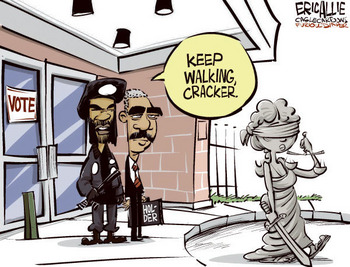
* Gov. Rauner also revealed that he has seen the Illinois Policy Institute’s cartoon. “I can see why some people would be upset about it,” he said. Rauner then claimed that part of the reason he ran for governor was because he wanted a more “just system,” and pointed at the Chicago public schools as an example of something that needs to be fixed.
Rauner was asked if he thought the cartoon was racist. “I understand why some people are upset by it.” He then repeated that line when asked again.
When it was pointed out to him that the cartoon was published by an organization he has supported and is his “go-to” think tank, Rauner said: “I have not leaned on them as my go-to think tank. That is not an accurate statement… I do have a few folks in my administration who used to work there… A very tiny fraction of our administration is from that organization… In no regard does that organization speak for me.”
* Asked about all the recent turnover, Rauner said: “The work that we do for the people of Illinois is incredibly difficult” and stressful. He complained about “false rumors,” political attacks and online attacks that had to be dealt with. Getting people who are willing to do the jobs isn’t easy. “We’ll always work to have great people who are willing to do it,” he said.
Asked if the turmoil in his administration could undermine his ability to work with the General Assembly on education funding reform. “I disagree with the characterization of turmoil,” he said.
“A handful of people” have changed, he insisted and claimed that his “only frustration” is Speaker Madigan, who he said “sat on SB1″ for two months to create a crisis.
* “Yes or no, is the cartoon inappropriate?” he was asked at the end of his press conference. Another reporter asked, “It sounds like you agree with the message of the cartoon, is that correct?” Rauner talked extensively about Chicago’s TIF districts when speaking of his reaction to the cartoon. But the governor walked away without answering either question.
NOW HIRING: ENTIRE GUBERNATORIAL COMMUNICATIONS TEAM
Seeking Best Team in America…Take 2
JOB DESCRIPTION: The communications department is responsible for crafting effective “messaging” for the governor’s office. We are currently seeking candidates for entry level to senior positions following what some are calling a “Wednesday night massacre.” Prior team members have been unwilling to show a racist cartoon, compared abortion to Nazi eugenics, tweeted homophobic and sexist slurs, advocated for the firing of all state workers, and got into Twitter fights with reporters over spelling errors. Come on board!
Ideal applicants will have the ability to convince Illinois voters that going 736 days without a budget is good and school funding is bad. Candidates need not know how many votes it takes to pass legislation or amendatory vetoes. An ideal applicant will be a self-starter. At times, it may even feel like no one is in charge.
REQUIREMENTS: Extensive experience in radical, right-wing activism. Government experience optional. Leave your G’s at home.
DURATION: 37 days… perhaps.
ATTIRE: Steam-pressed plaid shirts and Carhartt jackets.
SALARY: Commensurate with lack of experience.
LOCATION: Springfield or under the nearest bus.
Please email resumes and cover letters to BestTeamInAmericaTake2@gmail.com.
CHICAGO (Aug. 24, 2017) – Diana Rickert, Laurel Patrick, Meghan Keenan and Brittany Carl have submitted their resignations to the Office of the Governor.
We are grateful for their hard work on behalf of the people of Illinois and wish them all the best going forward.
Elizabeth Tomev is acting communications director.
* We will have live video soon from BlueRoomstream.com of the first event, even though it says in his daily public schedule that he won’t take any questions…
Daily Public Schedule: Thursday, August 24, 2017
What: Gov. Rauner signs HB 418, protecting taxpayers from police pension fund abuse
Where: Naperville City Hall, 400 S. Eagle Street, Naperville
Date: Thursday, August 24, 2017
Time: 10 a.m.
Note: No additional media availability
What: Gov. Rauner signs series of criminal justice reform bills
Where: Safer Foundation North Lawndale Adult Transition Center, 2839 W. Fillmore St., Chicago
Date: Thursday, August 24, 2017
Time: 1:15 p.m.
Note: No additional media availability
*** UPDATE *** From the DGA…
Rauner’s Office in Disarray (Again) As He Struggles to Respond to a Cartoon
Prairie State Purge 2.0 – Rauner Fires Staff He Hired Just a Month Ago in Last Purge
Rauner Fires Top Staff in the Middle of Major Education Funding Fight
Last night, Governor Bruce Rauner commenced a staff purge targeting staffers he brought in just weeks ago, during his last purge. In early July, Bruce Rauner suffered an embarrassing defeat when a group of bipartisan lawmakers overrode his veto of the state’s first budget in two years. Rauner decided to clear house and 21 people were fired or resigned. He replaced much of his top aides with members of the right-wing think tank Illinois Policy Institute believing it could solve his communications problems.
It has not been a good month for Rauner’s new inexperienced staff:
The bodyman was hired and fired on the same day for homophobic and racist tweets;
A comms staffer had to explain her past writings comparing abortion to Nazi eugenics;
A policy staffer got into a twitter fight over the rules of a blog’s comment section;
Rauner was repeatedly unprepared for basic questions about his policy;
Rauner was criticized for his office’s slow response to major flooding;
And more.
It all came to a head last week. The still existent Illinois Policy Institute published a cartoon many deemed racist and which drew immediate and bipartisan condemnation on the Illinois House Floor. For a week, Rauner’s team fumbled its response to the cartoon; Rauner refused to condemn the it, refused to look it, and proceeded to argue that some people did not find it offensive. On Tuesday, Rauner’s office produced dueling statements. The first said Rauner, “as a white male”, had nothing more to add to the debate. The second read “Earlier today an email went out from my office that did not accurately reflect my views.” The second statement did not condemn the cartoon or add much to the debate, however.
So, Rauner begins again. The details are still fuzzy but Rauner’s Prairie State Purge 2.0 includes most of his communications staff, with others potentially later.
The timing could not be worse – Rauner’s in the middle of a major political fight he started by issuing an amendatory veto of the state’s education funding formula. Rauner’s veto was seen as extreme and influenced by his then-new Illinois Policy Institute staffers. Illinois schools are opening their doors unsure if they would survive past October as lawmakers try and deal with the veto. Rauner’s plan has not received much support – it was already overridden in the Senate, and received zero votes in the House.
“At no time has Bruce Rauner ever taken responsibility for the consequences of his failed leadership, and this recent staff purge suggests he is not about to start,” said DGA Illinois Communications Director Sam Salustro. “As Governor, Bruce Rauner forced the state through a two-year budget crisis that was only ended over his objection. Debt piled up, social services were cut or closed, and jobs and people fled the state. Now Rauner is pushing the school system to closure for political gain. No staff purge can solve the problem at the center of this administration – Bruce Rauner.”
* During a Rauner administration staff meeting this morning, three comms staff resignations were confirmed: Diana Rickert, the governor’s deputy chief of staff for communications; Laurel Patrick, his communications director; and Brittany Carl, a comms person best known for her “Nazi eugenics” comment.
The governor told staffers that reports that his chief of staff Kristina Rasmussen and his chief legal counsel Dennis Murashko could also be resigning were “vicious rumors.” But I’m told Murashko has been asked to stick around until a replacement can be found. His policy director, Michael Lucci, appears to be safe.
The communications team departures, Rauner insisted to staff, were “mutual decisions,” and that the staffers were “not a good fit.”
The governor also reportedly blamed many of his current problems on the top staff members who were fired or resigned in July and, I’m told, said he would use legal means to go on offense and stop them.
* Lots of rumors that some top communications staff and at least one (and maybe more) legal staff have resigned or have been pushed out. Legal staff resignations are reportedly unrelated to the comms staff cleanout, which are directly related to the “as a white male” PR disaster. The comms staff rumors started last night, but their “resignations” were delayed for whatever reason..
BREAKING: Multiple Reliable source say FIRINGS tonight in @GovRauner's NEW staff. #twill
Bruce Rauner Goes Full On Trump In Latest Staff Purge
New Illinois Policy Institute Staff Last a Mere 37 Days
Chicago, IL – In a move straight out of the Trump playbook, Bruce Rauner has reportedly fired his communications team who were just 37 days on the job. The rash move comes after the failed governor had to publicly rebuke his own staff yesterday after they said “as a white male — [Rauner] does not have anything more to add to the discussion” on the racist IPI cartoon.
“There is a problem that no amount of staff changes can fix and his name is Bruce Rauner,” said Pritzker communications director Galia Slayen. “This governor has no moral compass, no vision, and no loyalty. Churning through staff faster than we can say Scaramucci is not going to change the fact that Bruce Rauner is entirely incapable of leading this state.”
*** UPDATE 2 *** Rasmussen is not yet confirmed, but sources say her resignation may happen later in the week…
Some reports say Rauner’s chief of staff, Kristina Rasmussen, may be out, but are still not confirmed. Sources tell NBC 5 perhaps Rauner’s entire communications team and his general counsel are all out.
Sources confirmed that Diana Rickert, Laurel Patric and Britany Carl, who once compared abortion to Nazi eugenics in a controversial blog post, were all out.
It’s believed Rickert wrote the vexing “white male” press release from Tuesday and Patrick sent it out. Former staffers say Rasmussen would have signed off on it.
Attempts to reach the Rauner team have been unsuccessful. Whether all were fired or quit is not clear.
*** UPDATE 3 *** I’m hearing the same on comms and sources say that more than Murashko may be out in legal staff…
More shakeups in @GovRauner's office. I'm told Laurel Patrick, Diana Rickert and Brittany Carl are out in aftermath of cartoon backlash.
Two anonymous sources say Chief of Staff Kristina Rasmussen and legal counsel Dennis Murashko are out too. Murashko over separate fight. https://t.co/dWZulM6KNt
A day after crafting a controversial statement citing Gov. Bruce Rauner’s position as a “white male,” the governor’s new communication staff has been ousted — with more exits on the way, according to multiple sources.
Sources said the staffers — hired in July after a staff purge and series of protest resignations — were asked to resign; one was asked to stay but chose to resign.
Sources say that includes former Illinois Policy Institute staffer Diana Rickert, who served as the governor’s deputy chief of staff for communications; Laurel Patrick, communications director; Brittany Carl and Meghan Keenan, both communications specialists.
A spokeswoman for the lieutenant governor’s office offered no comment on the resignations but said that she would be assisting with media calls.
*** UPDATE 5 *** I’m hearing the Looch has been set loose. Not confirmed yet, though.
*** UPDATE 6 *** If this does happen, he won’t be chief very long. Just sayin…
People close to @GovRauner's team think Deputy Governor Trey Childress could be in line to become next Chief of Staff. https://t.co/LT1wpp0WMy
Schools across Illinois are still waiting for state money while legislative leaders try to agree on a new funding formula. Governor Bruce Rauner vetoed large portions of a Democrat-sponsored plan, saying it was too generous to Chicago Public Schools. The list of educators lobbying for lawmakers to override that veto includes some surprising names.
School administrators have had to choose sides in this political fight — whether they support the governor, or the bill Democrats originally passed. That leaves Rauner College Prep in a strange position. It’s one of 17 high schools in the Noble Network — the largest group of charter schools in Chicago — and the first named after a donor. Rauner and his wife Diana have given more than $3 million to Noble.
“Yeah, we’ve appreciated their support over the years. They’ve been supporters of Noble,” says Cody Rogers, communications director for the network. Michael Milkie, Noble’s CEO, has publicly supported the Democratic plan. And that makes economic sense. Most charter schools in Chicago are authorized and funded by CPS.
Gov. Bruce Rauner has sided with big insurance companies and against Illinois employers, House Speaker Michael J. Madigan said, criticizing the governor’s veto of legislation offering Illinois businesses the ability to reduce workers’ compensation costs.
“The governor’s actions show his real agenda is not to do what’s in the best interest of Illinois employers, but only to serve the interests of multibillion-dollar insurance companies and further enrich corporate CEOs,” Madigan said. “Instead of helping local employers reduce their workers’ compensation insurance costs, the governor has blocked reform to protect corporate profits. House Democrats will push to override the governor’s veto and provide relief for Illinois employers.”
Madigan and House Democrats passed House Bill 2622, which would provide employers with relief from workers’ compensation costs. While Rauner has consistently identified reduced workers’ compensation costs as a way to turn the state’s business climate around, the governor vetoed the bill last week.
The measure would have created a not-for-profit insurance provider that would be able to sell workers’ compensation insurance to businesses throughout the state. The Illinois Employers Mutual Insurance Company would offer the same quality insurance as for-profit companies, but would be committed to delivering the best value for businesses, not turning a profit for investors. This competition would also encourage for-profit insurers to offer lower-cost options for Illinois employers. Twenty other states, including Missouri, Kentucky, California and Texas, currently offer employers the option of purchasing workers’ compensation coverage through a state-run, non-profit insurer. Americans for Insurance Reform, a coalition of 100 consumer and public interest groups, studied similar state-administered workers’ compensation insurers currently in place in other states. Their report concluded that these state options operate at a high level of efficiency, resulting in “far lower expenses” and lower overhead costs.
“The governor’s veto rejected competition that would give Illinois employers the same advantages employers have in other states,” Madigan said. “House Democrats continue to try to meet the governor half way by putting forward real reforms that make Illinois a competitive place for business, but the governor continues to show that his only interest is padding the profits of insurance companies, big businesses and corporate CEOs.”
The State Board of Elections put off a decision Tuesday on the latest request for Illinois voter information made by a panel formed by President Donald Trump to look into his claims of voting irregularities in last year’s presidential election.
Instead, the board is sending a letter requesting more information about the purpose of the Presidential Advisory Commission on Election Integrity. Illinois officials also want to know whether any information provided truly could be kept confidential, as the federal panel pledged and as Illinois law requires.
The privacy issue is a critical one for state election officials. In early July, the bipartisan elections board rejected an initial appeal for “publicly available” voter data by the federal panel because, under Illinois law, it had no such information available that could be publicly disclosed.
The elections board had agreed to consider the latest request from the federal panel after it issued a new request that vowed to keep voter information confidential.
Voters in Illinois and across the country have been contacting election officials asking to be removed from the rolls rather than have their personal information turned over to the Commission. The Commission should have the burden of demonstrating that voter information will be kept private and secure, especially given the ongoing threats to election security both locally and nationally. We urge the State Board of Elections to refrain from turning over our voter information until the Commission has sufficiently safeguarded against misuse of this information.
The same “blind spot” that triggered Gov. Bruce Rauner’s timid response to a racist cartoon prompted his veto of a bill rewriting a school funding formula that “punishes” poor and minority students, Mayor Rahm Emanuel charged Wednesday. […]
“Everybody that looks at that cartoon can see that cartoon for what it says. And that same blind spot led a governor to a veto of an education bill that doubled-down on the failure of the most inequitable funding of education. It’s wrong and it’s time the Legislature override the governor,” the mayor said Wednesday. […]
Emanuel made those remarks after joining forces with mayors from Democratic suburbs to turn up the heat on the General Assembly to override the governor’s veto of a school funding reform bill that the governor has condemned as a “Chicago bailout.”
Robert J. Nunamaker, mayor of Fox River Grove, was asked why he was supporting a bill that would give $300 million to the Chicago Public Schools.
“We’re smart enough to know that Chicago is the economic driver of northern Illinois and, if Chicago is sick, we all catch cold someplace along the way. And Chicago is not gonna be great without good education. You have to see through that,” Nunamaker said.
* Not everyone sees the cartoon as racist, however…
* From the Fox News Channel’s Bret Baier interview of Gov. Bruce Rauner…
BAIER: There are some families who say they’ve lost loved ones because of sanctuary status or policy and they’re trying to meet with you. Do you want to hear that point of view?
RAUNER: I want to hear everybody’s point of view. I work for everybody in the state of Illinois. Our immigration system is broken and we need to have a system that keeps the people of Illinois safe, the people of America safe. We’ve got to put that as the first priority.
* The Illinois Review did a brief piece on this social media meme…
The families of these three Illinoisans that died at the hands of immigrants in American illegally have yet to hear from Governor Rauner, although he promised Fox News’ Bret Baier he would speak with them before his final action on SB 31. The deadline for action on the bill is August 29th.
“No, the governor hasn’t called me yet,” Brian McCann told Illinois Review Tuesday morning. “It’s very disappointing. There are four families that want a chance to share their stories with him in person. We’re all hoping he does what he said he would do.”
The above meme is circulating the internet, encouraging calls to the governor’s office to veto SB 31.
* As you already know, the governor is supposed to sign SB31 next Monday. But that’s giving time for public pressure to build…
Fran Eaton, co-founder of the conservative Illinois Review website, questioned whether Rauner’s support for the bill was “the beginning of the end.”
“If he wants Republican support, then govern like a Republican,” Eaton tweeted. “It’s simple. Otherwise, it’s a waste of time & energy.” […]
State Sen. Dave Syverson of Rockford has said Republicans are concerned the “blanket prohibition could result in leaving criminal illegal immigrants, including those accused of violent crimes, on the streets.” The conservative news organization Breitbart just wrote an article on the bill suggesting Rauner would be helping Democrats “frustrate federal immigration enforcement.”
* But Lake County Sheriff Mark Curran, a Republican and a supporter of Donald Trump, supports the bill…
The legislation requires that local police not comply with immigration detainers and warrants not issued by a judge. Curran said that’s already standard practice.
But writing it into the law could help stop other sheriffs or police chiefs from going rogue, supporters say.
In addition, the TRUST Act would prevent local police from stopping, searching or arresting anyone based on their immigration or citizenship status.
Again, that’s already how it’s done in Lake County, Curran said. […]
“In order to police these communities, protect these communities from the true predators, you have to be able to pull up with lights and all and not have widespread fear and panic among citizens that really have nothing to do with the crime.”
Also critical of the bill is Rep. John Cabello, a Republican of Mexican heritage who is a Rockford police detective and also co-chair of the Illinois Trump Victory fund. Cabello said the measure puts police in the position of choosing whether to uphold federal law or state law.
“We can’t cherry-pick which laws we are going to enforce, it doesn’t matter if this bill is signed into law or not, law enforcement will do what we have to do,” he said. “I think this bill is symbolic, no law enforcement officer is going to follow this bill.”
* Related…
* Illinois Review: Despite threats of federal police funding cuts, Rauner to join Emanuel in defying federal immigration laws
Not to mention that it’s probably best not to mess with Jesse White.
* Meanwhile, a commenter posted a link to this cartoon the other day…
That’s from the far-right World Net Daily website, but it’s the same guy who drew the now infamous CPS/TIF cartoon for the Illinois Policy Institute. Yeah. No issues at all.
PROFT: Tom Demmer is stepping out to criticize the Illinois Policy Institute, to pile on and to provide again the political cover for the Democrats because that’s what so many Republicans do in this state, provide political cover. You point your finger, poke your finger in my chest and I fold. And Tom Demmer is a good example of why Republicans are the super-minority party in the state. Just as those 15 Madigan Republicans who voted for the Madigan tax increase without spending reforms are a good example of why Republicans are the super-minority constituency in the state. And why there’s an enthusiasm gap right now between Republicans and Democrats in Illinois, looking forward to the 2018 election.
And, boy, I gotta tell you, if you wanna ensure another generation of Madigan and Cullerton lordship. You wanna switch out Rauner for one of the fungible Chicago Democrats that are running for the Democrat nomination for governor? You know what you do? You entrust the Republican Party to the likes of Tom Demmer and those 15 surrender Republicans who voted with Madigan on the tax increases. And you won’t have to worry about the Republican Party being in charge of anything in Illinois again.
HUGHES: Yeah, and I remember when Tom Demmer ran the first time and he was very young, supported by the local party because he’d been sort of a volunteer and all that good stuff. I supported and you supported another candidate back then and I’m really sitting here today wishing mightily that that other candidate had won. And I’m wondering whether or not there should be someone else to run against Tom Demmer in this next cycle.
PROFT: Well, I gotta tell ya, I think we have enough dinks in the Republican caucus. We don’t need any more and we need to excise those that we have.
“Jesse White is Mike Madigan’s top patronage chief, using the Secretary of State’s office as a jobs machine for Madigan allies. J.B. Pritzker’s willingness to accept the endorsement of the Speaker’s top patronage chief is just another sign that Mike Madigan is orchestrating Pritzker’s nomination.” – Illinois Republican Party Spokesman Steven Yaffe
Jesse White is a Madigan ally through and through – and now he’s supporting J.B. Pritzker.
Just this month, Jesse White broke his promise to not run for re-election after Madigan worked to change his mind.
J.B. Pritzker’s willingness to accept a Jesse White endorsement is even more proof that he would give the Governor’s office back to Mike Madigan.
A bit much. White’s still way more popular than any other statewide officeholder, including and especially the governor (which may be why they haven’t found their SoS candidate yet). But, hey, they got their message and they’re sticking to it and you can’t blame them. The one thing I totally agree with Bill Maher on is when he says “Democrats read polls, Republicans change them.”
*** UPDATE *** And here’s the Pritzker campaign release…
Today, Secretary of State Jesse White announced his endorsement of JB Pritzker for governor at Eckhart Park on the West Side of Chicago. They event was kicked off with a performance by the Jesse White Tumblers.
The endorsement is the first by a statewide elected official in the Democratic primary for governor, and comes from a widely popular public servant who has won by large margins in his election bids. Secretary White is currently running for a record sixth term as Secretary of State, and has held a number of different public offices in Illinois for over 40 years. Under his leadership, Illinois has become a nationwide leader in road safety with strengthened DUI laws, a reformed CDL program, and improved teen driving guidelines. Jesse White is a veteran, former Chicago Public Schools teacher and administrator, and a lifelong public servant.
“For over half a century, Secretary of State Jesse White has defined public service in Illinois,” said JB Pritzker. “He is an Army veteran, a Chicago Cubs ball player, a Chicago Public School teacher, the first African American ever elected Illinois Secretary of State, one of the biggest vote getters in the history of our state, and a leader in every sense of the word. By his many good works and by his example, Jesse White inspires our young people to pursue public service and do good for Illinois. I’ve known Jesse for more than a quarter century, and back then as today, he inspires me. That’s why today, I am so proud to receive Jesse White’s endorsement in my campaign for governor.”
“I am so proud to endorse JB Pritzker for governor,” said Secretary of State Jesse White. “JB and I have known each other for 30 years and I can confidently say that he’s always stood up for what’s right. JB has spent his life fighting for Illinoisans, helping create opportunity for working families and expanding quality education for Illinois’ children. That’s exactly the type of leadership we need. As secretary of state, I’ve worked to rebuild trust in Springfield and make government work for the people, but I need a partner in the governor’s office. I know that JB is the right candidate to lead our ticket in 2018 and work with me to get our state back on track.”
*** UPDATE 2 *** Galia Slayen with the Pritzker campaign…
Jesse White has served this state, our country, and contributed to communities across Illinois his whole life. JB is proud to have Jesse White’s support and looks forward to working with this tireless public servant to defeat Bruce Rauner. We know the Illinois GOP has a tough job propping up their failed governor, but Jesse White deserves better than their tired talking points and deeply out of touch attacks. Perhaps they need a refresher on Secretary of State Jesse White’s over 50 years of service to our state and country:
Served our country in the U.S. Army and Illinois National Guard and Reserve.
Founded the Jesse White Tumbling Team and volunteered for 57 years to help over 17,500 at-risk youth.
Taught students in the Chicago public school system as a teacher and administrator for over 33 years.
Started tutoring and scholarship programs to help kids thrive in school and go to college.
First African American elected as Illinois Secretary of State and longest serving Secretary of State in Illinois history.
* One of the bills Gov. Rauner vetoed on Friday was this one…
Gov. Bruce Rauner has vetoed legislation that the Democratic comptroller says would help the state manage overdue bills.
The Republican governor rejected on Friday a plan pushed by Comptroller Susana Mendoza. It would require state agencies to regularly report the bills they’ve not yet sent the comptroller for payment.
I took notice of Mendoza not long after she was sworn into the House. She was working hard on some bill that was important to her district and had reached out to Democrats and Republicans alike. After the bill passed with a huge margin, she walked the entire House floor personally thanking each legislator who’d voted for her legislation. I was impressed.
* Comptroller Mendoza did the same sort of thing with editorial boards before Gov. Rauner vetoed her bill. And it’s paying off now. Favorable newspaper editorials generally don’t pass bills, but they don’t hurt, either. From the Daily Herald…
In a statement defending his veto, Rauner said the bill “more closely resembles an attempt by the comptroller to micromanage executive agencies than an attempt to get the information most helpful to the monitoring of state government.”
But in truth, micromanaging payment of the state’s bills, within the context of the law and court orders, is precisely the job of the comptroller. Regardless of party, whoever is in that role needs to have a financial snapshot more frequently than once a year. What’s more, lawmakers need a more definite picture of the state’s financial status as they contemplate legislation, and taxpayers need to have that as they evaluate lawmakers and the actions of government.
The past-due balance of bills on the state’s ledger is an unqualified embarrassment for everyone in state government. It is reported to have produced $800 million — and constantly counting — in penalties alone.
No action is going to get such a huge backlog under control immediately, but no opportunity to make the process more manageable should be overlooked. This one could have been undertaken while simultaneously demonstrating the governor is not reflexively opposed to any meaningful legislation Democrats support.
Unfortunately, that leaves it to lawmakers to override the governor in yet another show of contention and discord. We’re disappointed by the appearances, but agree that lawmakers should take it on themselves to create a more reliable and up-to-date system of accounting for the state’s bills.
Gov. Bruce Rauner vetoed the measure Friday. In doing so, he said providing this information monthly would create more work for departments.
That’s not satisfactory. Pardon us if we seem uncaring about government workers having to push a few more buttons or take a few more hours out of their monthly schedule in the name of transparency. Taxpayers are having to work harder than ever to pay the debt, and they deserve to know the realities of state finances down to the penny. […]
Rauner has painted a vision of his administration as one that puts taxpayers ahead of the political status quo.
Yet his veto of legislation that would give a clear and useful accounting of the state’s debt load belies that.
Lawmakers on both sides of the political fence need to do what is best for taxpayers: Demand accountability and override this veto.
The state of Illinois, as of Friday, owed its vendors about $14.7 billion.
At least, Comptroller Susana Mendoza thinks that’s what the debt is, based on the bills in her office and the ones she is aware of at state agencies.
Ridiculously, state agencies are only required to annually report in October the aggregate amount of bills being held as of June 30. By that point, it’s outdated. Mendoza said there have been four times since she became comptroller in December where a stack of bills that she was unaware of landed in her office. Some were 11 months overdue. One time, it added $1 billion to the backlog of unpaid bills. And, the state must pay penalty interest on those late bills.
Mendoza’s reasonable request is to lose the surprises that add to the already difficult job she has of triaging the state’s checkbook during times of unprecedented financial uncertainty. She wants to have, on a monthly basis, the most accurate snapshot of what the state’s debt is so her office can better manage it.
It’s dumbfounding to think such a policy isn’t already in place, but then again, Illinois isn’t exactly known for having its ducks in a row when it comes to anything financial. Mendoza is championing the Debt Transparency Act, which would require state agencies to report monthly to the comptroller’s office what bills they are holding and estimate the amount of interest that will be paid on those bills. […]
We encourage the General Assembly to override the governor’s veto and get this long overdue, best-practice accounting policy in place.
Gov. Bruce Rauner missed an opportunity to make reporting of Illinois’ outstanding bills and overdue interest more accurate, transparent and accountable when he vetoed the General Assembly approved Debt Transparency Act.
Politics clearly were top of mind for the GOP governor facing a crowded field of Democrats seeking to unseat him in 2018. […]
Politics aside, this is at its heart a good-government bill that does what a fiscally responsible state ought to have been doing from the beginning. Indeed, past comptrollers, including the late Ms. Topinka, a Republican, and Dan Hynes, a Democrat, championed similar efforts to increase bill reporting and transparency. […]
It’s time to end the practice of hiding and holding bills. We continue to believe the Debt Transparency Act will do that. A comfortable majority of lawmakers in both houses agreed. We urge them to set aside political concerns and override the governor’s veto.
The bill received bipartisan support in both houses in being approved last spring and was sent to Gov. Bruce Rauner for his signature. It seemed to be the kind of common-sense legislation that would appeal to Rauner, who has repeatedly vowed to apply sound private-sector business practices to improve the efficiency of state government.
Instead, the governor vetoed the bill Friday. […]
Clearly, accountability and good governance should transcend politics, but this is, after all, Illinois. Outwardly, Rauner’s veto decision appears to be based more on political tit-for-tat than reasonable policy differences. […]
It bears repeating: Elected officials need reliable financial information to make budget decisions, vendors and service providers deserve to know how long the line is for those awaiting payment, and taxpayers deserve to know the magnitude of the state’s debt.
The Debt Transparency Act clearly is a step toward achieving those goals. We urge lawmakers to override the governor’s veto and make it law.
Illinois House Speaker Mike Madigan canceled a Wednesday House session — and a planned override of Gov. Bruce Rauner’s veto of a school funding measure — “in light of progress” made during lengthy leaders’ meetings about school funding reform.
Leaders met for more than five hours in Madigan’s office on Tuesday. The speaker last week said he’d call for an override of Rauner’s school funding reform veto. The Illinois Senate last week voted to override the veto. […]
Last week, Madigan – on a day intended to celebrate Rauner at the Illinois State Fair — vowed to keep fighting for the measure and held a test vote of Rauner’s amendatory veto. That was intended to be a public showing of the lack of support for his changes.
The speaker last week urged “reasonable Republicans” to join Democrats in overriding the veto “as they did on the budget making.”
Durkin said it would be up to Madigan to decide whether to go ahead with an override vote in the House Wednesday. Brady, however, said it would be a gesture of good faith on Madigan’s part to delay the vote.
It’s likely the veteran speaker didn’t have the votes to override Rauner on Wednesday anyway. Not only would Madigan probably have to put all 67 House Democrats on the override, but he would need at least four Republicans to break ranks with their governor. The minimum to override is 71. So far, no House Republicans have publicly said they’re willing to do so on the schools bill.
* Politico has some details, but keep in mind that some of this might be wishful thinking by the Democrats and the whole situation is very fluid at the moment…
Scholarships — On the table to bring Republicans on board SB1 in the House: $75 million in private school scholarships. Under serious discussion is a 75-cent-on the dollar credit to families choosing private schools, with a five-year sunset on the program. That reflects the desires of Cardinal Blase Cupich and other advocates of the program, sources tell POLITICO.
SB1 — the funding boost for Chicago that Gov. Bruce Rauner detests, remains intact; SB1 itself changes very little, except for Democrats open to adding unfunded mandate and property tax relief.
Negotiations continue, but time is running out. Democrats don’t have the numbers alone to override Rauner’s amendatory veto, but believe eight Republicans are leaning heavily toward an override — even without the scholarships. That’s after various degrees of pressure for SB1, including support from superintendents statewide. Democrats point to Gov. Bruce Rauner’s education proposal, which didn’t get a single “yes” vote last week. Every day another member announces he or she won’t seek reelection, leaving behind a potential for more brazen voting. Add tanking poll numbers and ongoing turmoil in Rauner’s office and you have a governor holding a weak hand. The worst-case scenario for Republicans is for another override to happen and they have nothing to show for it.
* Instead of dodging questions about a cartoon decried as racist, why didn’t the governor point to some real action yesterday? From the Illinois branch of the ACLU…
[Yesterday], Governor Rauner signed into law House Bill 3803, a measure that fixed the charge of unlawful gang conduct in Illinois statute. The charge has been used, largely with young men of color in Chicago, to arrest and charge individuals who are doing nothing more than being present in their own neighborhoods. Below, please statements from the two legislative sponsors – Senator Toi Hutchinson and Representative Kelly Cassidy – as well as my colleague Khadine Bennett.
Statement of State Senator Toi Hutchinson
Chief Senate Sponsor
House Bill 3803
August 22, 2017
With the Governor’s signature, we have been able to work together to make life better for thousands of persons – mostly young men of color – being arrested and subjected to prosecution for simply being in their own neighborhoods. I thank my colleagues in the Senate who joined in making this the law in Illinois.
Statement of State Representative Kelly Cassidy
Chief House Sponsor
House Bill 3803
August 22, 2017
The Governor today has moved forward a fix to one of the worst abuses of criminal law in our state. The notion that someone could be arrested and prosecuted simply for being in their neighborhood, talking to people, or in their own yard, is beyond troubling. I’m grateful to all of my colleagues who supported this fix. We ought to target our law enforcement resources towards those who are committing crimes, not just hanging out.
Statement of Khadine Bennett, Director
Advocacy and Intergovernmental Affairs
American Civil Liberties Union of Illinois
RE: Signing of House Bill 3803
August 22, 2017
Today, Governor Rauner helped bring a measure of sanity and fairness to the criminal justice system in Illinois – eliminating the charge of “unlawful gang contact” being applied to people who engage in no criminal conduct. These arrests – there were nearly 2,000 of them in Chicago during 2015 – resulted from such dangerous conduct as standing in one’s own yard, talking to neighbors or sitting on one’s porch.
The bill signed today simply requires that someone be engaged in a crime or other gang-related activity to be arrested and prosecuted for unlawful gang conduct. This reflects not just good policy, but aligns with our basic constitutional notions that police simply cannot arrest someone because they do not like who they are or where they are located.
We thank the Governor for seeing the wisdom in this position and Senator Toi Hutchinson and Representative Kelly Cassidy for championing this measure.
* Nothing from the governor’s office except this in a long bill-signing list…
Bill No.: HB 3803
An Act Concerning Criminal Law
Action: Signed
Effective: Jan. 01, 2018
Cassidy credited reporting by the Chicago Sun-Times for highlighting the unfairness of the current law. “When you draw attention to something that’s ridiculous, then you get a chance to fix it,” she said.
The Sun-Times reported earlier this year that Chicago police have made thousands of arrests for gang contact by parolees, mostly after the city decriminalized low-level marijuana possession in 2012. The total includes 375 arrests made this year through mid-May, city data show.
Cops have arrested parolees for doing nothing other than sitting on porches, getting rides or hanging out with neighbors identified as gang members.
Police say they stepped up enforcement in an effort to prevent gun violence. But Kelly and other legislators said the law is tilted against people who’ve returned from prison to neighborhoods on Chicago’s South and West sides, where it’s difficult to avoid other ex-offenders.
*** UPDATE *** Again, not a single word out of the governor’s office on this bill signing even though he’s being pummeled for cavorting with racists. From a press release…
In the wake of growing outrage over acts of violence and hate in Charlottesville, VA, Governor Bruce Rauner this week signed legislation that strengthens penalties for those who commit hate crimes in Illinois.
State Representative David S. Olsen (R-Downers Grove), Chief Co-Sponsor of HB 2390, said the signing of the bill sends a clear message to those who would target others based on their race, color, creed, religion or other perceived classification that their behavior will not be tolerated.
“The nation is still reeling from the acts of domestic terrorism that occurred just two short weeks ago in Virginia,” said Olsen. “As lawmakers, we must do everything in our power to help prevent future instances of hate crimes. This is not a partisan issue; it’s a human issue. I was proud to serve as the leading Republican on this incredibly important piece of bipartisan legislation.”
HB 2390, signed into law on August 22 as Public Act 100-0260, increases the amount of damages for which a defendant can be held liable and also ensures that sentences for multiple convictions for hate crimes will be served consecutively rather than concurrently. The new law also includes an educational provision, so that rather than just being penalized for their crime, defendants will face an educational sentence so they may learn why their actions were wrong.
The bill received unanimous support in both the House and Senate during the spring legislative session.
Facing increasing pressure to weigh in on a controversial cartoon from the Illinois Policy Institute, a spokeswoman for Gov. Bruce Rauner offered a lengthy response on the conservative think tank’s illustration Tuesday – but yet again refused to say whether or not the governor has seen it.
Hours later, the governor released another a statement saying the initial response “did not accurately reflect my views.
Gov. Bruce Rauner offered conflicting statements Tuesday on a political cartoon critics have called racist, first saying he didn’t have anything to add to the discussion “as a white male” before walking it back hours later.
The first-term Republican had repeatedly said he hadn’t seen the image, which depicts a black Chicago schoolchild begging for money from a suit-clad white man who has cash stuffed in one pocket. The cartoon was circulated online last week by the Chicago-based Illinois Policy Institute, a conservative think tank Rauner has links to.
Lawmakers widely criticized the image, with Republicans and Democrats standing up in opposition on the Illinois House floor last week. The image, meant to illustrate inequity in school funding, was removed hours later.
For the second time in a little over a week Gov. Bruce Rauner scrambled Tuesday to clarify remarks that have drawn him heat in situations with racial overtones.
Late Tuesday night, Rauner sought to undo the damage from a statement his newly revamped communications office issued earlier in the day, when a top spokeswoman said that the governor would not offer an opinion on a cartoon some called racist — because he is “a white male.”
Democrats blasted Rauner all day — with one lawmaker accusing the governor of “cowardice” and Mayor Rahm Emanuel declaring that Rauner should be “embarrassed for turning a blind eye to what is plain for everyone to see.”
The governor sought to fix the gaffe Tuesday night.
Illinois Gov. Bruce Rauner’s spokesman says “fixation” on a controversial cartoon published by a political organization with close ties to his administration is “disappointing” and that “the governor – as a white male – does not have anything more to add to the discussion.”
Legislators from both parties have condemned the Illinois Policy Institute’s cartoon as racist.
Now, legislators are condemning Rauner’s reaction to it.
Team Rauner found a brand-new way last night to revive a story about a racially-charged cartoon created by a conservative think tank from which he’s hired some of his top staffers. Far from tamping down the flames from the governor’s non-answers on the Illinois Policy Institute’s political cartoon, his communication team dumped gasoline on the fire. Their response? The governor couldn’t weigh in further “as a white male.” Rauner, who was out of state helping one of his kids move in at college out East, then released another statement to disavow the earlier one from his own staff. He was skewered by critics and overshadowed headlines about school funding progress and his support for an immigration bill.
Gov. Bruce Rauner’s former chief of staff, Rich Goldberg, is launching a strategic consulting firm based in Chicago. The new firm, RG Solutions, will also offer communications and crisis management consulting services to a wide range of corporate, non-profit and political clients.
Back in the day, we sold t-shirts and other tchotchkes here to raise money for charity. “Where’s Bradley Tusk When You Need Him?” was one of the most popular slogans. Rod Blagojevich’s former deputy governor wasn’t fully appreciated until after he fled to New York at the beginning of Blagojevich’s second term.
* And Goldberg, the infamous “Prince of Snarkness” and “Grassbowl” looks downright cuddly right about now.
In retrospect, Richard did a good job considering his boss and the environment he was dealt. Rauner’s slide in the polls was inevitable because of the impasse and who he is, but the governor was never put through the almost daily PR crises that he’s faced since he replaced Goldberg. Rauner never understood how much his staff did for him until it was too late. They quashed a kabillion potential crises that he never knew about.
RG is a friend of mine, but I also respect him. Hey, I don’t hang out with just anybody. Go get ‘em, dude.